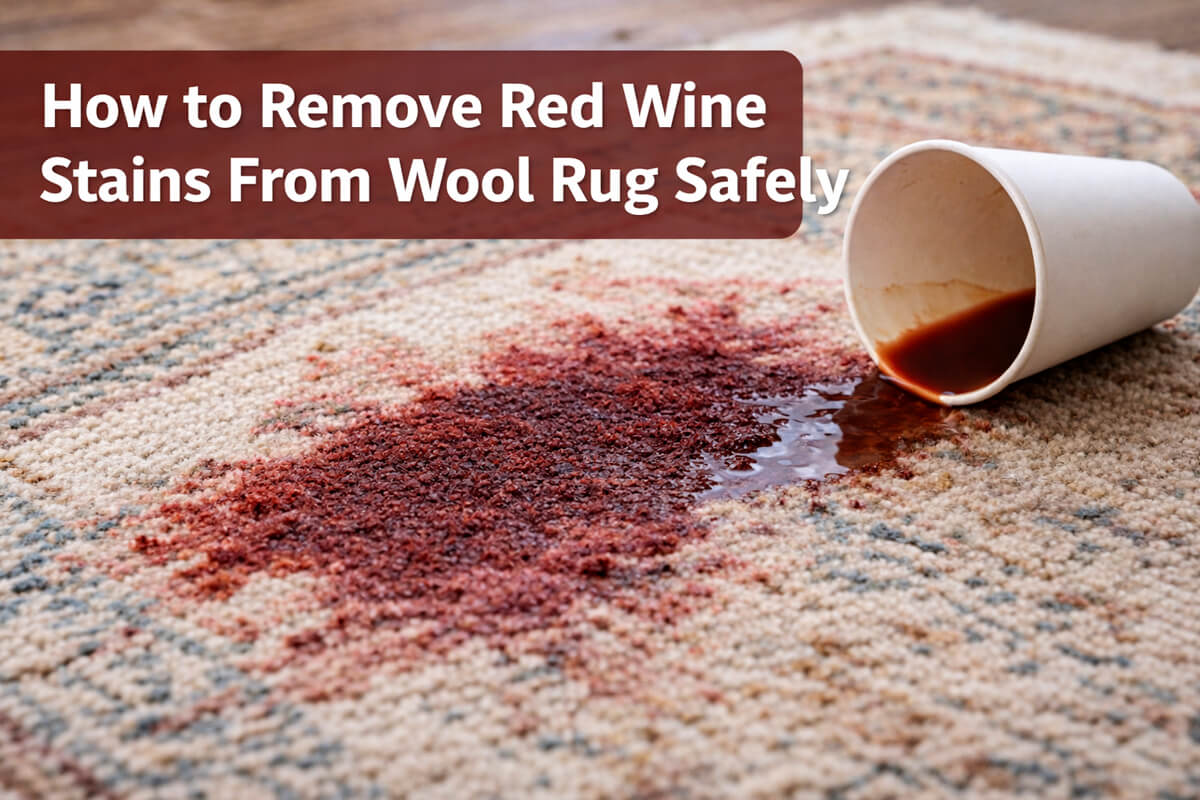
Red wine stains on a wool rug are among the most challenging household accidents because wool is a sensitive natural fiber that reacts strongly to moisture, heat, friction and chemicals. Unlike synthetic rugs, wool fibers can shrink, felt, lose color or weaken if treated incorrectly. Red wine contains powerful natural dyes, acids and sugars that bind rapidly to wool proteins, making stains appear deep and permanent within minutes. This extended guide explains in detail how red wine behaves on wool rugs, how to remove fresh and dried stains step by step, and how to protect the rug’s structure, color and longevity throughout the cleaning process.
Why wool rugs are especially vulnerable to red wine stains
Wool is a protein-based fiber with a complex surface structure made up of microscopic overlapping scales. These scales give wool its softness, elasticity and insulating properties, but they also make it highly absorbent. When red wine spills onto a wool rug, liquid is drawn rapidly into the fiber through capillary action, spreading both vertically and horizontally.
Heat from the wine accelerates absorption by slightly opening the fiber scales. Once wine pigments enter the fiber, they bond to the wool proteins in a way similar to textile dyeing. This chemical attraction explains why red wine stains set faster and deeper on wool than on many synthetic materials. Without immediate and careful treatment, pigments become difficult to remove without damaging the rug.
How red wine pigments bind to wool fibers
Red wine contains anthocyanins, naturally occurring pigments responsible for its deep red and purple hues. These pigments are acidic and bond strongly with protein fibers such as wool. As moisture evaporates, oxidation darkens the pigments and strengthens their attachment to the fiber surface.
Foot traffic and pressure further worsen the stain by forcing pigment deeper into the pile and backing. If the rug is exposed to sunlight or warmth, the stain may set even more firmly. Over time, sugars and tannins left behind attract dirt, making the stain appear larger and darker than the original spill.
Common cleaning errors that permanently damage wool rugs
Many wool rugs are damaged not by the stain itself, but by improper cleaning attempts. Avoiding the following mistakes is critical for safe stain removal.
- Using hot or warm water that causes wool fibers to shrink and felt
- Scrubbing aggressively which breaks fibers and distorts pile direction
- Applying bleach or oxygen cleaners that strip natural dyes
- Over-wetting the rug and soaking the backing or pad
- Using alkaline cleaners that weaken wool protein bonds
Safe wool cleaning always relies on gentle blotting, cold water and pH-balanced solutions.
Understanding wool rug construction before cleaning
Wool rugs vary greatly in construction, and this affects how stains should be treated. Identifying the rug type helps determine how much moisture and agitation it can tolerate.
- Hand-knotted wool rugs use tightly packed fibers and often natural dyes
- Hand-tufted wool rugs may contain latex backing that reacts poorly to water
- Machine-made wool rugs often include synthetic stabilizers
- Antique and vintage rugs have fragile fibers and unstable dyes
Checking the rug label or consulting manufacturer documentation helps avoid irreversible damage, especially for high-value or heirloom pieces.
Preparing safe supplies for wool rug stain removal
Wool-safe stain removal depends on mild, controlled solutions rather than strong chemicals. Preparing the right supplies before starting reduces the risk of over-cleaning.
- Cold distilled water to avoid mineral residue
- White vinegar or mild citric acid solution
- Wool-safe detergent with neutral pH
- Baking soda for absorption and deodorizing
- White towels or microfiber cloths to prevent dye transfer
- Soft natural-bristle brush for gentle pile alignment
- Spray bottle for precise moisture control
- Vacuum cleaner with adjustable suction
Distilled water is preferred because minerals in tap water can leave residue on wool fibers.
Immediate response to a red wine spill on a wool rug
The first minutes after a spill determine how severe the stain will become. Quick, careful action can dramatically reduce pigment bonding.
Blotting red wine correctly without spreading
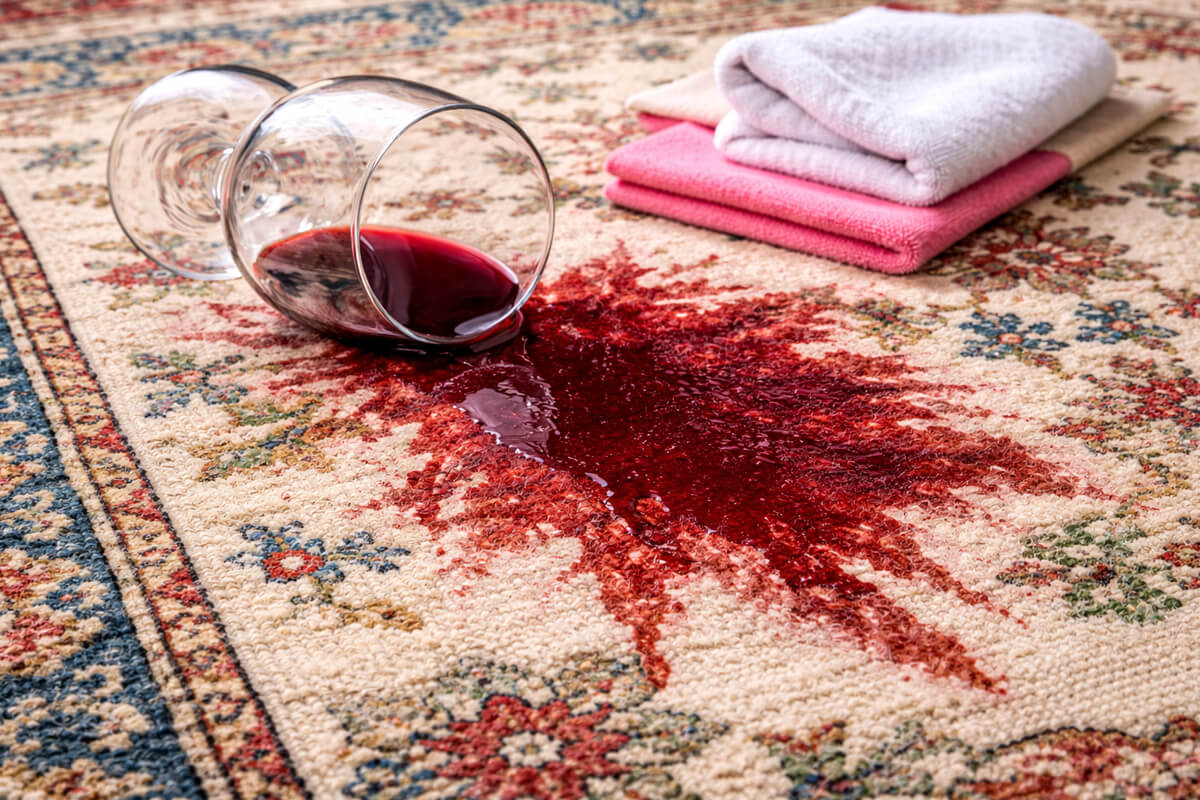
Immediately blot the spill using clean, dry towels. Apply gentle downward pressure without rubbing. Always blot from the outer edge toward the center to prevent spreading. Replace towels frequently until no more liquid transfers from the rug.
Diluting pigments with controlled cold water
Cold water helps slow pigment bonding without setting the stain.
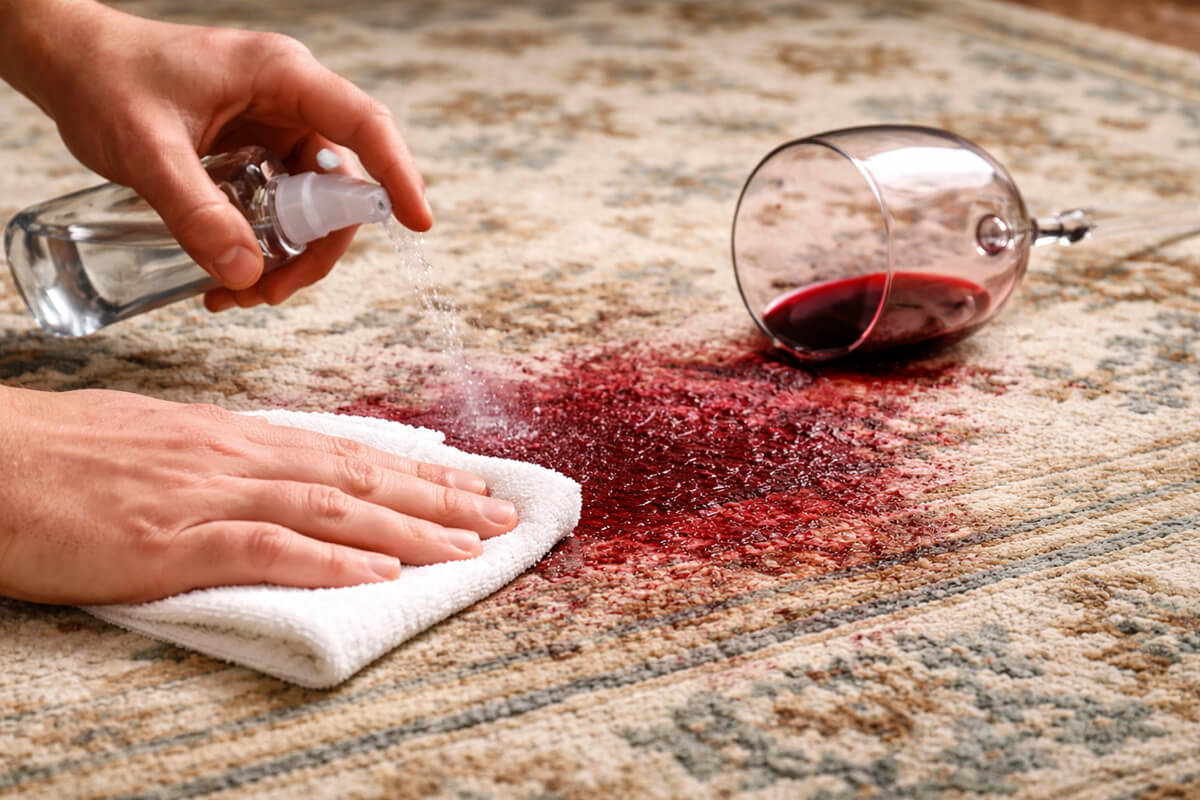
- Lightly dampen a cloth with cold water
- Blot the stained area gently
- Immediately blot again with a dry towel
This step reduces pigment concentration and prepares the stain for deeper treatment.
Using baking soda to absorb fresh red wine safely
Baking soda is one of the safest absorbents for wool rugs when used correctly. It draws moisture and pigment out of the fibers without chemical reaction.
Baking soda absorption technique
- Apply baking soda generously to the damp stain
- Allow it to absorb liquid for 30 to 60 minutes
- Vacuum gently using low suction
This step reduces stain intensity and limits pigment penetration.
Neutralizing red wine pigments with vinegar solution
White vinegar neutralizes red wine acids and helps release pigments from wool fibers when properly diluted.
Wool-safe vinegar method
- Mix one tablespoon of white vinegar with two cups of cold water
- Apply lightly using a spray bottle or cloth
- Blot gently without scrubbing
- Repeat gradually as the stain lightens
Vinegar odor disappears completely once the rug dries.
Removing older red wine stains from wool rugs
Dried stains require patience and gradual rehydration to avoid fiber damage.
Rehydrating dried wine residue safely
Lightly mist the stained area with cold water and allow a few minutes for pigments to soften before blotting.
Deep cleaning with wool-safe detergent
- Dilute a small amount of wool-safe detergent in cold water
- Apply sparingly to the stain
- Blot gently with a cloth
- Rinse by blotting with clean water
This approach lifts pigment while preserving wool strength.
Managing sugar and additive residue in red wine stains
Some red wines contain residual sugar or additives that leave sticky deposits. These residues attract dirt and darken stains over time.
After pigment removal, lightly blot the area with diluted detergent solution, followed by clean water blotting to remove all residue.
Drying a wool rug correctly after stain removal
Proper drying is essential to prevent odor, mildew and fiber distortion.
- Blot thoroughly to remove moisture
- Allow the rug to dry flat on a clean surface
- Increase airflow using fans
- Avoid direct sunlight and heat
Never roll, stack or hang a damp wool rug.
Comparison of safe red wine stain removal methods for wool rugs
The table below summarizes wool-safe methods and their effectiveness.
| Method | Best Use | Wool Safety | Effectiveness |
|---|---|---|---|
| Cold water blotting | Fresh spills | Very high | High |
| Baking soda | Absorbing fresh wine | Very high | Medium to high |
| Vinegar solution | Active pigments | High | Very high |
| Wool-safe detergent | Dried stains | High | High |
When professional wool rug cleaning is necessary
Professional cleaning is recommended for antique rugs, large spills that reach the backing, color-bleeding concerns or repeated staining. Specialists use controlled pH solutions, immersion-free techniques and specialized drying to preserve rug value.
Preventing red wine stains on wool rugs
Preventive measures significantly reduce stain risk and extend rug life.
- Use rug pads to reduce liquid penetration
- Avoid placing wool rugs in dining areas
- Apply wool-safe fabric protectants
- Blot spills immediately
- Vacuum regularly to remove abrasive dirt
By understanding how red wine interacts with wool fibers and using gentle, fiber-safe methods, red wine stains can be removed without damaging the rug. Patience, controlled moisture and proper drying preserve the beauty, texture and longevity of wool rugs for years to come.