Red wine stains on jeans are particularly problematic because denim combines high absorbency with a surface-level dye system that fades easily. Unlike many fabrics, denim is dyed primarily with indigo, which coats the cotton fibers instead of fully penetrating them. This makes jeans vulnerable to discoloration when exposed to aggressive stain removal methods. Red wine contains strong natural pigments, tannins and acids that quickly bind to cotton, creating deep stains that are difficult to remove without damaging color. This detailed guide explains how red wine stains interact with denim, why fading occurs so easily, and how to remove stains safely while preserving the original look and structure of your jeans.

Why denim fades so easily during stain removal
Denim fading is a natural result of how indigo dye attaches to cotton fibers. Indigo does not fully penetrate the fiber core, instead forming a thin layer on the surface. When jeans are washed, rubbed or exposed to chemicals, this surface dye gradually wears away, creating the characteristic faded appearance. While this is desirable over time, it becomes a problem during stain removal.
Red wine stains bond to both the cotton fibers and the indigo layer. Many cleaning agents remove the dye faster than they remove the wine pigment, leaving behind light patches or uneven fading. Heat, friction and alkaline cleaners accelerate dye loss, making color preservation the primary challenge when cleaning jeans.
How red wine pigments bind to denim fibers
Red wine contains anthocyanins and tannins, which act like natural dyes. When wine spills on jeans, these pigments quickly penetrate the cotton fibers beneath the indigo layer. As the liquid evaporates, the pigments oxidize and darken, creating a stain that appears deeper than it actually is.
Friction from movement and body heat during wear pushes the wine deeper into the weave. Over time, sugars and acids in the wine create a sticky residue that attracts dirt, making the stain larger and more visible. This layered binding explains why gentle, repeated treatments work better than single aggressive attempts.
How timing affects stain removal and fading risk
Time is one of the most important factors in removing red wine stains from jeans. Fresh stains contain mostly liquid and loosely bound pigments. These can often be flushed out with cold water before significant dye interaction occurs.
As time passes, oxidation strengthens the bond between wine pigments and cotton fibers. The longer the stain sits, the more likely it is that aggressive methods will be required, increasing the risk of fading. Immediate treatment reduces both stain depth and the need for harsh cleaners.
Common stain removal mistakes that cause denim fading
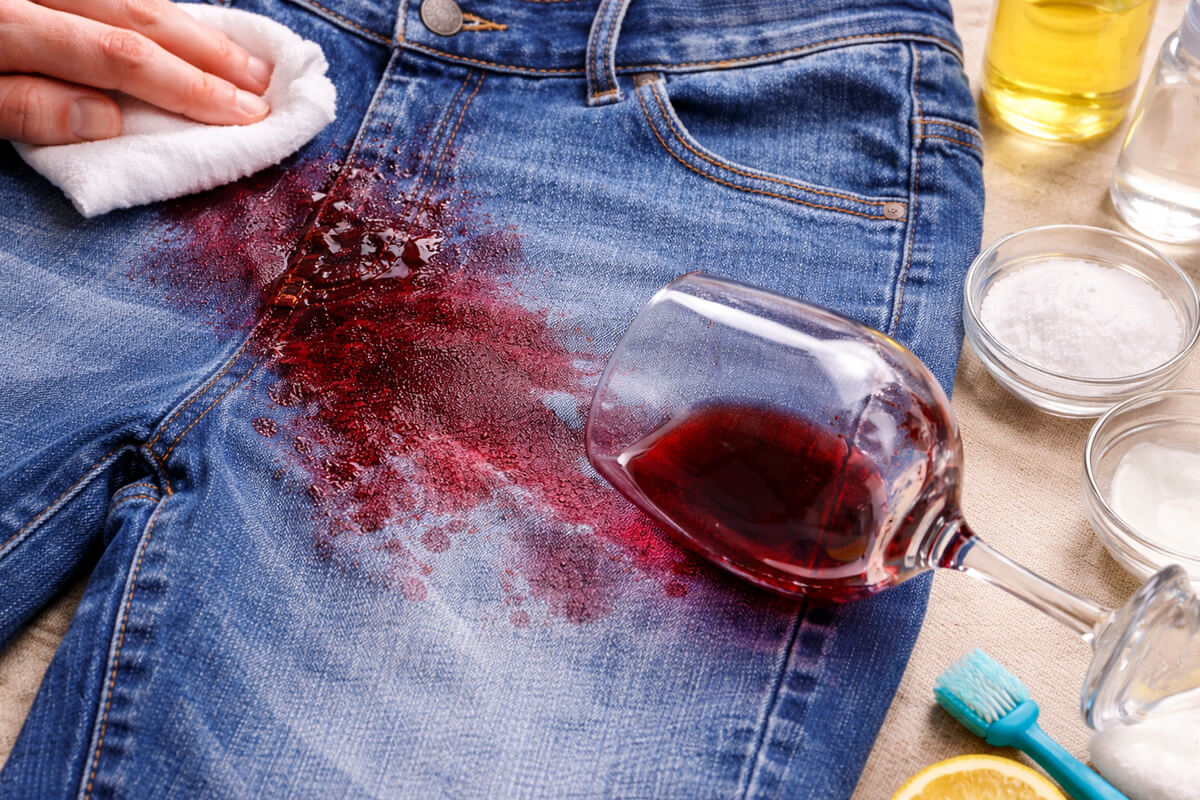
Many people unintentionally damage their jeans while trying to remove red wine stains. Understanding these mistakes helps prevent irreversible fading.
- Using hot or warm water that strips indigo dye
- Applying bleach or oxygen-based whiteners
- Scrubbing with stiff brushes or abrasive sponges
- Using alcohol or acetone directly on denim
- Machine washing before the stain is fully removed
Each of these actions removes dye faster than wine pigment, resulting in visible color loss.
Differences between denim types and how they affect cleaning
Not all jeans react the same way to stain removal. Denim type plays a significant role in both stain visibility and fading risk.
- Raw denim contains more surface dye and fades very easily
- Dark wash jeans show fading more clearly than stains
- Stretch denim includes synthetic fibers that retain color differently
- Light wash jeans hide fading better but show stains clearly
Knowing your denim type helps you choose the gentlest effective method.
Supplies that are safe for color-preserving stain removal
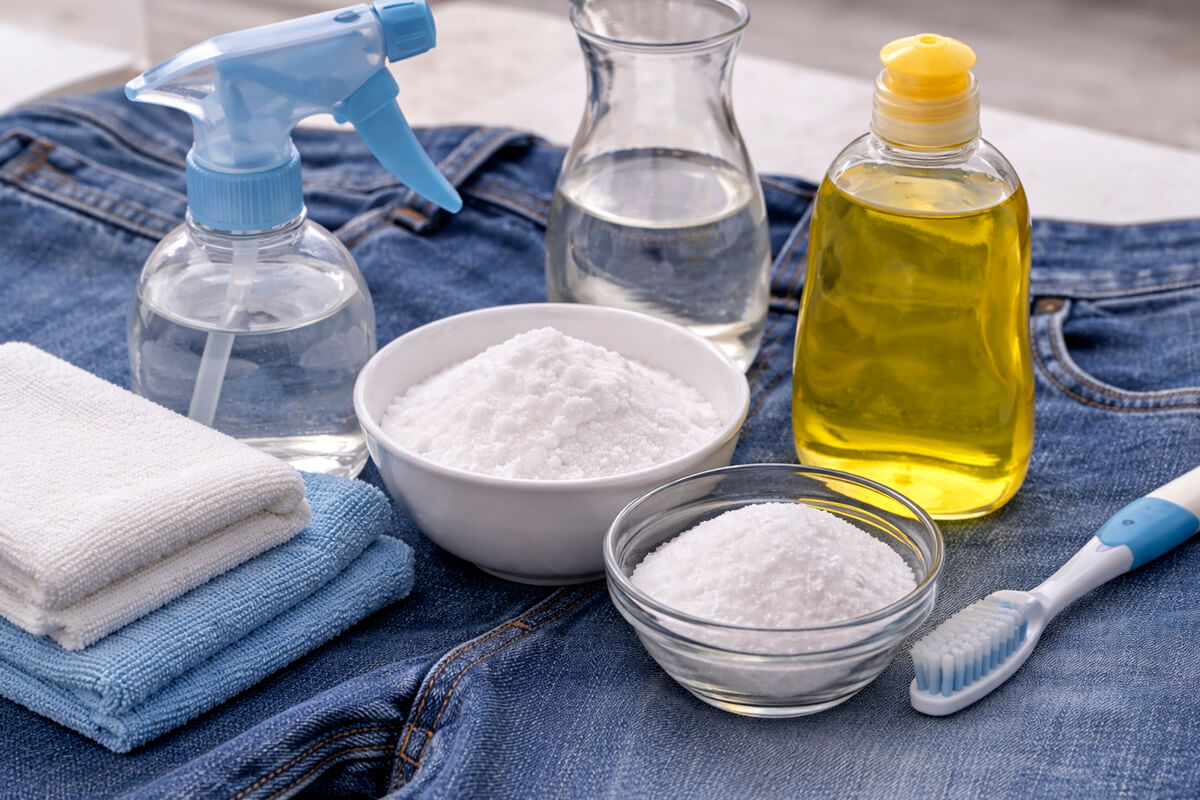
Using mild, color-safe supplies is essential for removing red wine stains without fading jeans.
- Cold water only
- Mild liquid dish soap without dyes
- White vinegar in small amounts
- Baking soda for absorption
- Salt for fresh stains
- Soft microfiber cloths
- Soft toothbrush for gentle agitation
All treatments should use minimal moisture and light pressure.
Immediate actions after spilling red wine on jeans
Quick action dramatically reduces stain severity and fading risk. The goal is to remove as much wine as possible before it bonds to the fibers.
Blotting excess wine correctly
Blot the stain immediately with a clean cloth or paper towel. Apply gentle pressure straight down and lift, rather than rubbing. Replace the cloth frequently to avoid re-depositing wine back onto the fabric.
Rinsing from the back with cold water
Cold water helps flush wine out of the cotton fibers without disturbing indigo dye.
- Turn the jeans inside out
- Rinse the stained area from the back under cold running water
- Allow the water to push wine pigment out of the fabric
This step alone can remove a large portion of fresh stains.
Using salt to absorb fresh red wine stains
Salt is a non-reactive absorbent that pulls liquid and pigment out of fabric. It is especially useful when immediate washing is not possible.
Salt treatment method
- Keep the stain damp with cold water
- Cover the area completely with salt
- Allow it to sit for 10 to 20 minutes
- Brush off the salt and rinse with cold water
This method is safe for denim and does not affect color.
Removing red wine stains with dish soap and vinegar
Dish soap dissolves organic compounds while vinegar breaks down tannins. When used in small amounts, this combination removes wine pigment without stripping dye.
Gentle cleaning process
- Mix cold water with a few drops of dish soap
- Add a small amount of white vinegar
- Apply gently with a cloth
- Blot without scrubbing
This method works well for fresh and lightly dried stains.
Baking soda for controlled pigment lifting
Baking soda absorbs pigment rather than dissolving dye, making it useful for stubborn stains.
Baking soda paste technique
- Mix baking soda with cold water to form a paste
- Apply lightly to the stain
- Allow it to partially dry
- Rinse gently with cold water
This technique minimizes fading while lifting residual pigment.
Dealing with dried red wine stains on jeans
Dried stains require patience and multiple gentle treatments. Rehydrating the stain with cold water allows cleaning agents to penetrate without damaging dye.
Apply dish soap or vinegar solution in stages, blotting and rinsing between applications. Avoid increasing concentration or pressure, as this increases fading risk.
Products and actions that should always be avoided
Certain methods almost guarantee fading or fabric damage.
- Bleach or chlorine-based cleaners
- Hot water or steam
- Hydrogen peroxide on dark denim
- Machine drying before stain removal
Air drying and cold treatments preserve color best.
Comparison of red wine stain removal methods for jeans
The table below compares common methods based on effectiveness and color safety.
| Method | Best Use | Color Safety | Effectiveness |
|---|---|---|---|
| Cold water rinse | Fresh stains | Very high | High |
| Salt absorption | Fresh spills | Very high | Medium to high |
| Dish soap and vinegar | Fresh and light dried stains | High | High |
| Baking soda paste | Stubborn pigment | High | Medium |
Washing jeans safely after stain removal
Jeans should only be washed once the stain is no longer visible. Washing sets any remaining pigment permanently.
- Turn jeans inside out
- Wash using cold water
- Select a gentle cycle
- Avoid fabric softeners
Air drying helps prevent heat-related fading.
Preventing red wine stains on jeans
While spills cannot always be avoided, certain habits reduce risk.
- Avoid resting wine glasses on laps
- Wear darker denim during social events
- Act immediately after spills
- Carry absorbent napkins or cloths
By understanding how red wine interacts with denim and using gentle, color-safe methods, red wine stains can be removed from jeans without fading. Controlled moisture, mild cleaners and patience preserve both the appearance and longevity of your denim.