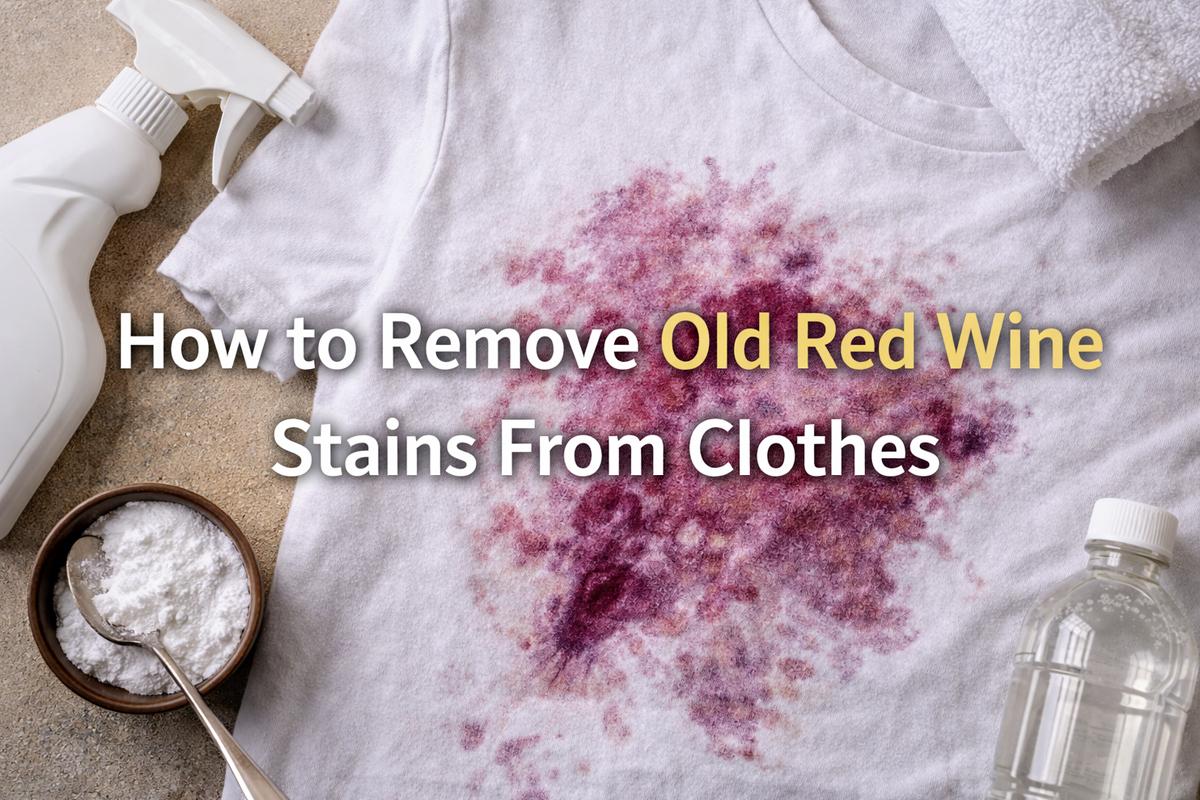
Old red wine stains on clothes are considered some of the most stubborn textile stains because red wine behaves like a natural dye. Once the liquid dries, the pigments, tannins and acids penetrate deeply into fabric fibers and chemically bind to them. Over time these compounds oxidize, darken and become resistant to ordinary washing. If the garment has been washed or dried with heat, the stain often becomes heat-set, making removal even more challenging. This in-depth guide explains in detail how old red wine stains form, how different fabrics react to them, and how to remove these stains step by step without damaging clothing.
Why old red wine stains behave like permanent dye
Red wine contains anthocyanins, which are natural plant pigments also used in food coloring and textile dyeing. When wine spills on fabric, these pigments dissolve in the liquid and immediately begin bonding with fibers. As the liquid evaporates, pigment concentration increases, leaving a darker residue behind.
Exposure to oxygen causes oxidation, a chemical process that darkens the stain and strengthens the bond between pigment and fiber. Over time, the stain becomes less water-soluble and more chemically stable. This is why old red wine stains often resist normal detergent and require targeted treatment to break these bonds.
How heat makes old red wine stains more difficult to remove
Heat is one of the biggest enemies when dealing with red wine stains. Washing clothes in warm or hot water before the stain is removed causes pigments to set permanently. Heat changes the structure of both the stain and the fabric fibers, locking the color in place.
Using a dryer intensifies this effect. High temperatures drive pigments deeper into fibers and make them resistant to future treatments. Even ironing a stained area can permanently fix the stain. For this reason, cold water and air drying are essential until the stain is completely removed.
How different fabrics respond to old red wine stains
Fabric type plays a critical role in how old red wine stains should be treated. Each material absorbs wine differently and reacts uniquely to cleaning agents.
- Cotton fibers are highly absorbent and hold wine deep inside but tolerate repeated treatments
- Linen stains easily and weakens when wet, requiring gentle handling
- Denim has thick fibers that trap pigment and require longer treatment
- Synthetic fabrics resist absorption but can hold dye-like stains
- Silk and wool are protein-based fibers that are sensitive to water and chemicals
Understanding fabric behavior helps prevent shrinkage, fading or fiber damage during stain removal.
Common mistakes that permanently set red wine stains
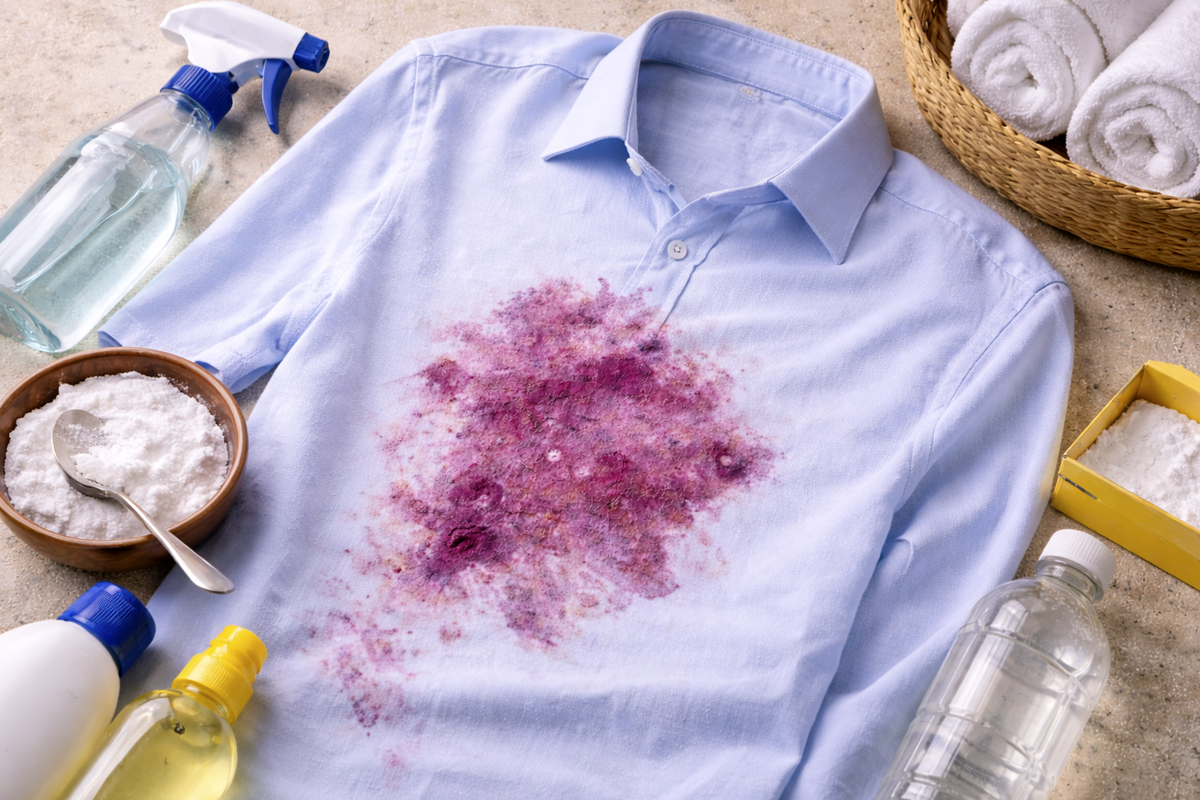
Many red wine stains become permanent because of well-intentioned but incorrect actions. Avoiding these mistakes is crucial for successful stain removal.
- Applying hot water to untreated stains
- Drying clothes before the stain is fully removed
- Using bleach on colored fabrics
- Scrubbing aggressively and damaging fibers
- Ignoring care labels and fabric limitations
Old stains require controlled, gradual treatment rather than forceful cleaning.
Preparing clothes for deep stain treatment
Preparation is essential before applying any stain removal method. Proper preparation helps loosen dried residue and improves the effectiveness of cleaning solutions.
Start by inspecting the stain under good lighting to determine its size and intensity. Gently brush off any surface residue or dried particles. If possible, rinse the stained area from the back of the fabric using cold water. This helps push pigment outward instead of deeper into the fibers.
Rehydrating old red wine stains with cold water
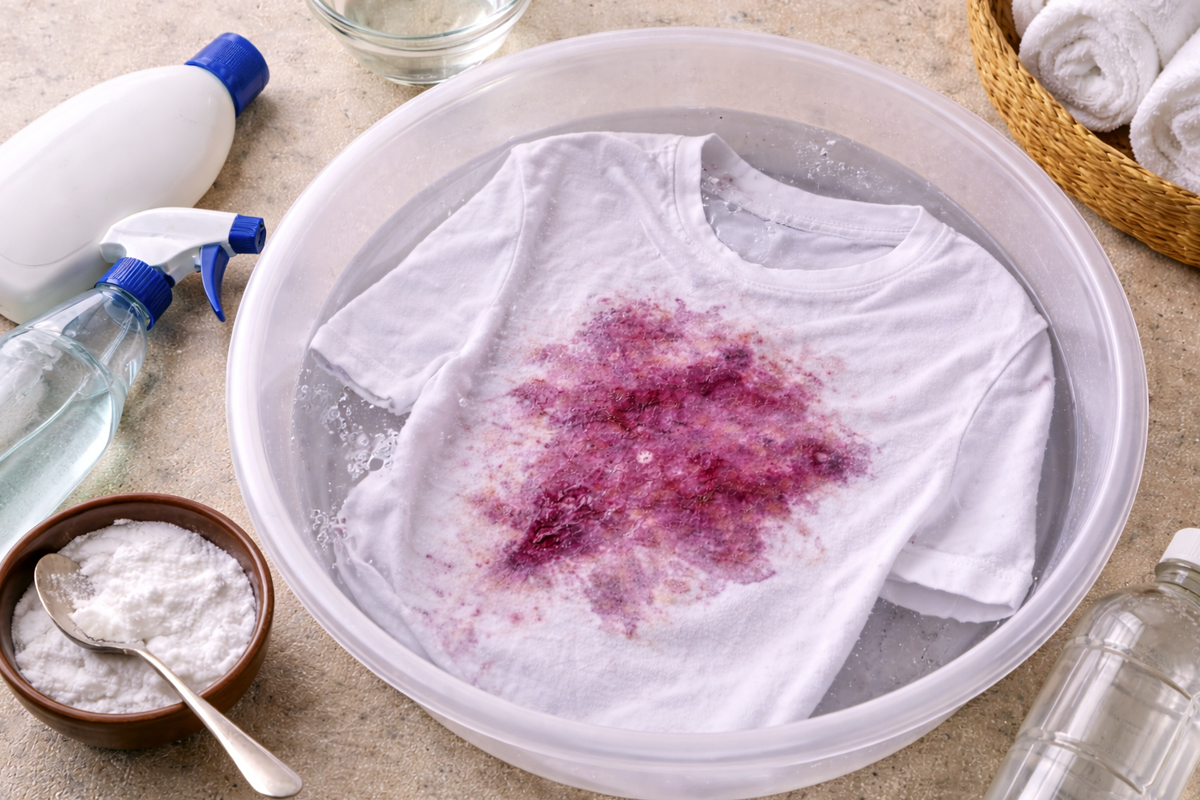
Old stains must be rehydrated before they can be removed. Cold water reactivates dried pigments without setting them.
Cold water rehydration method
- Submerge the stained area in cold water
- Allow it to soak for 30 to 60 minutes
- Gently rub the fabric together under water
- Remove and blot excess moisture
This step often lightens the stain and prepares it for chemical breakdown.
Breaking down tannins with vinegar and dish soap
White vinegar is acidic and effective at dissolving tannins, while dish soap breaks down oily components of red wine. Together they form one of the most effective treatments for old stains.
Vinegar and dish soap treatment
- Mix equal parts white vinegar and cold water
- Add a few drops of liquid dish soap
- Apply the solution directly to the stain
- Let it sit for 20 to 30 minutes
- Rinse thoroughly with cold water
This method works well for cotton, linen and many synthetic fabrics and can be repeated if necessary.
Using baking soda to lift deeply set pigment
Baking soda acts as a mild abrasive and absorbent that helps lift pigment from fabric fibers. It also neutralizes acidic residue left by wine.
Baking soda paste method
- Mix baking soda with cold water to form a thick paste
- Apply a generous layer over the stain
- Allow the paste to dry completely
- Brush off residue and rinse with cold water
This method is especially useful for lighter fabrics and stains that remain after initial treatment.
Hydrogen peroxide for severe old red wine stains
Hydrogen peroxide removes stains through oxidation and is particularly effective on white or very light-colored clothing. It should be used carefully because it can bleach fabric.
Safe hydrogen peroxide application
- Test on a hidden seam first
- Mix hydrogen peroxide with a small amount of dish soap
- Apply directly to the stain
- Let it sit for 10 to 15 minutes
- Rinse thoroughly with cold water
This method should never be used on dark or brightly colored fabrics.
Removing old red wine stains from delicate fabrics
Delicate fabrics such as silk and wool require extra caution because they weaken when wet and can be damaged by agitation.
Gentle treatment for silk and wool
- Use cold water only
- Apply diluted vinegar gently
- Blot instead of rubbing
- Avoid prolonged soaking
For expensive or sentimental garments, professional cleaning may be the safest option.
Dealing with stains that were washed and dried before treatment
Heat-set stains are the most difficult to remove and often require multiple treatment cycles. Rehydration, vinegar solutions and baking soda may need to be applied repeatedly over several days.
Allow the fabric to dry between treatments so progress can be evaluated. Never return the garment to the dryer until the stain is completely gone.
Comparison of old red wine stain removal methods
The table below compares common methods based on fabric safety and effectiveness.
| Method | Best Use | Fabric Safety | Effectiveness |
|---|---|---|---|
| Cold water rehydration | Initial stain loosening | All fabrics | Medium |
| Vinegar and dish soap | Most old stains | High | Very high |
| Baking soda paste | Residual discoloration | High | Medium to high |
| Hydrogen peroxide | White clothes only | Medium | Very high |
Proper washing after stain removal
Once the stain is significantly faded or gone, wash the garment according to the care label using cold water and mild detergent. Inspect the fabric carefully before drying. If any discoloration remains, repeat treatment before washing again.
Air drying is strongly recommended until you are certain the stain is completely removed.
Preventing red wine stains on clothes in the future
While accidents happen, simple habits can reduce the risk of permanent stains.
- Blot wine spills immediately without rubbing
- Rinse stained fabric with cold water as soon as possible
- Avoid applying heat to stained garments
- Carry stain-removal wipes when dining out
- Wash stained clothes separately until clean
Old red wine stains may seem impossible, but with patience, correct techniques and an understanding of fabric behavior, even deeply set stains can often be removed. Careful preparation, repeated gentle treatments and strict avoidance of heat provide the best chance of restoring clothes to their original condition.