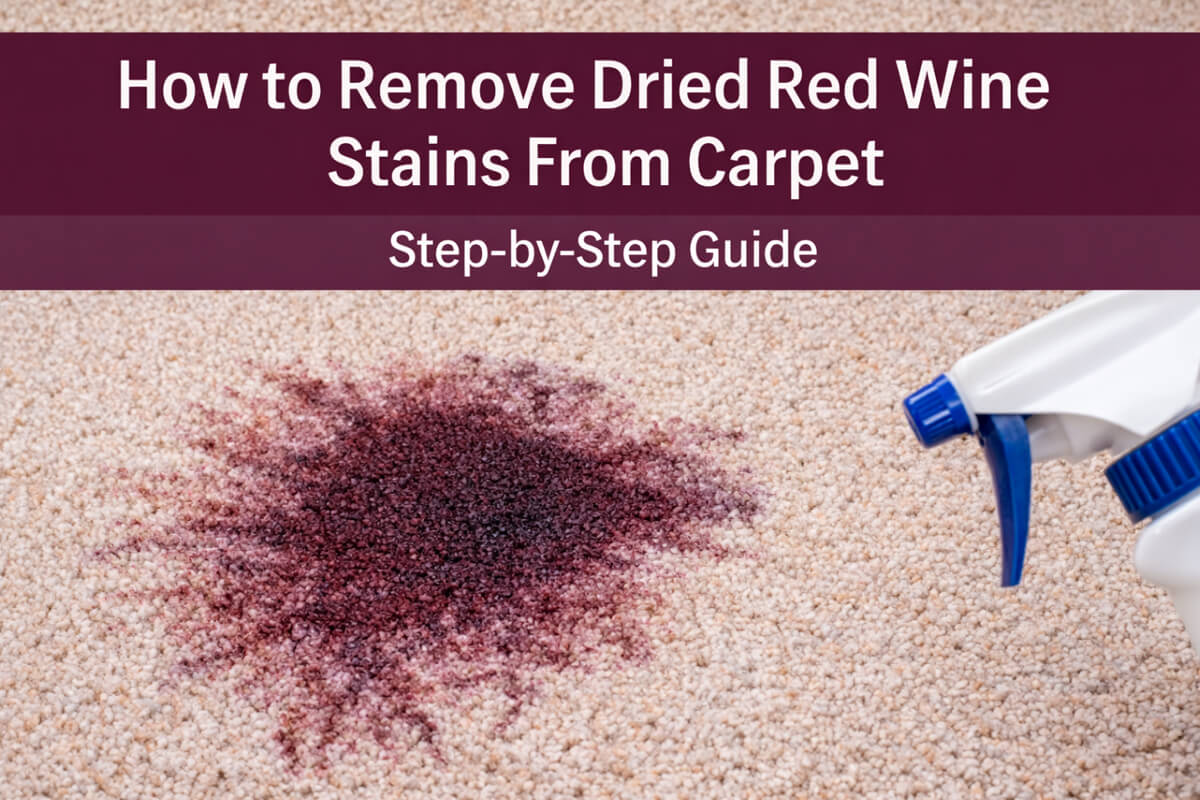
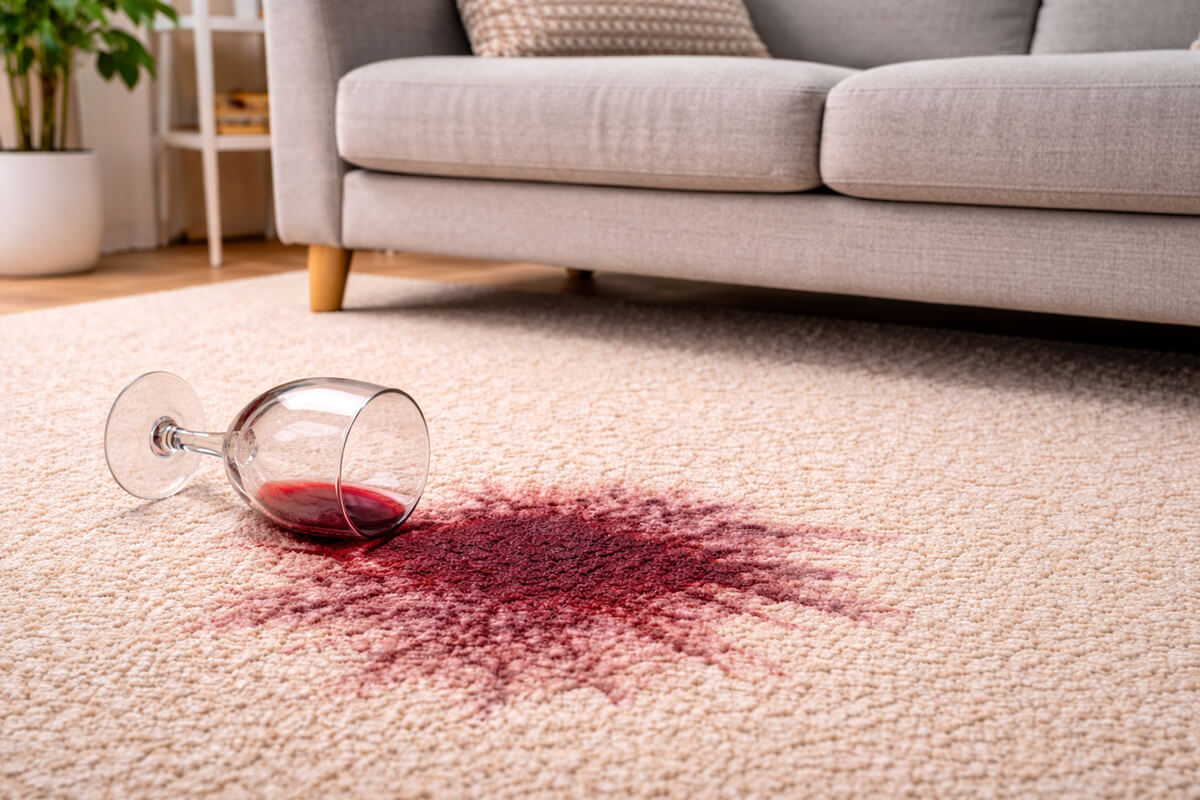
Dried red wine stains on carpet are considered one of the most stubborn household stains because red wine acts as a natural dye. Once the liquid dries, the pigments bind tightly to carpet fibers and continue to darken through oxidation. Unlike fresh spills, dried stains cannot be removed with simple blotting or water alone. They require controlled rehydration, the correct chemical balance and patience. This in-depth guide explains in detail how dried red wine stains behave inside carpet fibers, how different carpet materials react, and how to remove stains safely without damaging texture, color or backing.
Why dried red wine stains bond so strongly to carpet fibers
Red wine contains anthocyanins, powerful pigments responsible for its deep color. These compounds are designed by nature to bond to plant fibers, which makes them especially effective at staining textiles. When red wine spills onto carpet, the liquid penetrates the pile and reaches the fiber core within seconds.
As the wine dries, water evaporates but pigments remain. Oxygen exposure triggers oxidation, causing the stain to darken and chemically bond to the fiber structure. Carpet fibers, whether synthetic or natural, have microscopic grooves that trap pigment particles. Once these particles settle and dry, they resist removal unless the bonds are carefully broken down.
How carpet construction affects dried wine stains
Carpet is not a single layer. It consists of surface fibers, a backing material and often a thick padding underneath. Red wine spreads both vertically and horizontally, contaminating more area than what is visible on the surface.
When the stain dries, the surface may appear stable, but pigment remains embedded deep inside the pile and backing. Any later introduction of moisture can cause wicking, where pigment migrates back to the surface, making the stain appear again even after cleaning.
- Dense pile traps more pigment at the surface
- Loose pile allows wine to travel deeper
- Thick padding increases wicking risk
- High traffic areas spread dried residue further
This layered structure explains why dried stains often return if cleaning is incomplete.
Environmental factors that worsen dried red wine stains
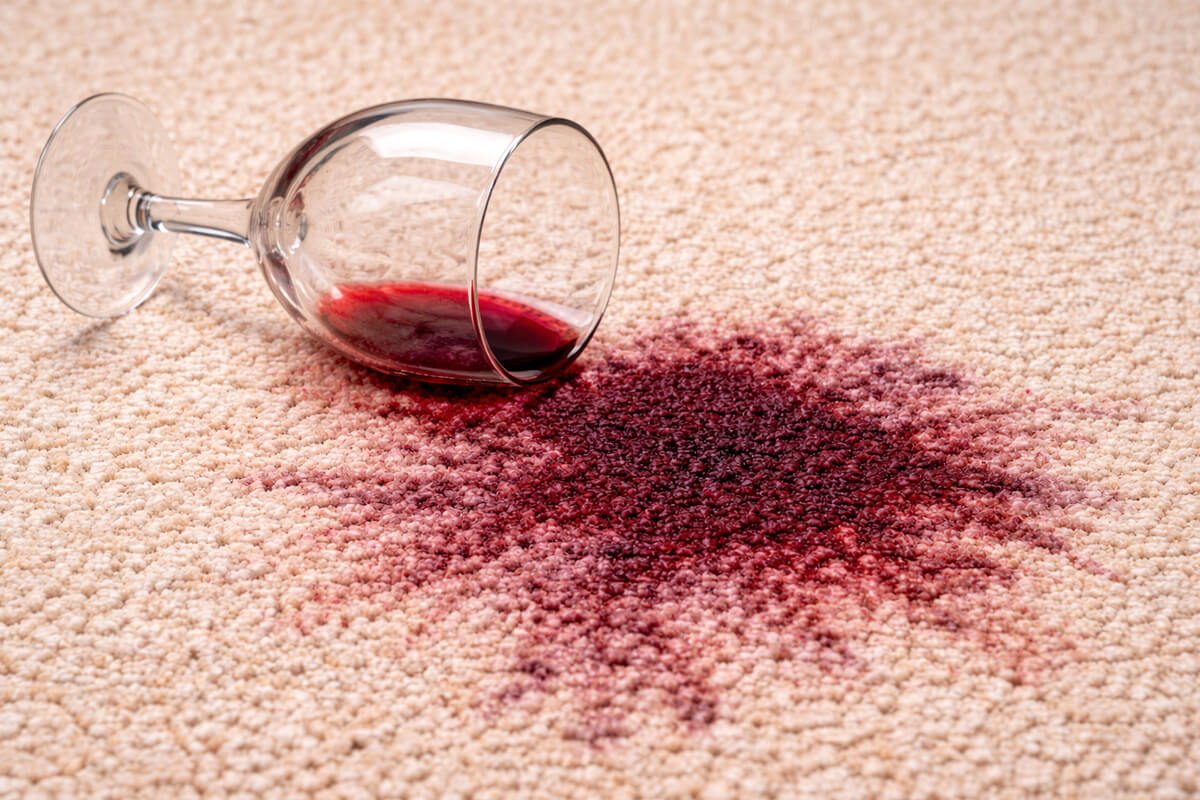
Several environmental conditions intensify dried wine stains over time. Heat accelerates oxidation, foot traffic compresses fibers and humidity partially rehydrates residue.
Even without visible moisture, humidity in the air can activate dried wine residue, causing pigment movement and odor development. Dirt particles also attach to sticky wine compounds, making stains darker and rougher in texture.
- Warm rooms increase oxidation speed
- Foot traffic pushes pigment deeper
- Humidity reactivates dried residue
- Dust bonds to sticky wine compounds
Cleaning mistakes that permanently set dried wine stains
Many stains become permanent because of incorrect cleaning attempts. These mistakes alter the fiber chemistry or damage the carpet structure.
- Using hot water which sets tannins permanently
- Scrubbing aggressively and damaging fiber tips
- Over-wetting carpet and soaking padding
- Using bleach that removes carpet dye unevenly
- Failing to extract moisture during drying
Successful stain removal depends on controlled moisture and gentle blotting rather than force.
Preparing the carpet for dried wine stain removal
Preparation determines the success of stain removal. Before applying any solution, the carpet must be free of loose debris and fibers must be relaxed.
Vacuum the stained area thoroughly to remove dust and particles that could interfere with cleaning. Avoid steam or heat during preparation, as this can further set the stain.
Next, lightly brush the carpet pile with a soft brush to lift flattened fibers. This improves solution penetration and allows better contact with the stained areas.
Controlled rehydration of dried red wine stains
Dried stains must be softened before pigment removal can begin. Rehydration loosens hardened residue and allows cleaning agents to reach pigment bonds.
Lightly mist the stained area with cool or lukewarm water. The carpet should feel slightly damp to the touch, not wet. Allow the moisture to sit for several minutes so fibers relax and pigment begins to soften.
This step prevents aggressive chemical use and reduces fiber damage.
Breaking down wine pigments using dish soap and vinegar
Dish soap and vinegar work together to break different components of dried wine stains. Dish soap dissolves oils and residue, while vinegar neutralizes tannins and acidic pigments.
Dish soap and vinegar treatment process
- Mix one cup of lukewarm water with one tablespoon of dish soap
- Add one tablespoon of white vinegar
- Apply gently using a clean cloth
- Blot the stain without rubbing
- Allow the solution to work for 10 minutes
- Blot again with a dry towel
This method gradually lifts pigment from fiber grooves without damaging most carpet types.
Using baking soda to lift remaining pigment and odor
Baking soda absorbs moisture and pulls pigment toward the surface while also neutralizing odor. It is especially effective after liquid treatments.
Baking soda application method
- Ensure the carpet remains slightly damp
- Cover the stain generously with baking soda
- Work it gently into the pile
- Allow it to sit for several hours or overnight
- Vacuum slowly and thoroughly
Longer dwell time improves pigment absorption and odor reduction.
Hydrogen peroxide for stubborn dried wine stains
Hydrogen peroxide breaks down organic pigments through oxidation. It is highly effective on light-colored carpets but must be used cautiously.
Safe peroxide usage
- Patch test in an inconspicuous area
- Mix hydrogen peroxide with a small amount of dish soap
- Apply lightly to the stain
- Allow bubbling action to lift pigment
- Blot and rinse lightly
This method should never be used on dark or color-sensitive carpets.
Special considerations for wool and natural fiber carpets
Wool and natural fiber carpets are sensitive to pH changes and excess moisture. Aggressive chemicals can damage fibers permanently.
For these carpets, use minimal moisture, diluted vinegar solutions and gentle blotting. Avoid peroxide and extended soaking. Baking soda may be used carefully for odor control only.
Preventing stain return caused by wicking
Wicking occurs when pigment trapped deep in the carpet migrates back to the surface during drying. This causes stains to reappear.
To prevent this, blot until the area is nearly dry and place a clean towel with weight over the spot while drying. This draws remaining pigment upward into the towel rather than back into the carpet.
Comparison of dried red wine stain removal methods
The table below compares common techniques based on effectiveness and carpet safety.
| Method | Best Use | Carpet Safety | Effectiveness |
|---|---|---|---|
| Dish soap and vinegar | Most dried stains | Most carpets | Very high |
| Baking soda | Residual pigment and odor | All carpets | High |
| Hydrogen peroxide | Light carpet stubborn stains | Light carpets only | Very high |
| Cold water rehydration | Initial softening | All carpets | Medium |
Drying the carpet correctly after stain removal
Proper drying is essential to prevent odor, mold and stain recurrence.
- Increase airflow with fans
- Open windows if conditions allow
- Avoid walking on the area until fully dry
- Never apply direct heat
Complete drying may take several hours depending on carpet thickness and humidity.
Preventing future red wine stains on carpet
While accidents happen, prevention reduces damage and simplifies cleanup.
- Use rugs in dining and entertaining areas
- Blot spills immediately even if cleaning is delayed
- Avoid rubbing wine spills
- Apply carpet protectors periodically
- Vacuum carpets regularly
Dried red wine stains on carpet are challenging but not permanent. By understanding pigment behavior, carpet structure and correct cleaning chemistry, stains can be removed safely and effectively. Patience, controlled moisture and proper drying ensure long-term results without carpet damage.