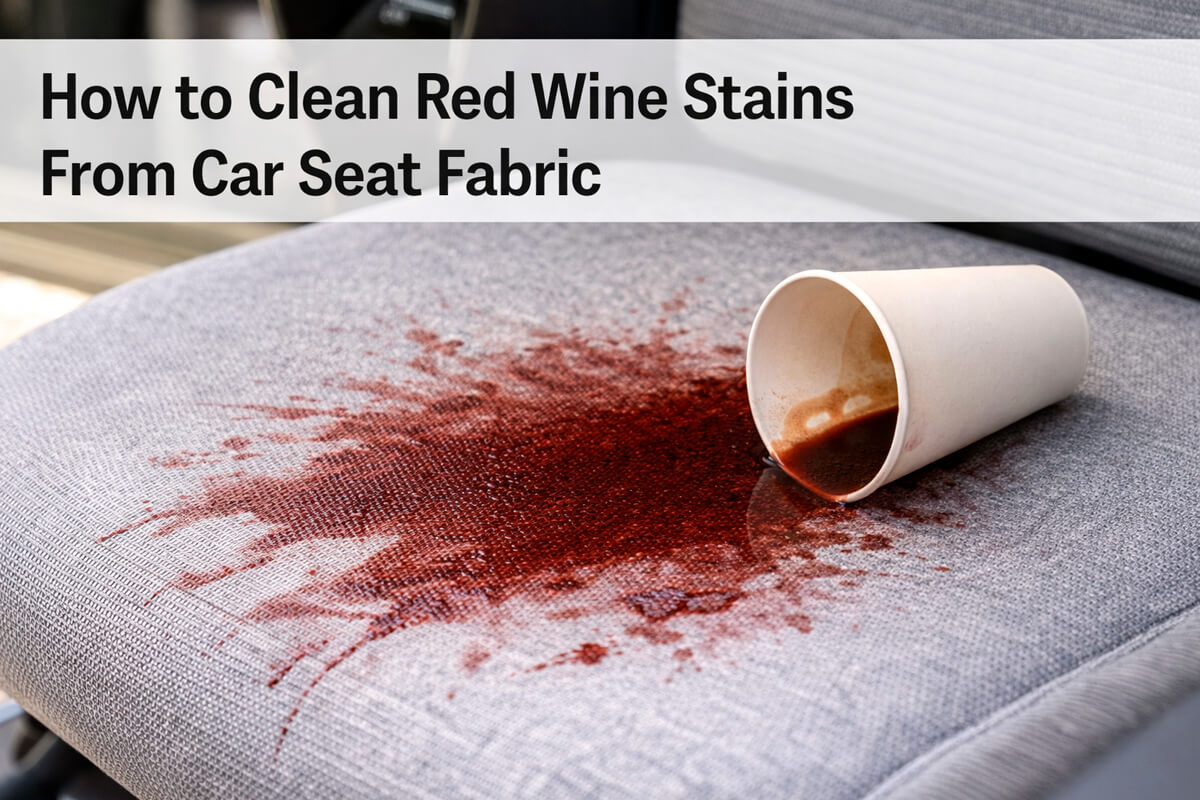
Red wine stains on car seat fabric are especially problematic because they combine intense natural pigments with the unique conditions of a vehicle interior. Red wine contains anthocyanins, tannins and organic acids that act like dyes, bonding rapidly with textile fibers. Inside a car, high temperatures, constant pressure from sitting and limited airflow accelerate absorption and oxidation. Fabric car seats also contain underlying foam padding that absorbs liquid and traps residue, making stains and odors return if cleaning is incomplete. This in-depth guide explains in detail how red wine stains behave on car seat fabric, why they are so persistent, and how to clean both fresh and dried stains safely without damaging upholstery.
Why red wine stains are extremely difficult to remove in cars
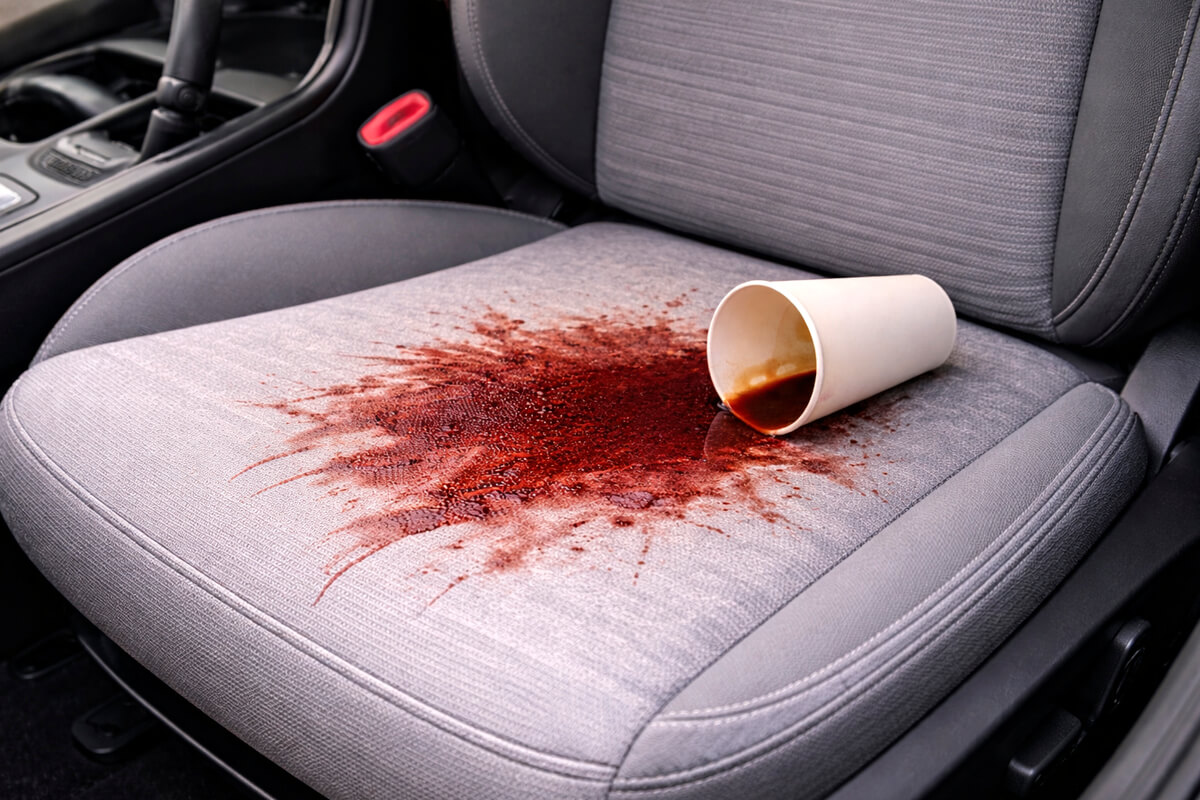
Car interiors create an environment that amplifies staining. When red wine is spilled, the liquid spreads quickly across the seat surface and then moves downward into the fabric weave. Heat inside the car causes fibers to expand, allowing pigments to penetrate more deeply. As the seat cools, fibers contract and trap the stain inside.
Unlike household furniture, car seats are exposed to constant friction. Each time someone sits down, pressure pushes the stain deeper into the fabric and padding. Limited ventilation slows evaporation, keeping wine in contact with fibers longer. These factors together make red wine stains darker, larger and more difficult to extract than similar spills on couches or carpets.
How red wine pigments bond with car seat fabric
Red wine pigments are water-soluble when fresh, but they become increasingly insoluble as they oxidize. Anthocyanins in red wine bond strongly with synthetic fibers commonly used in car seats, such as polyester and nylon. Tannins reinforce this bond, behaving similarly to fabric dye.
Once wine reaches the foam padding beneath the fabric, it spreads laterally and remains hidden. Even if the surface stain is removed, residue in the padding can wick back up when moisture is reintroduced. This is why stains often reappear after cleaning or during humid weather.
Changes that occur as red wine dries inside a car seat
Fresh red wine stains appear bright red or purple and are easier to dilute and lift. As the wine dries, oxidation darkens the pigment, turning it deep burgundy or brown. Oils thicken and adhere more strongly to fibers, while sugars form sticky layers that trap dirt and bacteria.
Heat cycling inside the car further accelerates these changes. During the day, high temperatures intensify oxidation. At night, cooling causes fibers to contract and lock pigments in place. Over time, the stain becomes harder, darker and more resistant to basic cleaning methods.
Common cleaning mistakes that permanently set red wine stains
Many well-intentioned cleaning attempts fail because of actions that worsen the stain or damage upholstery.
- Using hot water which permanently sets wine pigments
- Scrubbing aggressively and spreading pigment outward
- Soaking the seat and saturating foam padding
- Using bleach which reacts with wine and causes discoloration
- Covering odors instead of neutralizing residue
Successful stain removal requires patience, controlled moisture and gradual pigment breakdown.
Identifying car seat fabric types before cleaning
Car seats use different materials that respond differently to cleaning agents. Identifying the upholstery type helps prevent fading, stiffness or damage.
- Polyester blends are durable and tolerate mild water-based cleaners
- Nylon fabrics absorb quickly but release stains with proper treatment
- Velour seats are highly absorbent and require minimal liquid
- Perforated fabrics allow wine to reach padding rapidly
Checking the vehicle owner’s manual or manufacturer recommendations is always advised before cleaning.
Supplies required for safe red wine stain removal
Effective cleaning depends on having the right tools and using them correctly. Most red wine stains can be treated with household supplies.
- Cold or lukewarm water for dilution
- Mild liquid dish soap to break down oils
- White vinegar to dissolve tannins
- Baking soda for absorption and deodorizing
- Hydrogen peroxide for light-colored seats
- Microfiber cloths for blotting
- Soft brush or toothbrush for gentle agitation
- Spray bottle for controlled application
- Vacuum cleaner for residue removal
Minimal liquid use is critical to protect seat padding.
Immediate response to fresh red wine spills
Fresh stains offer the best chance for complete removal. Quick action prevents pigments from bonding deeply.
Blotting wine without spreading it
Blot the spill immediately using clean, absorbent cloths. Apply steady pressure without rubbing. Work from the outer edges toward the center to prevent spreading. Replace cloths frequently until no more wine transfers.
Diluting pigment with cold water
Cold water reduces pigment concentration without setting the stain.
- Dampen a cloth lightly with cold water
- Blot gently over the stained area
- Immediately blot again with a dry cloth
This step prepares the stain for deeper cleaning.
Cleaning fresh red wine stains using dish soap
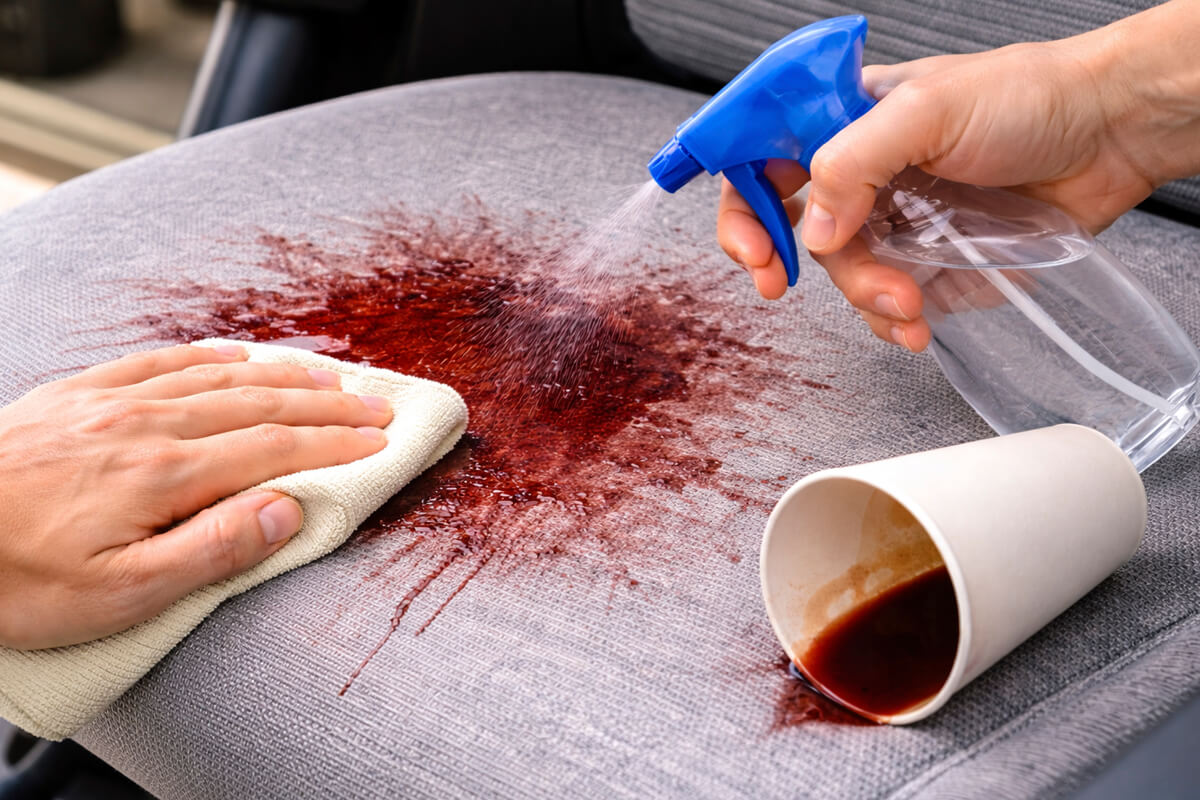
Dish soap is effective because it breaks down oils and helps lift pigments without harming upholstery.
Dish soap cleaning process
- Mix one cup of lukewarm water with a few drops of dish soap
- Apply sparingly using a cloth or spray bottle
- Blot gently without scrubbing
- Allow the solution to sit briefly
- Blot again with a dry cloth
This method works best for fresh or lightly dried stains.
Removing dried red wine stains from car seat fabric
Dried stains require rehydration and chemical breakdown. Pigments that have bonded to fibers must be loosened gradually.
Vinegar solution for dried wine stains
White vinegar dissolves tannins and helps release dark pigments.
- Mix equal parts white vinegar and water
- Apply lightly to the stain
- Allow it to sit for 5 to 10 minutes
- Blot thoroughly with a microfiber cloth
Vinegar odor fades naturally during drying.
Using baking soda to lift pigment and eliminate odor
Baking soda absorbs moisture, pigment and odor trapped in fabric and padding.
Baking soda application method
- Ensure the area is slightly damp but not wet
- Sprinkle baking soda generously over the stain
- Allow it to sit for several hours
- Vacuum thoroughly once dry
This step is especially important for preventing lingering wine smells.
Hydrogen peroxide for severe red wine stains
Hydrogen peroxide breaks down organic pigments through oxidation and is effective for light-colored seats.
Safe peroxide usage steps
- Test in an inconspicuous area first
- Dilute peroxide with equal water
- Apply lightly to the stain
- Allow to dry completely
This method should not be used on dark upholstery.
Handling red wine with sugar or fruit additives
Some red wines contain added sugars or fruit extracts. These substances create sticky residue that attracts dirt and bacteria.
Dish soap dissolves sugars, vinegar neutralizes pigments and baking soda absorbs remaining moisture. Repeated gentle treatments are more effective than aggressive scrubbing.
Comparison of red wine stain removal methods for car seats
The table below compares common cleaning methods by effectiveness and safety.
| Method | Best For | Fabric Safety | Effectiveness |
|---|---|---|---|
| Cold water blotting | Fresh spills | All fabrics | High |
| Dish soap solution | Fresh to moderate stains | Most fabrics | High |
| Vinegar solution | Dried wine stains | Most fabrics | Very high |
| Baking soda | Odor and deep residue | All fabrics | Medium to high |
| Hydrogen peroxide | Stubborn stains on light seats | Light fabrics only | Very high |
Drying car seats correctly after cleaning
Proper drying prevents odor, mold and water marks.
- Open doors or windows to improve airflow
- Use fans to speed evaporation
- Avoid sitting on the seat until fully dry
Drying may take several hours depending on humidity.
Preventing red wine stains in car interiors
Preventive habits greatly reduce the risk of permanent stains.
- Transport wine in sealed containers
- Avoid open glasses inside the car
- Use seat covers when transporting beverages
- Clean spills immediately
- Apply fabric protectant sprays if appropriate
By understanding how red wine stains behave on car seat fabric and using controlled, fabric-safe methods, even difficult stains can be removed successfully. Patience, minimal moisture and thorough drying are the keys to preserving a clean, odor-free car interior.