Red wine stains on silk clothes are among the most difficult fabric accidents to handle successfully. Silk is a luxury natural fiber known for its smooth texture, elegant drape and sensitivity to moisture, heat and chemicals. Red wine contains powerful pigments, organic acids and tannins that behave like natural dyes, bonding rapidly with silk proteins. If the stain is treated incorrectly, it can spread, set permanently or weaken the fabric. This in-depth guide explains in detail how red wine stains interact with silk, why they are so challenging to remove, and how to clean both fresh and dried stains while preserving the integrity, color and softness of silk garments.

Why silk is extremely vulnerable to red wine stains
Silk is a protein-based fiber composed primarily of fibroin, which reacts differently to liquids than plant-based or synthetic fibers. Unlike cotton, silk fibers are smooth and continuous, allowing liquids to spread quickly across the surface. When red wine contacts silk, it does not absorb evenly but travels along the fibers, creating irregular edges and rapid color transfer.
Red wine pigments attach easily to silk proteins due to chemical attraction. The acidic nature of wine slightly weakens silk fibers, making them more susceptible to damage during cleaning. Heat, friction or alkaline cleaners can permanently alter the fiber structure, locking in stains and dulling the fabric’s natural sheen.
How red wine stains evolve as they dry on silk
Fresh red wine stains appear bright red or purple. As the liquid evaporates, oxidation occurs, darkening the stain to burgundy or brown. This chemical reaction strengthens the bond between pigments and silk fibers. The longer the stain remains untreated, the more difficult it becomes to remove.
Dried stains often create secondary problems such as water rings or halos during cleaning. When moisture is reintroduced, pigments trapped deeper in the fibers can wick outward, making the stain appear larger. This is why silk stain removal must be gradual and controlled, allowing the fabric to rest between treatments.
Common cleaning errors that permanently damage silk
Silk garments are frequently ruined not by the stain itself, but by aggressive or improper cleaning attempts. Avoiding these mistakes is essential.
- Rubbing the stain and breaking delicate fibers
- Using hot water which permanently sets wine pigments
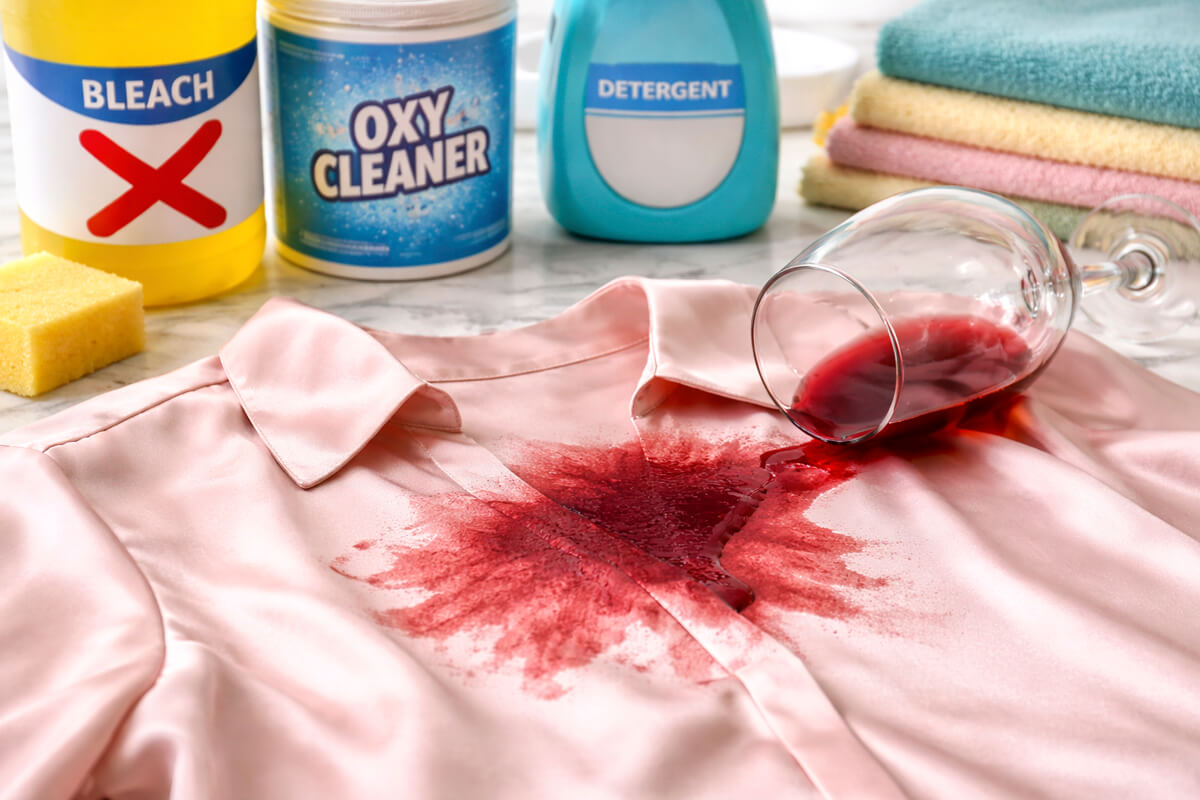
- Applying bleach or oxygen-based cleaners
- Using alkaline detergents that degrade silk protein
- Soaking silk for extended periods
Silk requires patience, gentle blotting and low-impact solutions.
Understanding different types of silk garments
Silk garments vary widely in weave, thickness and finish. Each type responds differently to stains and cleaning methods.
- Silk charmeuse has a glossy surface and shows stains clearly
- Silk chiffon is lightweight and allows stains to spread rapidly
- Silk satin highlights water marks and uneven drying
- Silk blends may tolerate slightly more moisture
Structured garments such as blouses with lining or tailored dresses may trap stains between layers, increasing cleaning complexity.
Supplies required for safe silk stain removal
Only gentle, controlled supplies should be used when treating silk. Using the correct tools minimizes fiber stress and color loss.
- Cold distilled water to avoid mineral residue
- White vinegar for acid neutralization
- Mild liquid dish soap without enzymes or fragrance
- Clean white cloths or paper towels
- Spray bottle for controlled application
- Absorbent towel for backing support
Colored towels or textured fabrics should be avoided to prevent dye transfer or snagging.
Immediate response after spilling red wine on silk
The first few minutes after a spill are critical. Immediate action significantly improves the chances of stain reduction.
Blotting excess wine without spreading
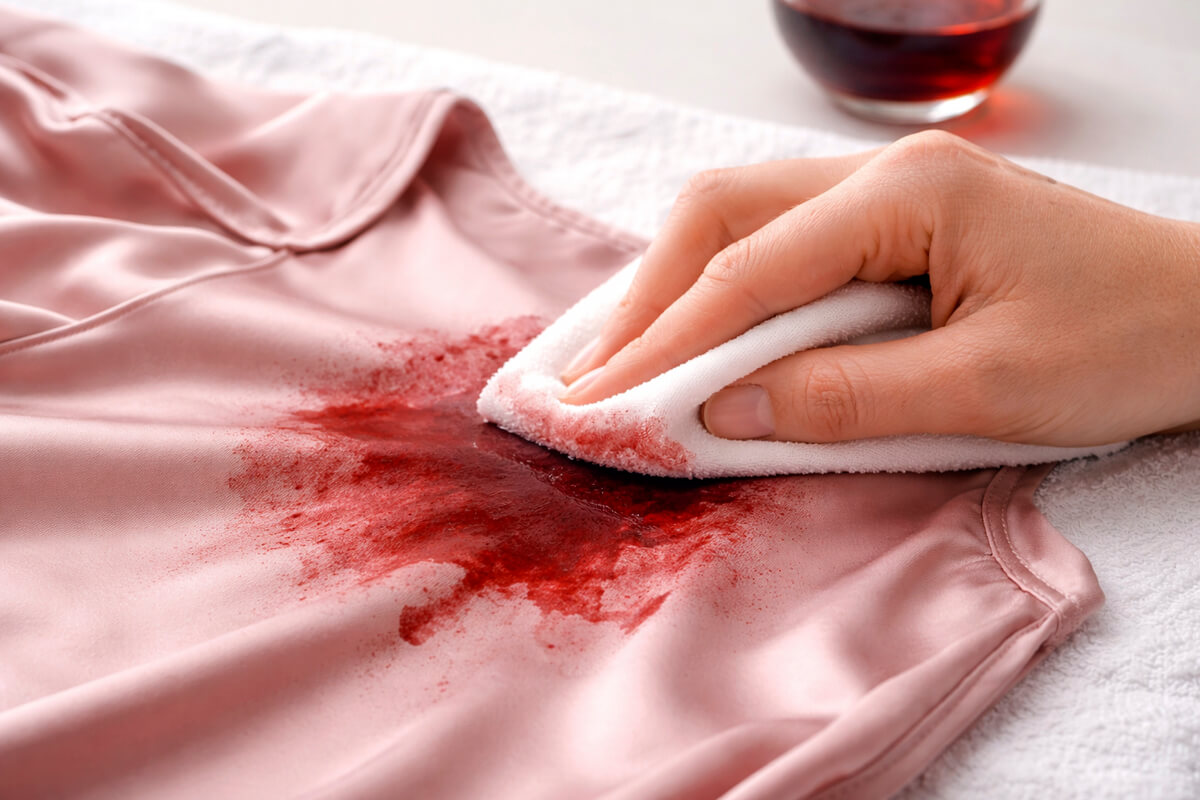
Place a clean absorbent towel beneath the stained area to protect underlying layers. Using a white cloth, blot gently from the outer edge inward. Replace the cloth frequently to avoid redepositing pigment. Pressure should be light and consistent.
Rubbing, twisting or squeezing the fabric must be avoided.
Stabilizing the stain area
Keep the fabric flat and supported. Avoid folding the garment or allowing the stain to touch other areas. Do not expose silk to heat, hair dryers or direct sunlight during this stage.
Diluting fresh red wine stains with cold water
Cold water reduces pigment concentration without setting the stain. Only minimal moisture should be used.
- Lightly mist the stained area with cold distilled water
- Blot gently with a clean cloth
- Repeat until color transfer slows
This step is most effective on very fresh stains and should be followed by targeted treatment.
Neutralizing wine acids with diluted vinegar
White vinegar helps neutralize wine acids and weaken pigment bonds without harming silk when diluted properly.
Vinegar treatment method
- Mix one tablespoon of white vinegar with one cup of cold water
- Apply lightly using a cloth or spray bottle
- Blot gently without saturating the fabric
Undiluted vinegar should never be applied directly to silk.
Lifting remaining discoloration with mild soap
A small amount of mild dish soap can help remove residual pigments and oils.
Gentle soap application
- Add one drop of mild dish soap to a cup of cold water
- Apply using light blotting motions
- Rinse by blotting with clean water
Soap residue must be fully removed to avoid water marks.
Treating dried red wine stains on silk
Dried stains require patience and multiple light treatments. Aggressive cleaning often causes irreversible damage.
Rehydrate the stain slightly using diluted vinegar and water, blot gently and allow the fabric to rest between attempts. Some older stains may only fade rather than disappear completely without professional care.
Special risks for dyed and printed silk garments
Printed or brightly dyed silk is especially vulnerable to color loss during stain removal.
- Always test solutions on an inconspicuous area
- Stop treatment if garment dye transfers
- Avoid soaking patterned areas
Professional dry cleaning is often the safest option for valuable or sentimental items.
Comparison of red wine stain removal methods for silk
The table below compares different approaches based on safety and effectiveness.
| Method | Best Use | Silk Safety | Effectiveness |
|---|---|---|---|
| Cold water blotting | Fresh stains | High | Medium |
| Diluted vinegar | Fresh to moderate stains | High | High |
| Mild soap solution | Residual discoloration | Medium | Medium |
| Professional dry cleaning | Dried or severe stains | Very high | Very high |
Drying silk garments after stain treatment
Drying silk correctly prevents water marks, stiffness and fiber distortion.
- Lay the garment flat on a clean towel
- Roll gently to absorb excess moisture
- Air dry away from heat and sunlight
Never wring, twist or hang wet silk.
Preventing red wine stains on silk clothes
Preventive habits offer the best protection for silk garments.
- Avoid wearing silk in high-risk dining settings
- Use shawls or napkins as barriers
- Address spills immediately
- Follow care label instructions carefully
By understanding the delicate nature of silk and respecting its limitations, red wine stains can often be reduced or removed without compromising the fabric. Gentle handling, controlled moisture and patience are the keys to preserving silk garments after an accident.