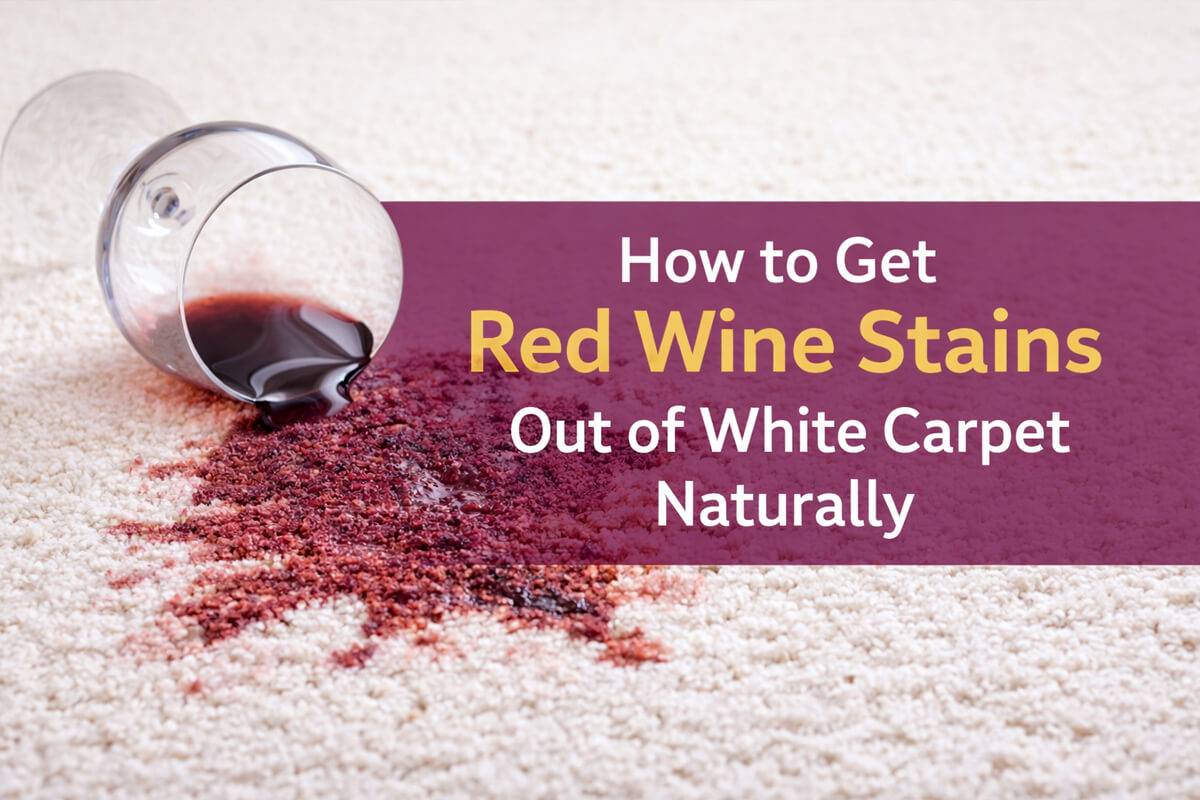
Red wine spills on white carpet are among the most stressful household accidents. The deep red pigments contrast sharply with light fibers, making even a small spill immediately visible. Red wine contains tannins, natural dyes and organic acids that bind quickly to carpet fibers, especially when the carpet is light-colored. If handled incorrectly, the stain can spread, darken and become permanent. This detailed guide explains how to remove red wine stains from white carpet using natural methods, why these stains behave the way they do, and how to clean effectively without harsh chemicals.
Why red wine stains are especially visible on white carpet
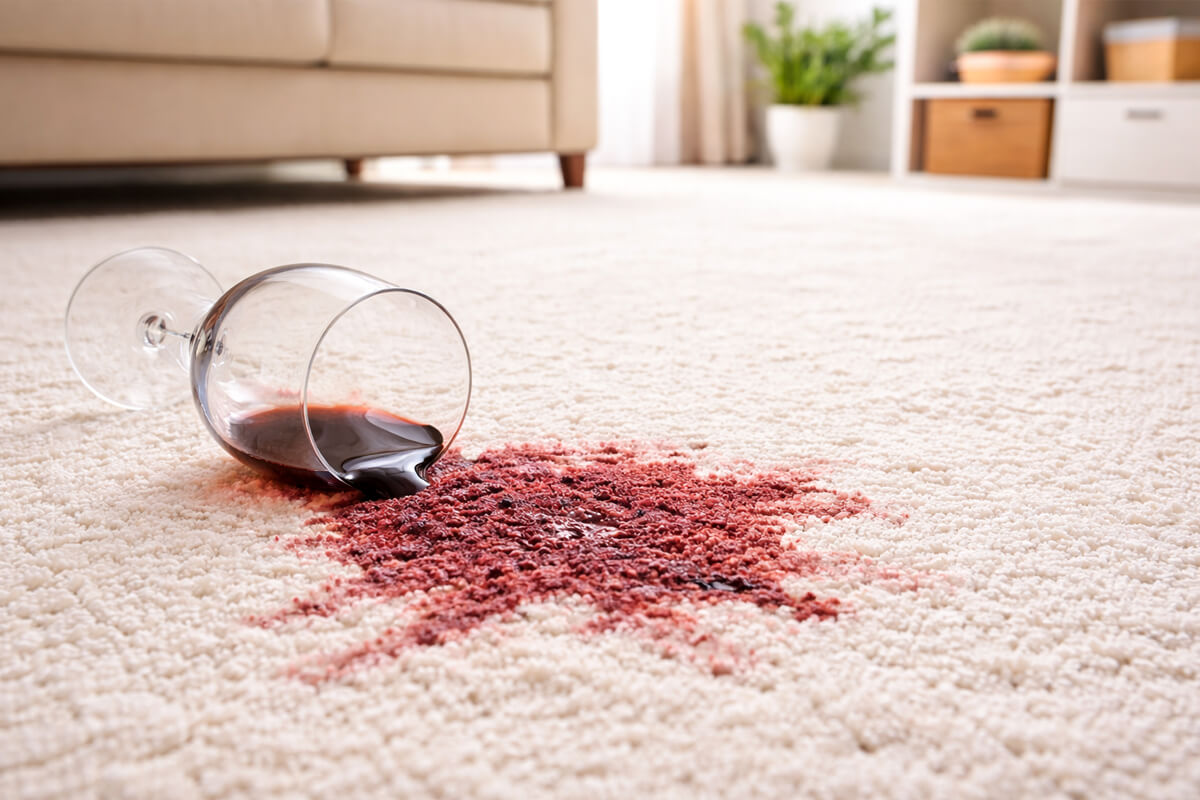
White carpet fibers reflect light and show discoloration immediately. Red wine contains anthocyanins, the same pigments used in natural dyes, which attach strongly to porous materials. When wine is spilled, the liquid spreads quickly through the carpet pile and begins bonding with the fibers.
The acidity of red wine accelerates this bonding process. As the liquid dries, oxidation darkens the stain further. On white carpet, even small amounts of pigment create a noticeable mark. Heat from the room, sunlight or foot traffic can make the stain set faster and penetrate deeper into the carpet backing.
How red wine stains develop over time
Fresh red wine stains are easier to remove because the pigments have not fully bonded. As time passes, several processes occur simultaneously. Moisture evaporates, leaving concentrated dye behind. Oxygen exposure darkens the pigments, and sugars in the wine create sticky residue that attracts dirt.
If the carpet is cleaned improperly, moisture can carry the stain deeper into the padding. This leads to wicking, where the stain reappears on the surface after drying. Understanding this behavior explains why gentle, controlled cleaning is more effective than aggressive scrubbing.
Common mistakes when cleaning red wine from white carpet
Many people unintentionally make red wine stains worse by using the wrong techniques. Avoiding these mistakes significantly improves stain removal success.
- Rubbing the stain and spreading pigment
- Using hot water which sets wine tannins
- Over-wetting the carpet and soaking the padding
- Using colored cloths that transfer dye
- Applying harsh chemicals that damage white fibers
Natural stain removal relies on blotting, dilution and absorption rather than force.
Understanding white carpet fiber types
White carpets are made from different fibers, and each reacts differently to red wine and cleaning solutions. Identifying the fiber type helps choose the safest natural method.
- Nylon carpets are durable and respond well to gentle cleaning
- Polyester carpets resist moisture but trap pigment on the surface
- Wool carpets are delicate and require minimal moisture
- Blended fibers combine properties and need cautious treatment
Always treat white carpet gently to avoid yellowing or fiber damage.
Supplies needed for natural red wine stain removal
Natural cleaning focuses on ingredients that neutralize, absorb or lift wine pigments without damaging carpet fibers.
- Cold water
- White vinegar
- Baking soda
- Salt
- Hydrogen peroxide for light carpets
- Mild dish soap
- Clean white cloths or paper towels
- Vacuum cleaner
Using white cloths prevents color transfer onto the carpet.
Immediate steps after spilling red wine on white carpet
Fast response is the most important factor in successful stain removal. Immediate action limits pigment absorption and spread.
Blotting the spill correctly
Blot the wine immediately using clean, dry cloths. Press down gently to absorb liquid without rubbing. Start from the outer edge and work inward to prevent spreading. Replace cloths frequently as they become saturated.
Diluting the wine with cold water
Cold water helps reduce pigment concentration.
- Lightly pour or spray cold water onto the stain
- Blot again with a clean cloth
- Repeat until the color lightens
Never use hot water on red wine stains.
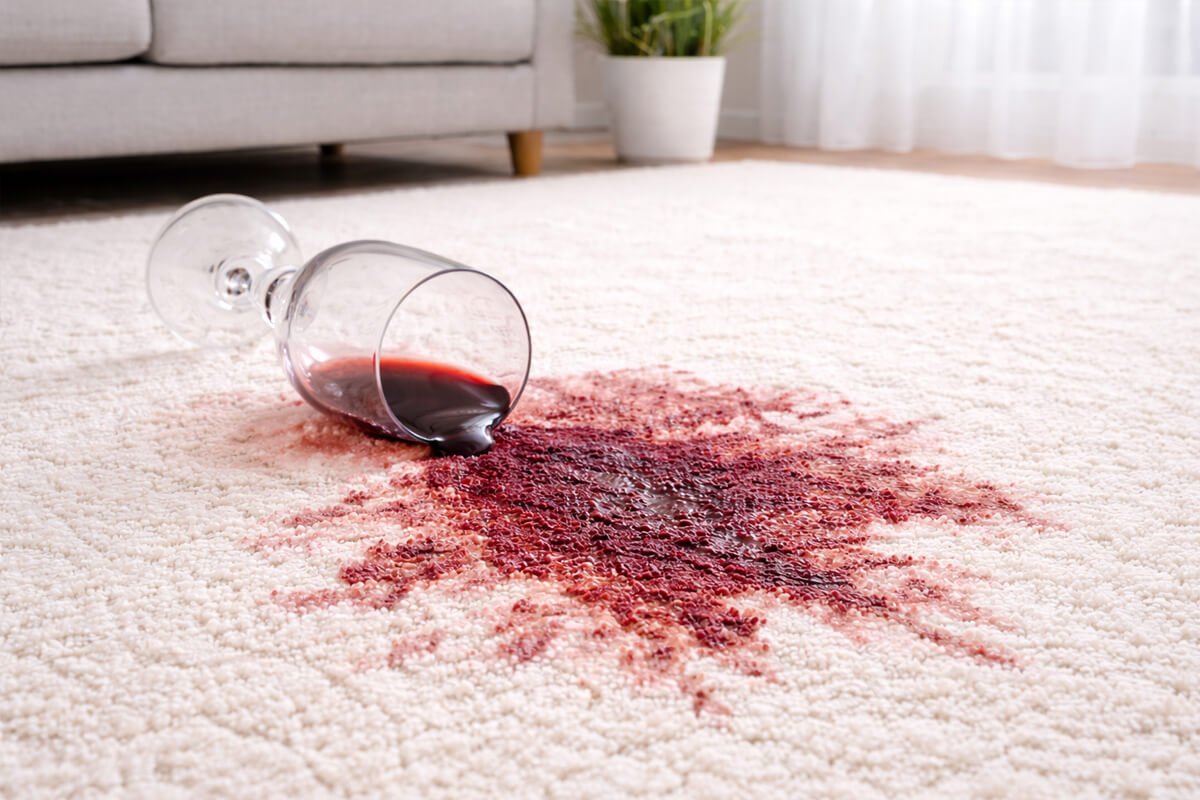
Using salt to absorb fresh red wine stains
Salt is a natural absorbent that draws moisture and pigment out of carpet fibers. It is most effective on fresh stains.
Salt application method
- Blot excess wine first
- Cover the damp stain generously with salt
- Allow the salt to sit until fully dry
- Vacuum thoroughly to remove residue
As salt dries, it pulls wine pigments upward and lightens the stain.
Removing red wine stains naturally with baking soda
Baking soda neutralizes acids and absorbs pigment and odor. It works well on both fresh and partially dried stains.
Baking soda paste method
- Mix baking soda with a small amount of cold water
- Apply the paste directly to the stain
- Allow it to dry completely
- Vacuum to remove residue
This method is safe for most white carpets and helps prevent lingering odors.
Using vinegar to neutralize red wine pigments
White vinegar neutralizes red wine pigments by breaking down tannins. Although vinegar has a strong smell initially, it evaporates quickly.
Vinegar solution method
- Mix equal parts white vinegar and cold water
- Apply lightly to the stained area
- Blot gently with a clean cloth
- Repeat until the stain fades
Vinegar is especially effective for pink or purple discoloration left after initial cleaning.
Dish soap and vinegar combination for stubborn stains
For stains containing sugar or residue, combining dish soap with vinegar improves results.
Natural cleaning mixture
- Mix one tablespoon dish soap with one tablespoon vinegar
- Add two cups of cold water
- Apply sparingly and blot gently
- Rinse lightly with water and blot dry
This combination breaks down both pigments and sticky residue.
Hydrogen peroxide for deep stains on white carpet
Hydrogen peroxide is a natural oxidizer that can lighten deep red wine stains on white carpet. It should be used cautiously.
Safe peroxide use
- Test in an inconspicuous area first
- Apply a small amount directly to the stain
- Allow it to bubble and lift pigment
- Blot and allow to dry fully
This method is best for older or darker stains.
Comparison of natural red wine stain removal methods
The table below compares natural methods based on stain age and effectiveness.
| Method | Best For | Carpet Safety | Effectiveness |
|---|---|---|---|
| Cold water blotting | Fresh spills | All white carpets | High |
| Salt absorption | Fresh stains | All white carpets | High |
| Baking soda | Fresh and light dried stains | Most carpets | High |
| Vinegar solution | Persistent discoloration | Most carpets | Very high |
| Hydrogen peroxide | Deep stains | White carpets only | Very high |
Drying white carpet correctly after cleaning
Proper drying prevents stains from returning and avoids yellowing.
- Blot moisture thoroughly with dry towels
- Increase airflow using fans
- Avoid walking on the area until fully dry
Fast drying locks in cleaning results.
Preventing future red wine stains on white carpet
Prevention is the best way to protect white carpet from red wine accidents.
- Use rugs in dining and entertaining areas
- Keep absorbent cloths nearby during gatherings
- Clean spills immediately
- Avoid over-wetting during routine cleaning
- Apply carpet protectant treatments if appropriate
By understanding how red wine stains behave and using natural, gentle cleaning methods, white carpet can be restored without harsh chemicals. Prompt action, controlled moisture and proper drying ensure the carpet remains bright, clean and visually appealing.