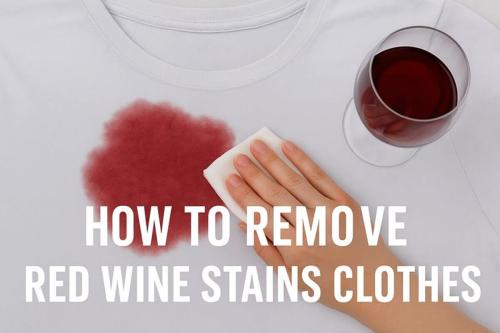
Red wine stains on couch fabric are among the most difficult household stains to deal with because of how quickly wine penetrates upholstery fibers. Couches are designed for comfort and breathability, which means liquids spread rapidly through the surface fabric and into the padding below. Red wine contains anthocyanins, tannins, alcohol and acids that bind strongly to fabric fibers and darken as they oxidize. If the spill is not handled correctly, the stain can grow larger, darker and develop a persistent odor. This detailed guide explains in depth how red wine stains behave on couch fabric, how to remove them safely at home, and how to protect upholstery from long-term damage.

Why red wine stains bond so strongly to couch upholstery
Red wine is essentially a natural dye. The pigments responsible for its deep color are designed by nature to bind to organic material. When red wine comes into contact with couch fabric, these pigments immediately attach to the fibers. Tannins strengthen this bond, while alcohol acts as a solvent that helps pigments penetrate deeper into the upholstery.
Couch fabrics are rarely tightly sealed. Even synthetic upholstery has microscopic gaps that allow liquid to move both across the surface and downward into the padding. Body heat from sitting, combined with pressure from cushions, forces wine deeper into the fabric structure. Limited airflow inside couch cushions slows evaporation, giving pigments more time to set.
How red wine stains evolve as they dry on a couch
Fresh red wine stains are usually bright red or purple and may appear easy to remove at first. As the liquid evaporates, oxidation begins. Oxygen reacts with wine pigments, turning the stain darker and more brownish over time. Tannins continue to harden their bond with fibers, making the stain more resistant to water alone.
Alcohol and sugars in wine leave behind sticky residue that attracts dust and dirt. If the couch is used before the stain is fully removed, repeated compression spreads the stain outward and pushes residue deeper. Dried stains may also wick back to the surface after cleaning when moisture pulls hidden residue upward, creating the appearance of a returning stain.
Common cleaning mistakes that permanently set red wine stains
Many well-intended cleaning attempts actually make red wine stains harder to remove. Understanding these mistakes is essential before starting any cleaning process.
- Rubbing the stain aggressively instead of blotting
- Using hot or warm water on untreated stains
- Pouring large amounts of liquid onto the couch
- Using bleach on colored or delicate fabrics
- Allowing the couch to remain damp for too long
Red wine stains require patience, controlled moisture and gradual treatment rather than force.
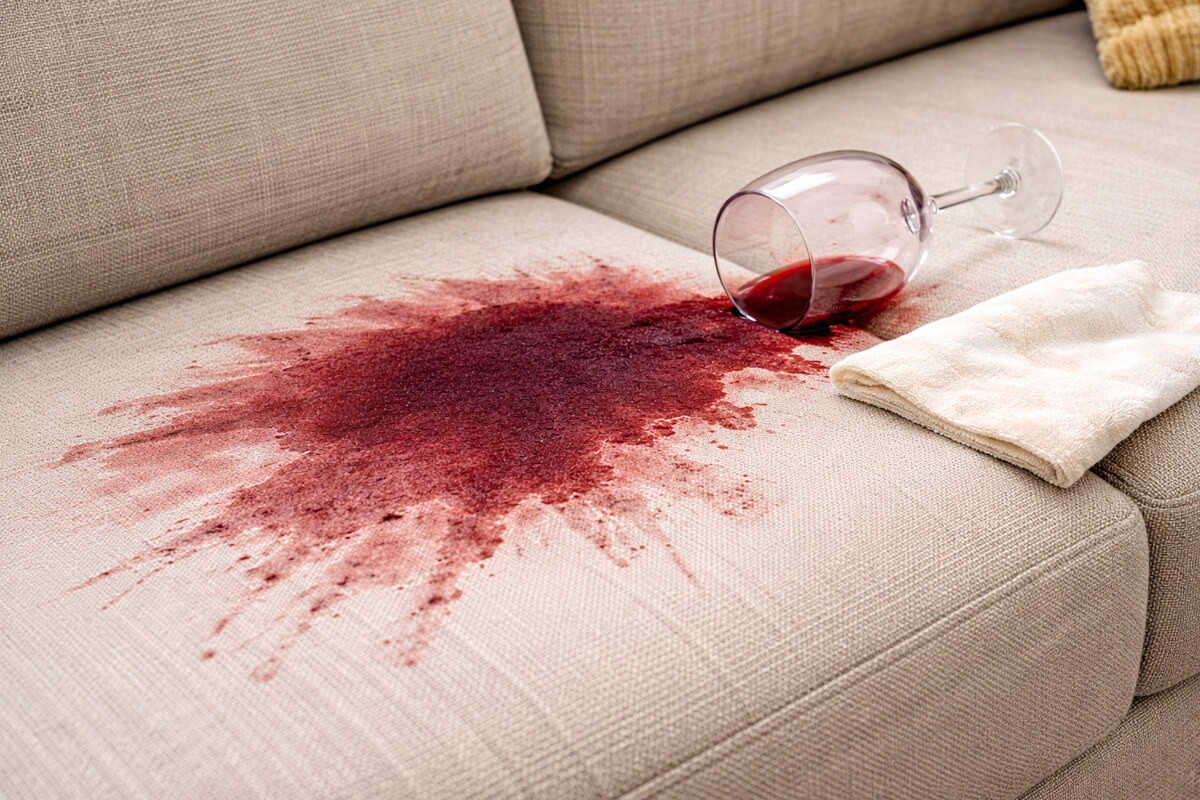
Understanding different couch fabric types before cleaning
Not all couch fabrics respond the same way to cleaning solutions. Identifying the upholstery material helps prevent discoloration, shrinking or texture damage.
- Cotton upholstery absorbs wine deeply and stains quickly
- Polyester and synthetic blends resist absorption better
- Linen is highly absorbent and prone to water marks
- Microfiber traps stains near the surface but reacts to excess moisture
- Velvet and specialty fabrics require extremely gentle treatment
Manufacturer care labels often indicate whether water-based cleaning is safe. When in doubt, always test cleaning solutions in an inconspicuous area.
Supplies needed to remove red wine stains at home
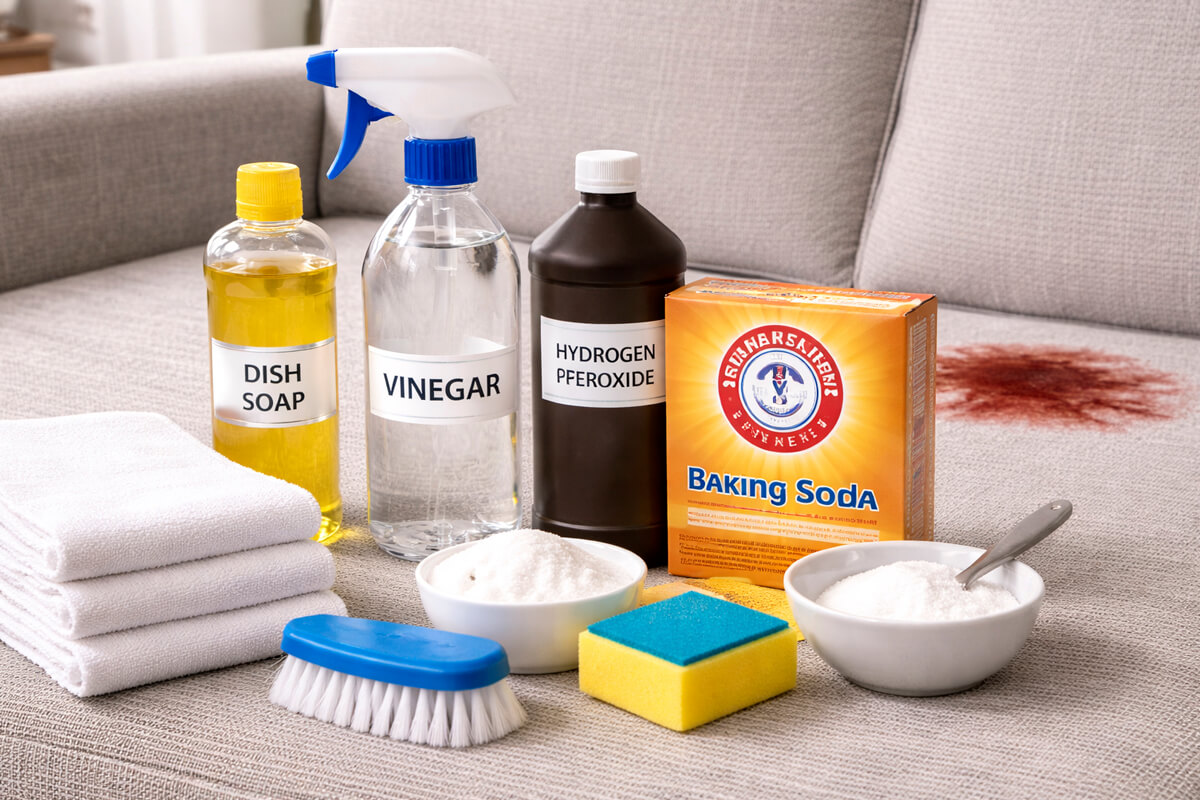
Most red wine stains can be removed using common household items when applied correctly. Preparing all supplies in advance helps avoid spreading the stain.
- Cold or lukewarm water
- Mild liquid dish soap
- White vinegar
- Baking soda
- Hydrogen peroxide for light fabrics
- Microfiber cloths or clean towels
- Soft brush or toothbrush
- Spray bottle for controlled application
- Vacuum cleaner
Minimal liquid use is critical to protect couch padding from saturation.
Immediate actions after spilling red wine on a couch
The first few minutes after a spill are the most important. Quick action significantly limits how deeply the wine penetrates the upholstery.
Blotting excess wine the correct way
Blot the spill immediately with a clean, absorbent cloth. Apply steady pressure to soak up liquid without rubbing. Always work from the outer edge of the stain toward the center to prevent spreading. Replace cloths as they become saturated and continue until no more wine transfers.
Reducing pigment concentration with cold water
Cold water helps dilute wine pigments without setting the stain.
- Dampen a cloth lightly with cold water
- Blot the stained area gently
- Immediately blot again with a dry cloth
Hot water should never be used at this stage because it permanently fixes wine pigments to fibers.
Removing fresh red wine stains using dish soap
Dish soap is effective because it breaks down alcohol residue, oils and surface pigments without damaging most couch fabrics.
Dish soap cleaning process
- Mix one cup of lukewarm water with a few drops of dish soap
- Apply sparingly using a clean cloth
- Blot gently without scrubbing
- Allow the solution to work for several minutes
- Blot again with a dry towel
This method works best for fresh spills and lightly set stains.
Breaking down dried red wine stains with vinegar
Dried red wine stains require chemical breakdown rather than simple dilution. White vinegar neutralizes pigments and weakens tannin bonds.
Vinegar based treatment method
- Mix equal parts white vinegar and water
- Apply lightly to the stained area
- Allow it to sit for 5 to 10 minutes
- Blot thoroughly with a microfiber cloth
Vinegar odor fades naturally as the couch dries and can be further neutralized with baking soda.
Using baking soda to lift stains and eliminate odors
Baking soda is highly effective for absorbing moisture, pigment residue and odor trapped in couch fibers. It works best after liquid cleaning steps.
Baking soda application technique
- Ensure the stained area is slightly damp but not wet
- Sprinkle baking soda generously over the stain
- Allow it to sit for several hours or overnight
- Vacuum slowly and thoroughly
This step helps draw remaining wine residue upward and prevents lingering odors.
Using hydrogen peroxide on light colored couch fabric
Hydrogen peroxide removes red wine stains through oxidation, breaking down deeply set pigments. It should only be used on white or light-colored fabrics.
Safe hydrogen peroxide use
- Test on a hidden area first
- Mix hydrogen peroxide with equal water
- Apply lightly to the stain
- Allow to dry completely
This method should never be used on dark or delicate upholstery.
Special care considerations for microfiber couches
Microfiber upholstery reacts differently to moisture and may develop water marks or stiff texture if over-wetted.
- Use minimal liquid at all times
- Apply solutions with a cloth instead of spraying
- Brush gently after drying to restore texture
Always follow manufacturer recommendations for microfiber fabrics.
Comparison of red wine stain removal methods for couch fabric
The table below compares common home methods based on stain severity and fabric safety.
| Method | Best For | Fabric Safety | Effectiveness |
|---|---|---|---|
| Cold water blotting | Fresh spills | All fabrics | High |
| Dish soap solution | Fresh and light stains | Most fabrics | High |
| Vinegar solution | Dried stains | Most fabrics | Very high |
| Baking soda | Odor and residue | All fabrics | Medium to high |
Drying the couch correctly after stain removal
Proper drying prevents water rings, odor buildup and mold growth inside cushions.
- Increase airflow with fans or open windows
- Avoid sitting on the couch until fully dry
- Never use direct heat on upholstery
Slow, even drying produces the most consistent results.
Preventing red wine stains on couch fabric
Preventive habits greatly reduce the likelihood of future stains and extend the life of couch upholstery.
- Use spill-resistant wine glasses
- Avoid placing drinks on couch arms
- Apply fabric protectant sprays periodically
- Clean spills immediately
- Vacuum couch fabric regularly
By understanding how red wine stains behave and applying controlled, fabric-safe cleaning methods, red wine stains can be removed from couch fabric at home. Careful technique, patience and proper drying ensure upholstery remains clean, odor-free and visually appealing for years.