Old coffee stains on carpet are among the most stubborn types of household discoloration. When coffee dries it leaves behind tannins, natural dyes, oils and organic compounds that penetrate deeply into carpet fibers and padding. Over time these particles oxidize and bind strongly to the fibers, which makes old stains far more difficult to remove than fresh ones. Fortunately natural cleaning methods can break down these stubborn residues without using harsh chemicals. This comprehensive guide provides deep explanations, cleaning science, step by step natural techniques and preventive strategies for keeping your carpet fresh, bright and free from lingering coffee stains.
How coffee interacts with carpet fibers over time
To understand why old coffee stains are so challenging, it is important to examine the interaction between the liquid and the carpet material. Coffee contains tannins, which are plant-based astringent compounds responsible for its dark color. Tannins behave similarly to natural dyes and bond easily with porous materials such as cotton, wool or synthetic carpet fibers. As the liquid dries, these tannins become more concentrated and attach more firmly to fiber surfaces.
The oxidation process also intensifies the stain. When coffee is exposed to air, oxygen triggers chemical reactions that darken the pigment. As a result an old coffee stain often appears much darker than a fresh one. Beyond the fibers the stain often spreads into the padding beneath the carpet. Once coffee reaches the padding it travels sideways under the surface, creating a larger stained area than what appears on the top layer.
Another important factor is time. A fresh spill remains mostly liquid and lies on the surface. However as hours pass the liquid evaporates, leaving behind concentrated solids that embed deeply. If the stain is months or years old, multiple layers of dust and dirt settle over it, making the discoloration even more difficult to remove.
Common conditions that worsen old coffee stains
While time is the biggest factor, several environmental and household habits can make coffee stains significantly worse. Identifying these conditions helps you choose the correct cleaning method and prevent future issues.
- Direct sunlight can permanently darken oxidized tannins in carpets.
- Improper cleaning solutions, especially soap-based ones, may leave residues that trap pigment.
- Scrubbing the carpet aggressively can push the stain deeper into the padding.
- Ignoring a spill for more than 12–24 hours allows it to harden.
- High foot traffic areas experience deeper stain penetration.
- Using hot water prematurely may set the stain further.
Understanding these conditions provides valuable guidance when choosing which natural methods will work most effectively for your carpet type and stain age.
Essential natural tools and ingredients for deep stain removal
Natural cleaning solutions can be extremely effective when used correctly. Unlike strong chemical cleaners they are gentle on fibers, environmentally friendly and safe for pets and children. Collecting the necessary tools before starting simplifies the cleaning process and ensures that you can complete all steps without interruptions.
- Baking soda for odor absorption and mild abrasive action.
- White vinegar for dissolving dried tannins and pigments.
- Lemon juice for natural brightening of light carpets.
- Warm water for rehydrating old stains and loosening residues.
- Salt for pigment extraction from deeper fibers.
- Hydrogen peroxide for oxidation of stubborn discoloration on pale carpets.
- Mild dish soap for emulsifying oils and organic materials.
- A spray bottle for even solution application.
- A soft brush or toothbrush to loosen embedded residues.
- Microfiber cloths for blotting and drying.
These natural ingredients complement each other. Some dissolve pigments, others absorb them and others brighten fibers. Combined they offer powerful cleaning performance comparable to commercial carpet cleaners.
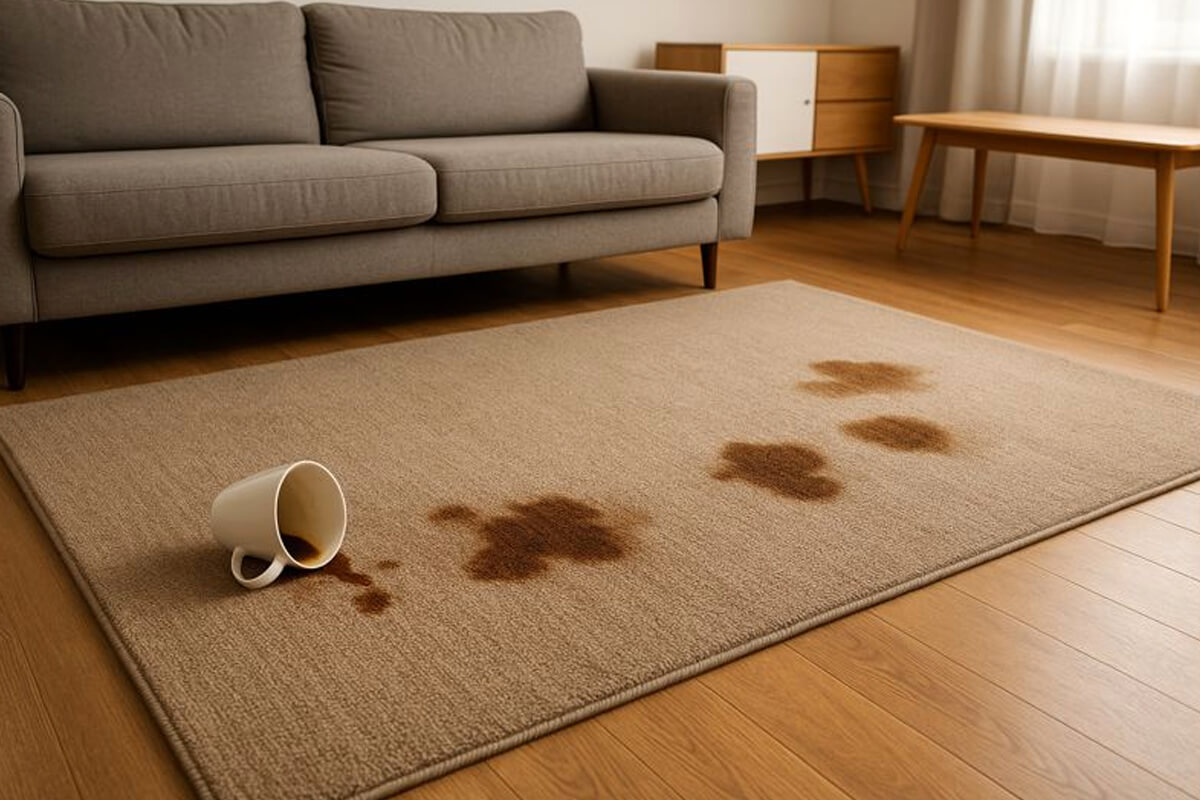
Preparing the carpet properly before applying natural cleaners
Preparation is crucial when treating old coffee stains. Without proper prep, even powerful natural agents may fail to reach the deepest layers of the stain. Thorough preparation ensures maximum penetration and reduces the number of cleaning cycles required.
Vacuuming to remove dry debris and dirt layers
An old stain often accumulates multiple layers of dust and dried residue. Vacuuming lifts these particles away and exposes the true stain. It also slightly lifts the carpet pile allowing cleaning solutions to seep deeper. A strong vacuum pass should be made from multiple angles to ensure that all loose debris is removed.
Rehydrating the stain for easier pigment breakdown
Because old coffee stains are dry and hardened it is important to soften them before treatment. Rehydrating the area allows cleaning solutions to work more effectively by penetrating deeper.
- Lightly spray warm water directly onto the stain.
- Let the water sit for 5–10 minutes.
- Avoid oversaturating the carpet to prevent spreading the stain.
- Blot excess moisture but do not attempt to scrub.
This process loosens dried tannins and prepares the area for the next steps involving natural cleaners.
Deep natural cleaning with vinegar and baking soda
The combination of vinegar and baking soda remains a highly effective cleaning method for old coffee stains due to the chemical reaction between them. Vinegar breaks apart dried pigments and baking soda absorbs and lifts them from the carpet. The fizzing reaction helps carry the stain upward, making it easier to remove.
Applying the vinegar solution to dissolve dried coffee compounds
White vinegar contains acetic acid which breaks down tannins and weakens the chemical bonds within the stain. It also neutralizes any odors caused by oxidation or bacteria.
- Mix equal parts warm water and white vinegar.
- Pour the solution into a spray bottle.
- Spray generously across the stain to ensure full penetration.
- Allow the solution to rest for 10–15 minutes.
You should see the stain begin to lighten slightly as the vinegar dissolves the surface pigments.
Using baking soda to lift and extract deep residue
Baking soda enhances the cleaning process by lifting particles from the fibers. It also absorbs odors and provides mild natural abrasion without damaging carpet texture.
- Sprinkle a thick, even layer of baking soda directly over the damp stained area.
- Allow the vinegar and baking soda to react and fizz.
- Let the solution dry completely so the baking soda absorbs maximum pigment.
- Vacuum thoroughly to remove the dried powder.
This technique is effective for stains that have darkened substantially or have multiple layers.
Brightening carpet fibers naturally with lemon juice
Lemon juice is a natural brightener and mild bleaching agent. It works well on beige or lightly colored carpets that appear dull after stain removal. Unlike chemical bleaching agents lemon juice provides brightness without damaging fibers when used correctly.
Lemon-based cleaning method for old stains
Lemon juice dissolves organic residues and enhances the freshness of the carpet. It is especially useful when the stain leaves behind yellowish tones.
- Mix equal amounts of fresh lemon juice and warm water.
- Apply evenly using a spray bottle or soft cloth.
- Let the mixture rest for 5–10 minutes.
- Blot gently with a microfiber towel until the area brightens.
Because lemon juice has bleaching properties, it should be used carefully on darker carpets.
Extracting deep carpet discoloration with salt
Salt absorbs pigments effectively and can lift stubborn stains from deep inside the carpet structure. It is particularly helpful for stains that reappear after drying, a sign that coffee has penetrated into the padding.
Salt method for deep stain absorption
This method relies on salt's ability to draw moisture and pigments upward.
- Moisten the stain slightly with warm water.
- Spread a thick layer of salt across the affected area.
- Press the salt lightly to help it reach deeper fibers.
- Leave the salt for several hours or overnight.
As the salt dries, it will often turn brown or yellow. This indicates successful pigment extraction. Vacuum thoroughly to remove the dried salt.
Using hydrogen peroxide on hard-to-remove discoloration
Hydrogen peroxide functions as a natural oxidizer that breaks down old stains at a molecular level. It is very effective on light carpets but should always be patch-tested to prevent unwanted lightening.
Deep cleaning with peroxide and dish soap
- Mix one cup of hydrogen peroxide with a teaspoon of mild dish soap.
- Apply carefully to the stained area.
- Allow it to sit for 10–20 minutes.
- Blot the solution until the stain begins to fade.
This method is especially useful for stains that remain visible after multiple natural cleaning attempts.
Comparing natural cleaning methods for effectiveness
Different natural treatments work best under specific conditions. The comparison table below helps you determine which method to choose based on your carpet material and the severity of the stain.
| Natural Cleaning Method | Best Used For | Carpet Compatibility | Effectiveness Level |
|---|---|---|---|
| Vinegar and baking soda | Old, dark, oxidized stains | All carpet types | Very high |
| Lemon juice | Light stains and carpet brightening | Light-colored carpets | High |
| Salt absorption | Deep stains or recurring stains | All carpet types | Medium |
| Hydrogen peroxide and dish soap | Very stubborn discoloration | Light carpets only | Very high |
Maintaining carpet cleanliness after stain removal
Removing the stain is only part of the process. To keep your carpet in good condition and prevent future staining, it is essential to follow natural maintenance habits that preserve fiber structure and color. Maintaining the carpet properly also prevents odors and extends its lifespan.
Natural maintenance strategies for long-term cleanliness
- Blot spills immediately to prevent pigment penetration.
- Vacuum regularly to remove dust and debris from fibers.
- Use doormats at entrances to reduce dirt exposure.
- Apply baking soda monthly to absorb hidden odors and moisture.
- Refresh the carpet occasionally with a diluted vinegar spray.
Consistent natural maintenance ensures that carpets stay fresh, bright and free from stubborn stains. With these techniques you can effectively remove old coffee stains and improve your carpet’s overall appearance without using harsh chemicals.