Coffee stains on office chairs are a frequent issue in modern workplaces where hot drinks are consumed throughout the day. Office chairs are used for long hours, exposed to constant movement, body heat and friction, all of which make stains harder to remove once they appear. Coffee contains tannins, oils and pigments that quickly penetrate chair upholstery and can leave both visible marks and persistent odors. This detailed guide explains in depth how coffee stains form on office chairs, how different chair materials react to spills, and how to remove both fresh and dried stains safely while preserving a clean and professional appearance.
Why office chairs are especially prone to coffee stains
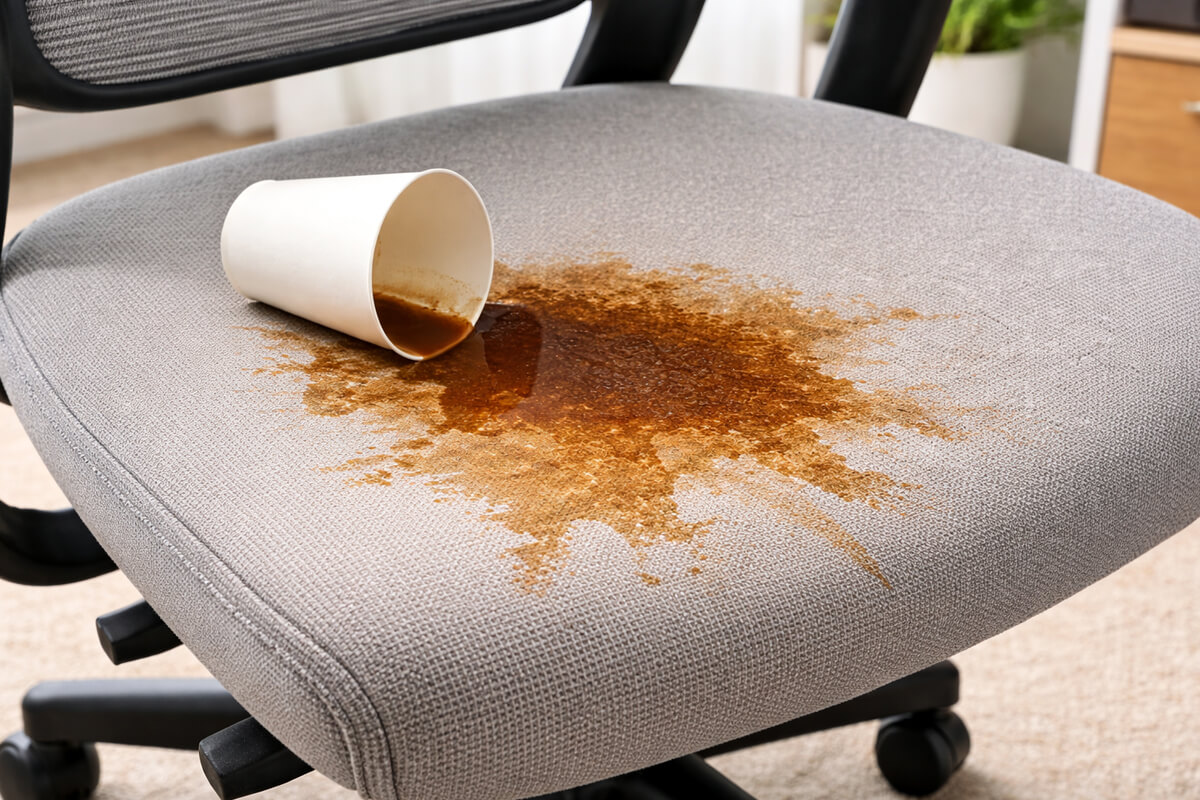
Office chairs are positioned directly under desks where coffee cups are frequently placed. Spills often occur near armrests, seat fronts and lumbar areas, which are zones of high pressure and movement. Unlike dining chairs, office chairs are rarely cleaned immediately after a spill because work continues uninterrupted.
Most office chairs are designed for comfort and breathability. Fabrics and mesh materials allow air to circulate, but they also allow liquids to penetrate quickly. Body heat from prolonged sitting keeps the material warm, which accelerates absorption and oxidation. As a result, coffee stains on office chairs often become darker and more noticeable within a short period of time.
How coffee stains interact with office chair materials
Office chairs are made from a combination of surface materials and internal padding. Each layer plays a role in how stains develop and persist.
- Fabric upholstery absorbs coffee deeply into fibers
- Mesh allows liquid to pass through rapidly
- Vinyl and faux leather resist absorption but can discolor
- Foam padding underneath traps moisture and odor
When coffee reaches the foam padding, it spreads laterally and becomes difficult to extract. Even if the surface looks clean, residue inside the padding may later wick back up and reappear.
What happens as coffee dries on an office chair
Fresh coffee stains are lighter in color and easier to lift. As the liquid evaporates, oxidation causes pigments to darken and bind more tightly to fibers. Oils in coffee thicken and adhere to upholstery, while sugars and milk residues create sticky layers that attract dust and bacteria.
Repeated sitting compresses the stained area, pushing residue deeper and spreading it outward. Over time, the stain grows larger and becomes more visible, especially on light-colored chairs used daily in office environments.
Common cleaning mistakes that worsen office chair stains
Many cleaning attempts fail because office chairs require careful moisture control. The following mistakes often make stains more difficult to remove.
- Over-saturating the chair and soaking the padding
- Scrubbing aggressively and spreading the stain
- Using hot water that sets tannins permanently
- Applying harsh chemicals that fade or stiffen fabric
- Not allowing sufficient drying time
Controlled blotting and gradual treatment are always more effective than forceful cleaning.
Identifying office chair upholstery before cleaning
Before applying any cleaning solution, identifying the upholstery type is essential. Office chairs often combine multiple materials that require different approaches.
- Woven fabric chairs tolerate mild soap solutions
- Mesh chairs require minimal liquid and careful blotting
- Vinyl chairs clean well with gentle detergents
- Leather-look chairs need non-abrasive cleaners only
Manufacturer labels or product specifications usually provide guidance on safe cleaning methods and should be consulted whenever possible.
Supplies required for effective coffee stain removal
Most coffee stains can be removed using simple household supplies. Having all tools ready prevents repeated cleaning attempts.
- Cold or lukewarm water
- Mild liquid dish soap
- White vinegar
- Baking soda
- Microfiber cloths or clean towels
- Soft brush or toothbrush
- Spray bottle
- Vacuum cleaner
Using soft tools and minimal liquid protects office chair materials.
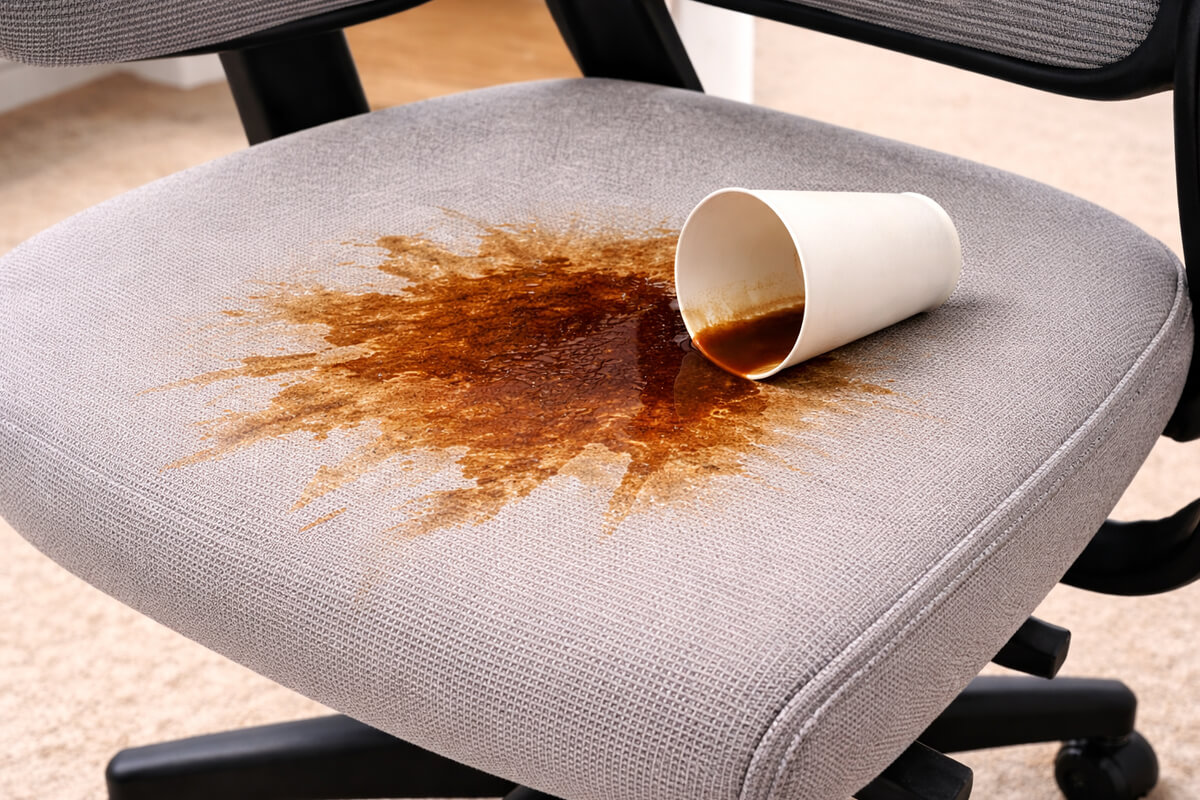
Immediate actions after a coffee spill on an office chair
Fast response significantly reduces stain severity. Fresh coffee is easier to remove before it penetrates padding.
Blotting excess liquid correctly
Blot the spill immediately using a clean cloth or paper towel. Apply steady pressure to absorb liquid without rubbing. Replace the cloth frequently until no more coffee transfers. Rubbing should be avoided because it pushes coffee deeper into the chair.
Light dilution using cold water
Cold water helps reduce coffee concentration without setting the stain.
- Dampen a cloth lightly with cold water
- Blot the stained area gently
- Remove moisture immediately with a dry cloth
This step prepares the stain for deeper cleaning.
Cleaning fabric office chairs with dish soap
Dish soap breaks down coffee oils and pigments while remaining gentle on fabric upholstery.
Dish soap method for fabric chairs
- Mix one cup of lukewarm water with a few drops of dish soap
- Apply sparingly using a cloth or spray bottle
- Blot gently without scrubbing
- Allow the solution to sit briefly
- Blot again with a dry cloth
This method is effective for fresh and moderately dried stains.
Removing dried coffee stains using vinegar
Dried stains require chemical breakdown. White vinegar dissolves tannins and loosens dark residue bonded to fibers.
Vinegar based treatment
- Mix equal parts white vinegar and water
- Apply lightly to the stained area
- Allow it to sit for 5 to 10 minutes
- Blot thoroughly with a microfiber cloth
Vinegar odor fades naturally as the chair dries.
Using baking soda to absorb stains and odors
Baking soda is useful for absorbing moisture and neutralizing lingering coffee odors inside office chair padding.
Baking soda application process
- Ensure the area is slightly damp but not wet
- Sprinkle baking soda generously over the stain
- Allow it to sit for several hours
- Vacuum thoroughly to remove residue
This step is especially helpful for odor control in shared office spaces.
Special care for mesh office chairs
Mesh chairs require extra caution because liquid passes through easily and may reach internal components.
- Use minimal liquid when cleaning
- Apply solutions with a cloth rather than spraying
- Blot from both sides if accessible
- Allow extended drying time
Proper airflow is essential for mesh materials.
Handling coffee stains with milk or sugar
Coffee with milk or sugar creates additional challenges. Milk proteins cling to fibers, while sugar attracts dirt and bacteria.
Dish soap dissolves fats, vinegar neutralizes proteins and baking soda absorbs remaining residue. Gentle repeated treatments produce better results than aggressive cleaning.
Comparison of coffee stain removal methods for office chairs
The table below compares common cleaning methods based on stain severity and chair material.
| Method | Best For | Chair Safety | Effectiveness |
|---|---|---|---|
| Cold water blotting | Fresh spills | All materials | High |
| Dish soap solution | Fresh to moderate stains | Most fabrics | High |
| Vinegar solution | Dried tannin stains | Most materials | Very high |
| Baking soda | Odor and moisture | All materials | Medium to high |
Drying office chairs thoroughly after cleaning
Proper drying prevents odor, mold and water marks.
- Increase airflow using fans
- Allow the chair to dry completely before use
- Avoid direct heat sources
Drying time varies depending on chair construction and humidity.
Preventing coffee stains on office chairs
Preventive habits help maintain a professional office environment.
- Use spill-resistant travel mugs
- Avoid placing drinks on armrests
- Clean small spills immediately
- Vacuum fabric chairs regularly
- Apply fabric protectant sprays if appropriate
By understanding how coffee stains develop on office chairs and using controlled, gentle cleaning techniques, stains can be removed effectively without damaging materials. Proper care, timely response and thorough drying ensure office chairs remain clean, comfortable and visually professional.