Coffee spills on carpet often create a problem that goes beyond visible staining. Even when the surface looks clean, an unpleasant odor can linger and repeatedly return. Coffee odor develops because liquid penetrates deep into carpet fibers and padding, where oils, acids and organic compounds become trapped. Over time these compounds interact with air, moisture and bacteria, producing persistent smells that are difficult to eliminate with simple cleaning. This in-depth guide explains how coffee odors form, why they remain after cleaning, and how to remove them completely using safe and effective methods.
Why coffee odors stay trapped in carpet fibers
Carpet is designed to be soft and absorbent, which unfortunately makes it vulnerable to odor retention. When coffee spills, the liquid spreads rapidly across the surface and then moves downward into the carpet backing and padding. Coffee contains oils and organic acids that cling to fibers and do not evaporate easily. Once the visible moisture disappears, these compounds remain behind as microscopic residue.
As air circulates through the carpet, odor molecules are released slowly. Changes in humidity or temperature can reactivate these residues, causing the smell to reappear days or weeks later. This is why carpets may smell fine initially but develop odor again after rainy weather or steam cleaning.
How bacterial activity contributes to coffee smells
Moisture trapped inside carpet padding creates an ideal environment for bacteria. These microorganisms feed on organic coffee residue and break it down through natural metabolic processes. As a result they release gases that produce sour, musty or stale odors. Coffee with milk or sugar worsens the issue because proteins and sugars provide additional nutrients for bacterial growth.
Unlike surface fibers, padding dries very slowly. Even a small spill can contaminate a wide area beneath the carpet surface. Without addressing this deeper layer, odors are likely to persist regardless of how clean the carpet looks.
Common cleaning mistakes that cause odors to linger
Many people unintentionally make odor problems worse by using incorrect cleaning techniques. These mistakes allow odor-causing compounds to spread deeper into the carpet.
- Over-saturating the carpet with water during cleaning
- Using fragranced sprays that mask but do not neutralize odors
- Failing to dry the carpet fully after cleaning
- Scrubbing aggressively and pushing residue into padding
- Ignoring the carpet backing and underlay
Effective odor removal focuses on neutralizing and extracting odor sources rather than covering them with scent.
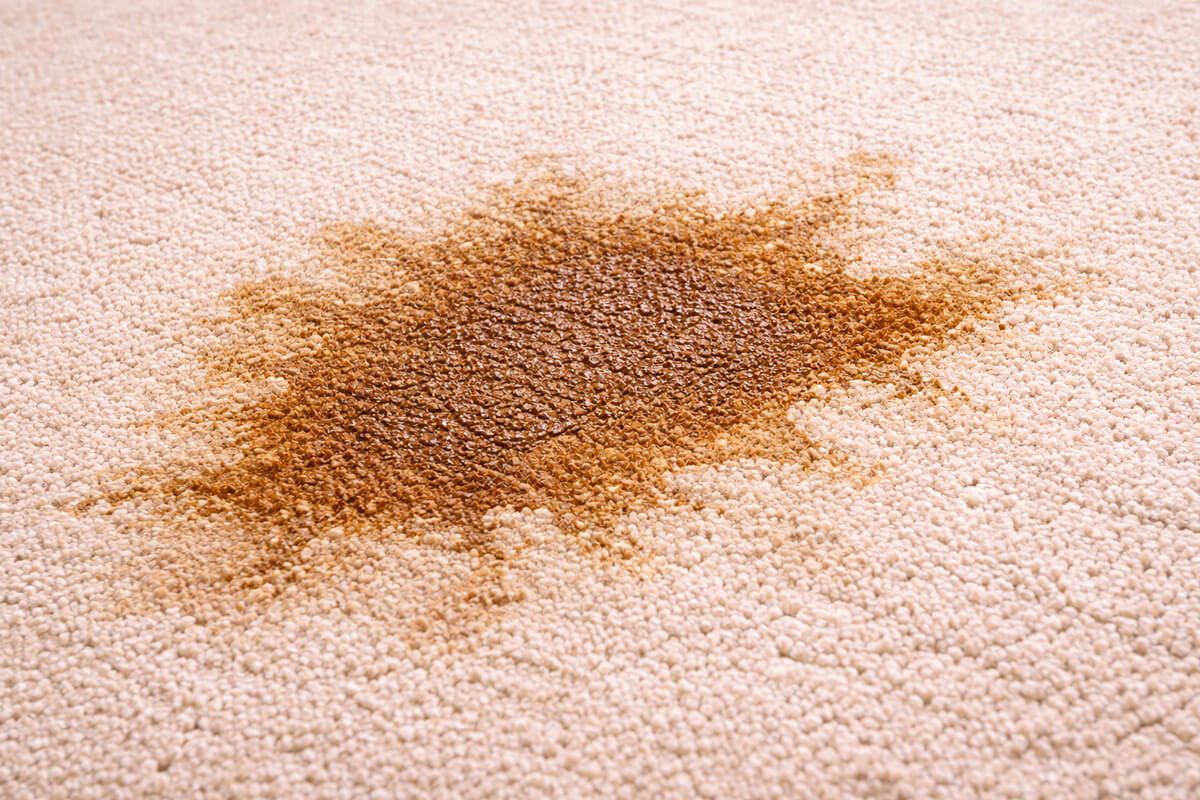
How coffee odor develops over time after a spill
Immediately after a spill, coffee odor is usually mild. However as time passes several processes occur simultaneously. Oxidation darkens coffee residue and intensifies its smell. Oils begin to turn rancid, producing unpleasant odors. If moisture remains, bacteria multiply and release additional odor compounds.
Carpet padding plays a key role in long-term odor development. Liquid spreads laterally through the padding, contaminating areas beyond the visible stain. This hidden contamination explains why odor can seem stronger than expected or appear in surrounding areas.
Supplies needed for deep coffee odor removal
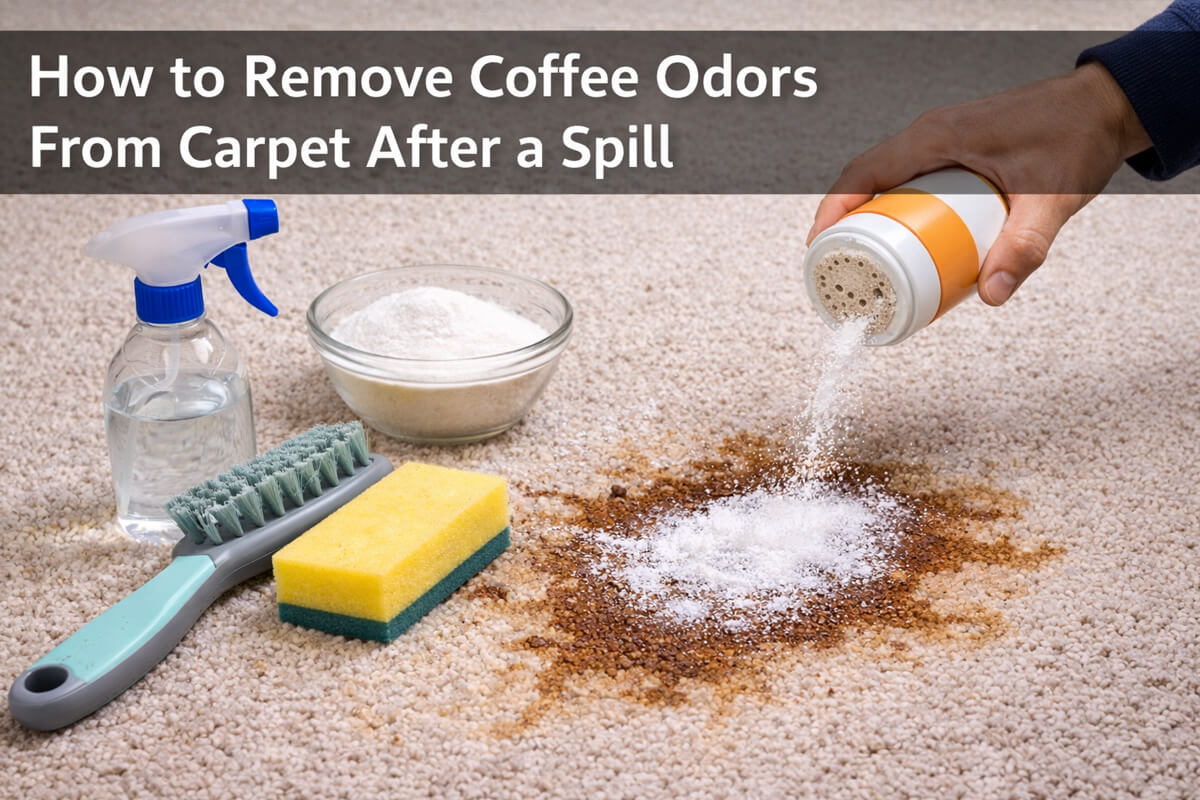
Removing coffee odor requires products that absorb, neutralize or chemically break down odor-causing molecules. Using the right tools in the correct sequence prevents spreading the smell further.
- Baking soda for absorbing odor molecules
- White vinegar for neutralizing acidic compounds
- Warm water for controlled rehydration of residue
- Mild dish soap for breaking down oily components
- Hydrogen peroxide for deep organic odor oxidation
- Microfiber cloths for blotting without abrasion
- Vacuum cleaner with strong suction
- Spray bottle for precise application
Using minimal liquid is essential to avoid soaking the carpet padding further.
Immediate actions to limit odor after a coffee spill
The first minutes after a spill are critical. Early intervention reduces odor intensity and limits penetration into deeper layers.
Blotting excess liquid effectively
Blotting removes as much coffee as possible before it spreads. Use absorbent towels and apply firm pressure without rubbing. Replace towels frequently until they no longer absorb liquid.
Diluting residue with controlled moisture
Small amounts of water help reduce odor concentration without soaking the carpet.
- Dampen a cloth lightly with cold water
- Blot the affected area gently
- Remove moisture immediately with dry towels
This step slows odor formation while preparing the carpet for deeper treatment.
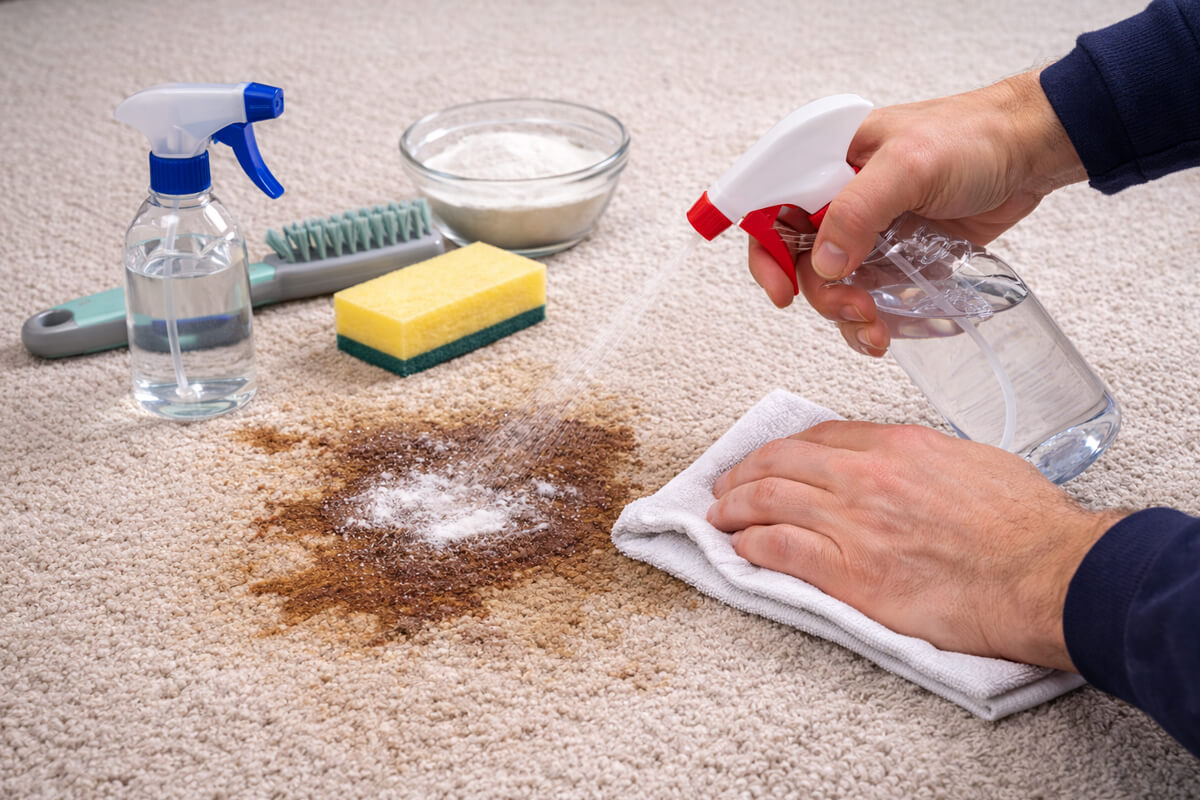
Using baking soda to absorb coffee odors
Baking soda is one of the most effective natural odor absorbers. It works by trapping odor molecules rather than masking them. Baking soda is particularly useful for carpets because it penetrates fibers without adding moisture.
Correct baking soda application technique
- Ensure the carpet is dry or only slightly damp
- Sprinkle a thick, even layer of baking soda
- Work it gently into the fibers with a soft brush
- Leave it in place for at least several hours
- Vacuum slowly and thoroughly
Longer dwell time allows baking soda to absorb deeper odor compounds.
Neutralizing odors using vinegar solution
White vinegar neutralizes odor-causing acids and kills bacteria. Although vinegar has a strong smell initially, it evaporates quickly and carries unwanted odors with it.
Vinegar deodorizing process
- Mix equal parts white vinegar and water
- Lightly mist the affected area without soaking
- Allow the carpet to air dry completely
- Vacuum to restore texture
This method is especially effective for sour or musty coffee odors.
Removing oily coffee residue with dish soap
Oils in coffee trap odors within carpet fibers. Dish soap breaks down these oils, allowing deodorizing agents to work more effectively.
Dish soap odor removal method
- Mix a few drops of dish soap with warm water
- Apply sparingly using a cloth
- Blot gently to lift oily residue
- Rinse lightly with clean water
- Dry thoroughly with towels and airflow
This step is crucial when coffee contains milk or cream.
Using hydrogen peroxide for deep odor elimination
Hydrogen peroxide removes odor by oxidizing organic compounds. It is effective for deep-set odors but should be used carefully on light-colored carpets only.
Safe hydrogen peroxide application
- Patch test in an inconspicuous area
- Dilute peroxide with equal water
- Apply lightly to the odor source
- Allow complete drying
This method helps eliminate stubborn odors that resist other treatments.
Addressing odor trapped in carpet padding
If odors persist after surface treatment, the padding is likely contaminated. Baking soda combined with light vinegar mist can help neutralize deeper odors. Severe cases may require professional extraction or partial padding replacement.
Comparison of coffee odor removal techniques
The table below summarizes common odor removal methods and their effectiveness.
| Method | Odor Type | Carpet Safety | Effectiveness |
|---|---|---|---|
| Baking soda | Mild to moderate odors | All carpets | High |
| Vinegar solution | Sour or musty odors | Most carpets | Very high |
| Dish soap | Oily residue odors | Most carpets | High |
| Hydrogen peroxide | Deep organic odors | Light carpets | Very high |
Drying the carpet correctly after deodorizing
Thorough drying is essential to prevent odor recurrence. Moisture trapped in padding creates conditions for bacteria and mold.
- Increase airflow with fans
- Open windows when weather allows
- Avoid foot traffic until completely dry
Fast drying locks in deodorizing results.
Preventing coffee odors in carpet in the future
Prevention minimizes odor problems and extends carpet life.
- Blot spills immediately
- Avoid soaking carpets during cleaning
- Use rugs in high-risk areas
- Vacuum regularly to remove residue
- Apply baking soda periodically as maintenance
With a clear understanding of how coffee odors develop and the correct removal methods, you can eliminate lingering smells completely. Careful moisture control, deep deodorizing and proper drying ensure carpets remain fresh and odor-free long after a coffee spill.