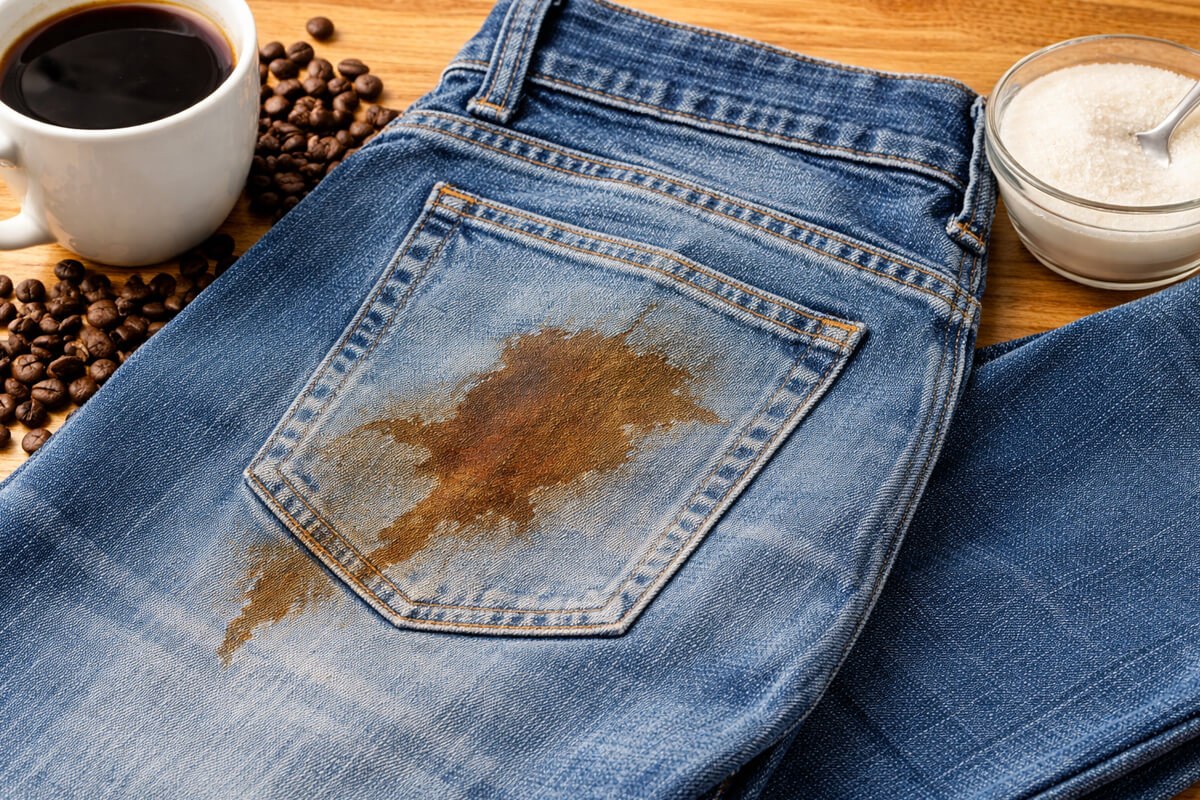
Coffee stains on jeans are especially frustrating because denim combines two opposing characteristics. On one hand, it is a strong and durable fabric designed for everyday wear. On the other hand, denim is dyed using pigments that can easily fade, bleed or lighten when exposed to heat, friction or aggressive cleaning products. Coffee contains tannins, oils and dark pigments that penetrate deep into cotton fibers and cling tightly as they dry. Removing these stains requires a careful balance between lifting the coffee residue and preserving the original color of the jeans. This article explains in detail how coffee stains behave on denim, how to remove both fresh and dried stains safely, and how to keep your jeans looking rich and evenly colored.

How coffee bonds with denim fibers
Denim is typically made from tightly woven cotton yarns that are dyed after weaving. The dye, most commonly indigo, coats the outer surface of the fibers rather than fully penetrating them. This is what gives jeans their characteristic fading over time. When coffee spills onto denim, the liquid quickly seeps between the yarns and into the fiber structure. Tannins in coffee behave like natural dyes and form bonds with cotton, especially when heat is present.
As the coffee dries, water evaporates and leaves behind concentrated pigments. These pigments lodge themselves between the twisted cotton fibers and beneath the surface dye layer. Because the denim dye is not fully fixed inside the fiber, aggressive cleaning methods can remove both the coffee stain and the jean’s color at the same time. This is why denim requires gentler, more controlled cleaning than many other fabrics.
Why denim color fades during improper stain removal
Color fading is not caused by a single factor but by a combination of mechanical and chemical stress. Many common cleaning habits unintentionally accelerate dye loss.
- Hot water opens cotton fibers and releases dye molecules
- Strong detergents strip surface dye along with stains
- Hard scrubbing breaks fiber ends and lightens fabric
- Bleach oxidizes dye permanently even in small amounts
- High dryer heat sets uneven color loss
Once denim dye is removed, it cannot be restored. This makes prevention of fading just as important as stain removal itself.
Different types of coffee stains found on jeans
Not all coffee stains behave the same way. The composition of the spill determines how difficult it will be to remove and which method is safest.
- Black coffee stains consist mainly of tannins and water
- Coffee with milk contains fats and proteins that cling to fibers
- Sugary coffee leaves sticky residues that trap dirt
- Dried stains have oxidized pigments that bond more strongly
Identifying the type of stain helps determine whether simple rinsing is enough or if deeper treatment is required.
Preparing jeans for color-safe stain treatment
Preparation reduces the risk of spreading the stain or damaging the fabric. Before applying any cleaner, excess coffee residue and surface dirt should be removed carefully.
Turn the jeans inside out and gently shake or brush the stained area to loosen dried particles. This prevents rubbing grit into the fabric during cleaning. Working from the inside of the fabric also helps push the stain outward rather than deeper into the weave.
Immediate action for fresh coffee spills
Fresh stains are significantly easier to remove because the pigments have not yet bonded fully with the fibers. Acting quickly minimizes the need for stronger treatments.
Blotting coffee without spreading the stain
Blotting absorbs liquid before it penetrates further. The pressure should be firm but gentle.
- Use a clean cloth or paper towel
- Press straight down without rubbing
- Move from the outer edge toward the center
This technique removes liquid while keeping the stain localized.
Cold water flushing to protect denim dye
Cold water prevents dye release and helps flush coffee particles out of the cotton fibers.
- Hold the stained area under cold running water
- Rinse from the inside of the jeans outward
- Continue until visible discoloration fades
Heat should be avoided completely at this stage.
Rehydrating dried coffee stains safely
Dried stains require controlled rehydration. Moisture softens hardened tannins and makes them easier to lift without aggressive scrubbing.
Lightly dampen the stained area with cold water and allow it to sit for several minutes. The fabric should feel cool and slightly moist but never soaked. This step loosens residue while keeping dye stable.
Using mild laundry detergent on denim
Color-safe laundry detergent is one of the most reliable tools for removing coffee stains from jeans. It is designed to clean cotton fibers while minimizing dye loss.
Detergent application technique
- Apply a small amount directly to the stain
- Gently massage with fingertips or a soft brush
- Allow it to work for 10 minutes
- Rinse thoroughly with cold water
This process can be repeated multiple times without damaging the fabric.
Dish soap for milk based coffee stains
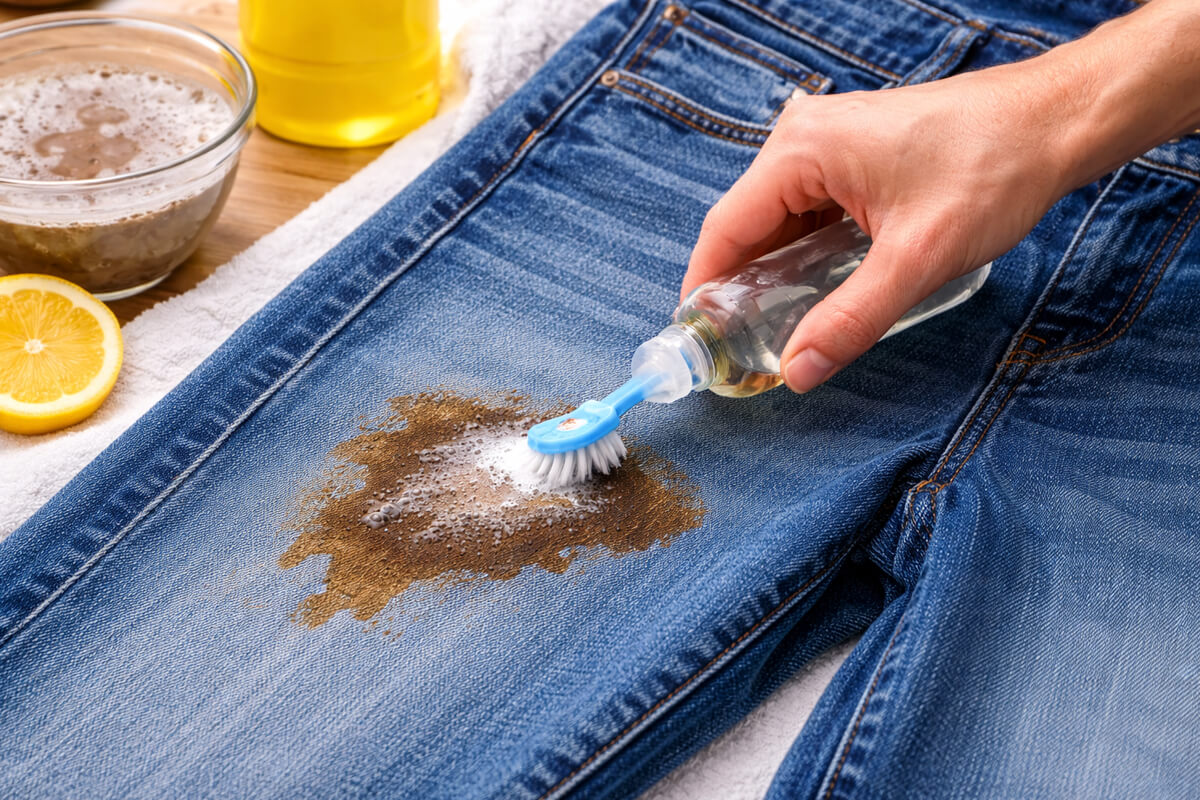
Coffee mixed with milk introduces fats and proteins that detergent alone may not fully remove. Dish soap is effective at breaking down grease while remaining gentle on denim.
Grease focused cleaning method
- Dilute a few drops of dish soap in cold water
- Apply gently to the stain
- Blot and massage lightly
- Rinse completely
This step prevents oily rings and lingering discoloration.
Vinegar as a tannin dissolver without fading
White vinegar is mildly acidic and dissolves tannins effectively when diluted. It should never be used at full strength on denim.
Color-safe vinegar dilution method
- Mix one part vinegar with three parts cold water
- Apply lightly with a cloth
- Let it sit for five minutes
- Rinse thoroughly
Proper dilution prevents fiber weakening and dye damage.
Baking soda for gentle stain lifting
Baking soda provides mild abrasion and absorbs pigment without stripping dye. It is most useful for lighter stains or final touch-ups.
Baking soda paste application
- Mix baking soda with cold water
- Apply a thin layer to the stain
- Allow it to sit briefly
- Rinse gently
Overuse should be avoided to prevent fabric dullness.
Comparison of coffee stain removal methods for jeans
The table below shows how each method performs in terms of stain removal and color protection.
| Method | Best Use | Color Safety | Effectiveness |
|---|---|---|---|
| Cold water rinse | Fresh stains | Very high | High |
| Laundry detergent | Dried stains | High | High |
| Dish soap | Milk based coffee | High | High |
| Diluted vinegar | Stubborn tannins | Medium to high | Very high |
| Baking soda | Light discoloration | Very high | Medium |
Washing jeans after stain removal
Once the stain is gone, proper washing ensures no residue remains and prevents uneven fading.
- Turn jeans inside out
- Wash in cold water only
- Use gentle detergent
- Select a mild cycle
Avoid fabric softeners which may affect color retention.
Drying jeans without causing color loss
Drying is one of the most critical steps for preserving denim color.
- Air dry whenever possible
- Keep jeans away from direct sunlight
- Avoid tumble drying until fully stain free
Heat can permanently set remaining stains and fade dye unevenly.
Preventing coffee stains on jeans in everyday life
Prevention minimizes the need for repeated cleaning and preserves denim appearance.
- Use travel mugs with secure lids
- Avoid placing cups on laps or pockets
- Address spills immediately
- Do not store stained jeans unwashed
With careful handling, gentle cleaning methods and patience, coffee stains can be removed from jeans effectively without fading the color. Understanding denim structure and respecting its dye limitations ensures long lasting appearance and consistent color.