Coffee stains on curtains are especially frustrating because curtains are highly visible and often made from fabrics that do not tolerate aggressive cleaning. A single spill or splash can create a noticeable brown mark that draws attention every time light passes through the fabric. Unlike carpets or upholstery, curtains hang vertically, which causes liquid to spread downward and form elongated stains. This in-depth guide explains in detail how coffee stains behave on curtain fabrics, how different materials react to cleaning, and how to remove stains safely without shrinking, fading or distorting the fabric.

Why coffee stains behave differently on curtains
Curtains are designed to be lightweight and breathable, which means their fibers are often loosely woven. When coffee contacts the fabric, it spreads rapidly along the fibers instead of pooling in one place. Gravity plays a major role, pulling the liquid downward and causing streak-like stains that may extend far below the initial spill point.
Coffee contains tannins that bind strongly to textile fibers. As the liquid dries, oxidation darkens these compounds, making the stain more visible. Curtains are frequently exposed to sunlight, which can further set stains by accelerating chemical bonding between coffee pigments and fabric fibers. This combination of gravity, oxidation and light exposure makes curtain coffee stains particularly stubborn if not addressed promptly.
How curtain fabric structure affects stain removal
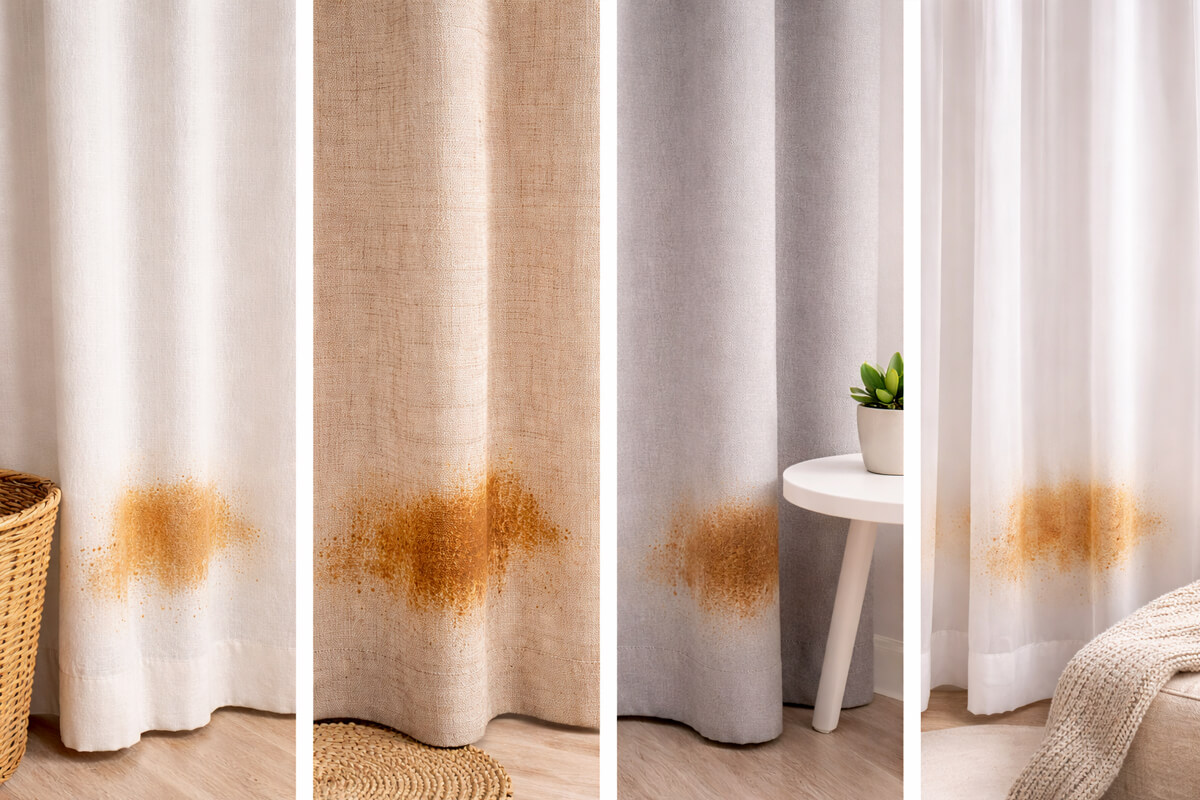
The weave and thickness of curtain fabric determine how deeply coffee penetrates and how easily it can be removed. Loosely woven fabrics allow liquid to travel quickly, while layered or lined curtains trap moisture between layers.
- Thin cotton curtains absorb quickly but release stains with gentle washing
- Linen fibers soak up liquid and are prone to water marks
- Polyester resists deep absorption and tolerates repeated blotting
- Sheer curtains spread stains widely due to fine fibers
- Blackout curtains trap liquid between outer fabric and lining
Understanding fabric structure helps determine whether spot cleaning alone is sufficient or if deeper treatment is required.
Risks of improper cleaning on curtain fabrics
Curtains are more vulnerable to damage than many household textiles. Improper cleaning can permanently alter their appearance and texture.
Excessive moisture can cause water rings, uneven drying or shrinkage. Hot water sets tannins and may distort delicate fibers. Rubbing can fray threads or spread the stain into surrounding areas. Bleach and harsh chemicals weaken fibers, cause yellowing and create uneven fading, especially on curtains exposed to sunlight.
Safe stain removal relies on minimal moisture, gentle blotting and patience rather than force.
Essential supplies for safe curtain stain removal
Using mild and controlled cleaning tools is critical when working with curtains. Most coffee stains can be treated effectively with household items when used correctly.
- Cold or lukewarm water for gentle dilution
- Mild liquid dish soap to dissolve coffee oils
- White vinegar to break down tannins
- Baking soda for odor absorption
- Hydrogen peroxide for light-colored fabrics
- Microfiber cloths for blotting
- Spray bottle for precise application
- Clean towels to protect surrounding fabric
Always test any solution on an inconspicuous area before applying it to a visible section.
Immediate actions after a coffee spill on curtains
Quick action significantly reduces stain severity. Fresh coffee stains are easier to remove before tannins bond with fibers.
Blotting coffee without spreading the stain
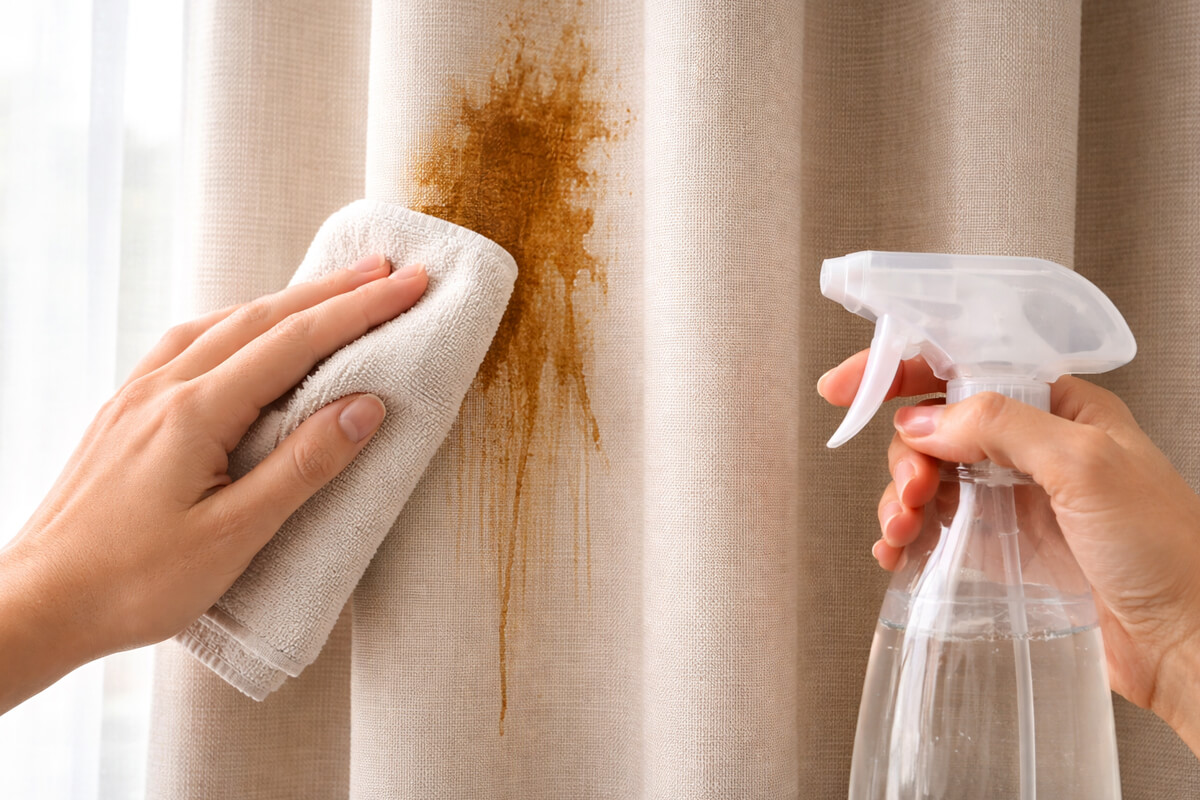
Blotting should begin immediately. Use a clean cloth to absorb liquid gently. Because curtains hang vertically, start blotting from the bottom of the stain and move upward. This prevents gravity from pulling the coffee further down the fabric.
Rubbing should be avoided completely, as it forces coffee deeper into fibers and enlarges the stained area.
Controlled dilution with cold water
Cold water helps reduce coffee concentration without setting the stain.
- Dampen a cloth lightly with cold water
- Blot the stain gently
- Use a dry cloth immediately to remove moisture
This step prepares the stain for deeper treatment while limiting water exposure.
Removing fresh coffee stains with dish soap
Dish soap is one of the safest and most effective cleaners for curtains. It breaks down oils and pigments without damaging fibers when used sparingly.
Dish soap spot cleaning technique
- Mix one cup of lukewarm water with a few drops of dish soap
- Apply the solution using a cloth or spray bottle
- Blot gently and allow it to sit briefly
- Blot again with a dry cloth
This method works best on fresh or lightly dried stains.
Breaking down dried coffee stains with vinegar
Dried stains require chemical breakdown. White vinegar dissolves tannins and loosens pigments bonded to fibers.
Vinegar based stain treatment
- Mix equal parts white vinegar and water
- Apply sparingly to the stained area
- Allow the solution to work for several minutes
- Blot thoroughly until the stain fades
Vinegar odor evaporates naturally and can be neutralized further with baking soda if needed.
Using baking soda to lift residue and remove odor
Baking soda absorbs moisture and odor while helping lift remaining coffee residue from fibers.
Baking soda application method
- Lightly dampen the stained area
- Sprinkle baking soda evenly over the stain
- Allow it to dry completely
- Brush or vacuum off residue carefully
This step is especially useful for curtains that retain coffee odor.
Dealing with coffee stains containing milk or sugar
Milk and sugar complicate stain removal. Milk proteins bind tightly to fibers, while sugar creates sticky residue that attracts dust and dirt.
Dish soap dissolves fats, vinegar neutralizes proteins and baking soda absorbs residue. Repeating gentle treatments produces better results than aggressive cleaning.
Washing curtains after stain treatment
Some curtains can be washed after spot cleaning to remove residual pigment and cleaning agents.
- Check care labels carefully
- Use cold or lukewarm water only
- Select gentle wash cycles
- Avoid high-speed spinning
Air drying is preferred to maintain fabric shape and texture.
Comparison of coffee stain removal methods for curtains
The table below compares different cleaning methods based on effectiveness and fabric safety.
| Method | Best Use | Fabric Safety | Effectiveness |
|---|---|---|---|
| Cold water blotting | Fresh spills | All fabrics | High |
| Dish soap solution | Fresh to moderate stains | Most fabrics | High |
| Vinegar solution | Dried tannin stains | Most fabrics | Very high |
| Baking soda | Odor and residue | All fabrics | Medium to high |
Drying curtains correctly after cleaning
Proper drying prevents water marks, shrinkage and uneven texture.
- Hang curtains evenly to maintain drape
- Avoid direct sunlight during drying
- Ensure good air circulation
Do not use high heat unless allowed by the care label.
Preventing coffee stains on curtains in the future
Preventive habits reduce the need for repeated cleaning and extend curtain lifespan.
- Keep beverages away from curtain edges
- Use tables instead of window sills
- Select washable or stain-resistant fabrics
- Clean splashes immediately
- Vacuum curtains regularly to remove dust
With careful handling and gentle cleaning techniques, coffee stains can be removed from curtains without damaging fabric. Understanding fabric behavior, using controlled moisture and allowing proper drying ensures curtains remain clean, elegant and long-lasting.