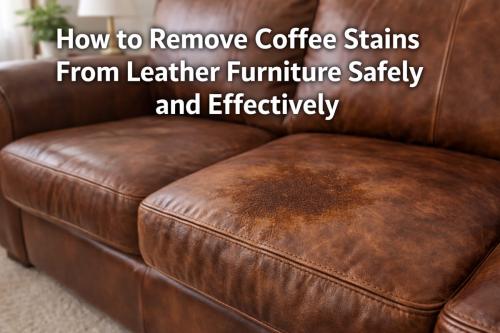
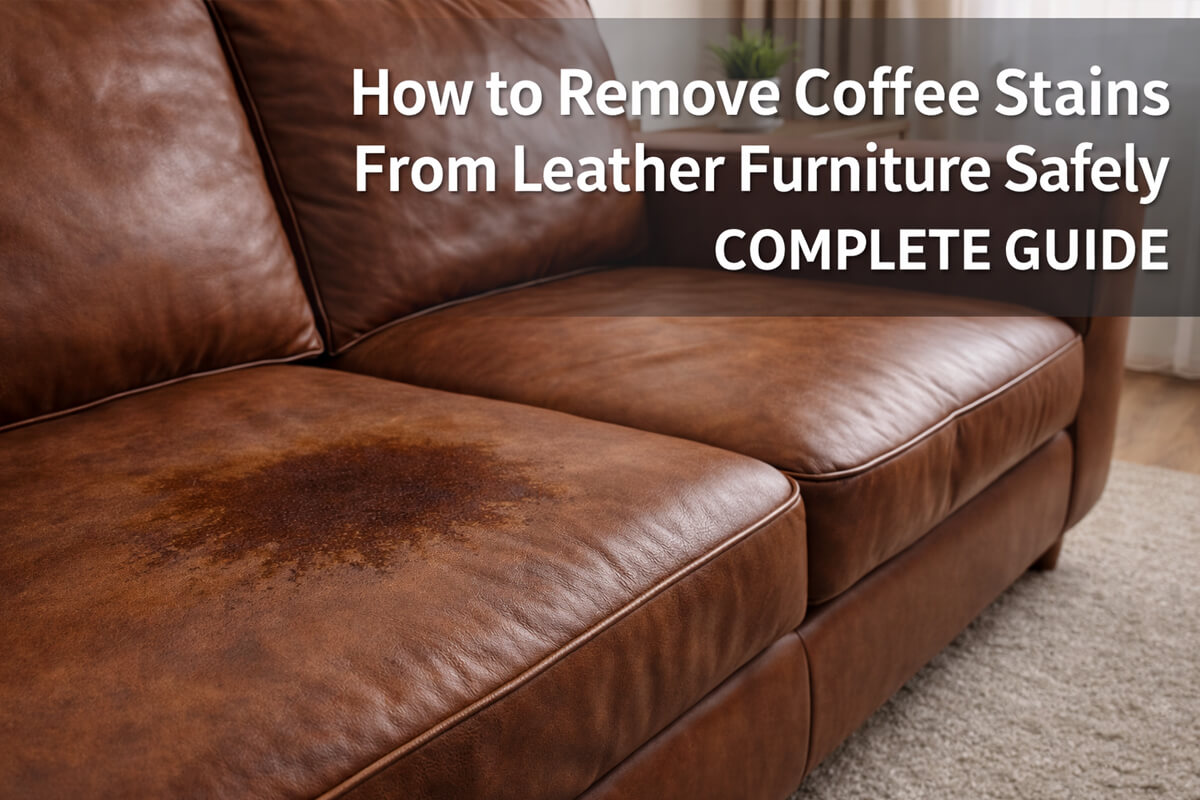
Coffee stains on leather furniture cause immediate concern because leather is both durable and delicate at the same time. Unlike fabric upholstery, leather reacts strongly to moisture, heat and acidic liquids. Coffee contains tannins, oils and acids that can penetrate the leather surface, disrupt the protective finish and leave behind dark marks or greasy spots. If handled incorrectly, even a small spill can result in discoloration, stiffness or cracking. This comprehensive guide explains in detail how coffee stains affect leather furniture, how to clean both fresh and dried stains step by step, and how to restore leather safely without compromising its structure or appearance.
How coffee interacts with leather furniture surfaces
Leather is a natural material made from animal hide, and even after tanning and finishing, it retains a porous structure. These microscopic pores allow leather to breathe, but they also allow liquids to enter. When coffee is spilled, part of the liquid remains on the surface while the rest seeps into pores, seams and stitching. Coffee pigments and tannins bind to leather fibers, especially if the surface coating is thin or worn.
Hot coffee increases the risk of staining because heat softens the leather surface. This temporary softening allows liquid to penetrate more deeply and spread unevenly. As the coffee dries, pigments concentrate inside pores and along stitching lines, creating darker patches that are difficult to remove with simple wiping.
Why coffee stains can permanently damage leather if untreated
Coffee stains are not only a cosmetic problem. Coffee contains acids that can weaken the leather finish over time. When moisture evaporates, it pulls natural oils out of the leather, leaving the stained area drier and less flexible than the surrounding surface. This uneven oil loss causes discoloration, stiffness and eventually cracking.
Repeated exposure to moisture without conditioning accelerates aging. Stained areas may fade differently, develop rough texture or lose their protective coating entirely. If milk or sugar is present in the coffee, oily residue can attract dirt and create sticky buildup that further degrades the leather surface.
Typical mistakes that worsen coffee stains on leather
Many well-intentioned cleaning attempts cause more harm than good. Leather requires controlled, gentle treatment, and the following mistakes often lead to permanent damage.
- Soaking leather with water and allowing it to absorb deeply
- Scrubbing aggressively and removing the protective finish
- Using vinegar or alcohol without proper dilution
- Applying household cleaners not designed for leather
- Skipping leather conditioning after cleaning
A careful approach that limits moisture and restores oils is essential for safe cleaning.
Understanding different types of leather furniture
Before cleaning any stain, it is important to identify the type of leather. Each leather type reacts differently to moisture and cleaning agents.
- Protected or finished leather has a surface coating and offers some resistance to spills
- Semi-aniline leather combines softness with light protection
- Aniline leather is untreated and highly absorbent
- Bonded leather contains synthetic materials and behaves differently from natural hide
Aniline and delicate leathers stain more easily and often require professional care. Finished leather is the most forgiving for home cleaning methods.
Supplies required for safe coffee stain removal
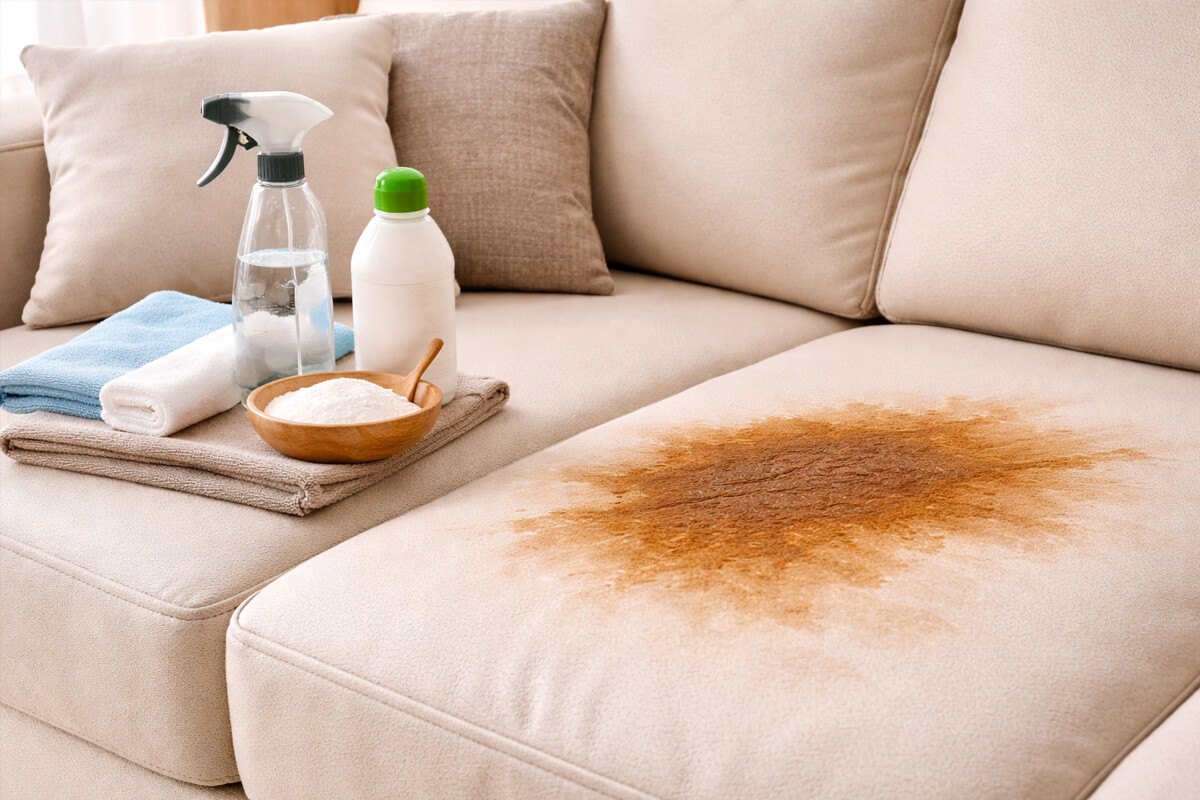
Leather should be cleaned using mild, non-abrasive supplies that remove stains without stripping oils or damaging the finish.
- Soft microfiber cloths for gentle wiping
- Distilled water to avoid mineral residue
- Mild liquid dish soap without degreasers
- White vinegar heavily diluted with water
- Baking soda for absorbing oils and odors
- Quality leather conditioner or cream
Distilled water is preferred because minerals in tap water can leave marks on leather.
Immediate actions after spilling coffee on leather furniture
Quick action greatly reduces the risk of permanent staining. Fresh spills are much easier to control before coffee penetrates deeply.
Blotting liquid without spreading the stain
Blot the spill immediately using a clean, dry microfiber cloth. Apply gentle pressure to absorb liquid without rubbing. Move to a fresh section of the cloth frequently to prevent spreading coffee across the surface. Blotting should continue until no moisture transfers.
Light surface cleaning with minimal moisture
If residue remains, use a cloth lightly dampened with distilled water.
- Dampen the cloth slightly, not wet
- Wipe gently in small circular motions
- Dry immediately with a clean cloth
This removes surface residue while limiting absorption into the leather.
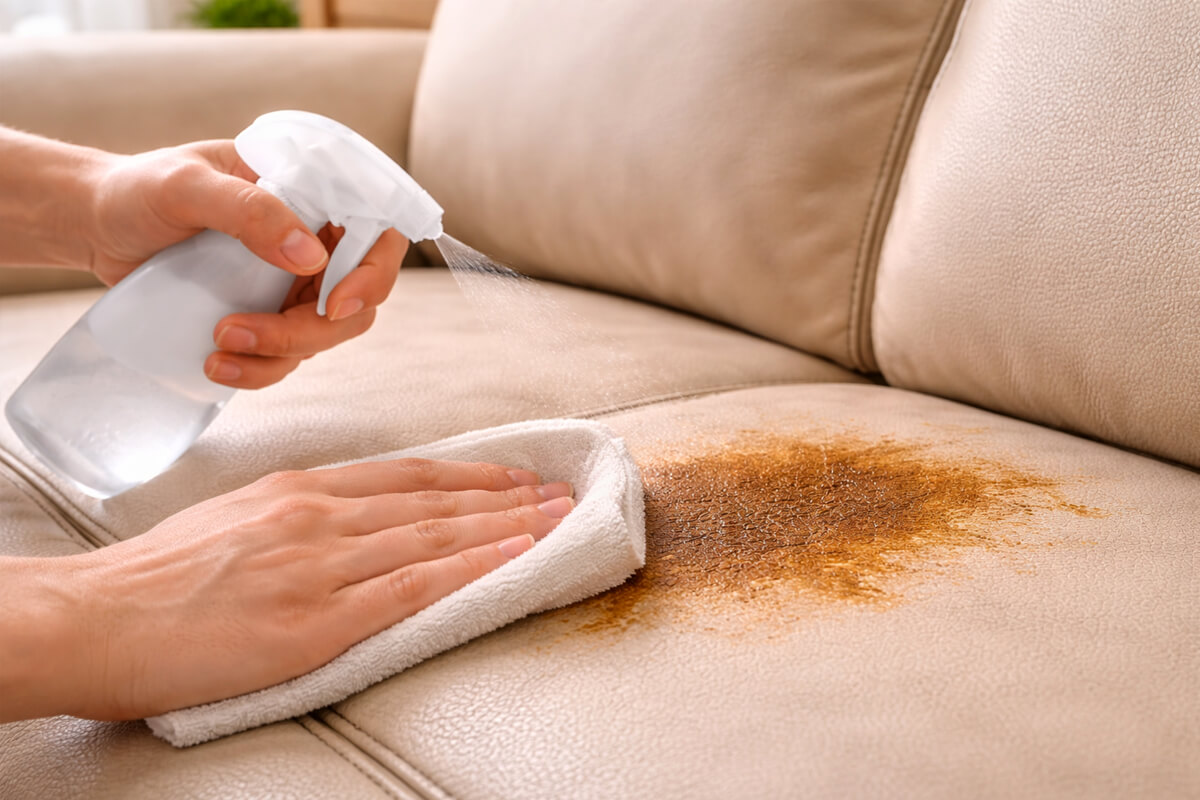
Cleaning fresh coffee stains using mild soap
Mild dish soap helps break down coffee oils and pigments while remaining safe for finished leather when used correctly.
Soap cleaning technique
- Mix a few drops of dish soap with distilled water
- Lightly dampen a microfiber cloth
- Wipe the stained area gently
- Remove soap residue with a clean damp cloth
- Dry thoroughly with a soft towel
This method works best for fresh or lightly set stains.
Removing dried coffee stains from leather safely
Dried stains require extra care because pigments have bonded more firmly to the leather surface.
Diluted vinegar method for finished leather
Vinegar can dissolve tannins when heavily diluted.
- Mix one part white vinegar with ten parts distilled water
- Dampen a cloth lightly with the solution
- Wipe gently over the stained area
- Dry immediately
This method should only be used on finished leather and always followed by conditioning.
Using baking soda to absorb oils and neutralize odor
Baking soda is useful for absorbing oily residue and lingering coffee odor.
Baking soda application method
- Sprinkle a very small amount on the stain
- Allow it to sit for several hours
- Wipe away gently with a dry cloth
Baking soda should never be rubbed into leather.
Special considerations for aniline and delicate leather
Aniline leather lacks a protective coating and absorbs liquid immediately. Home cleaning options are extremely limited.
For delicate leather, blot moisture quickly and avoid soap, vinegar or water-based solutions. Persistent stains usually require professional leather cleaning to avoid permanent damage.
Restoring leather after coffee stain removal
Any cleaning process removes some natural oils from leather. Conditioning restores flexibility, color and surface protection.
- Apply leather conditioner evenly
- Allow it to absorb fully
- Buff lightly with a soft cloth
Conditioning prevents cracking and extends furniture lifespan.
Comparison of coffee stain removal methods for leather furniture
The table below compares common methods based on safety and effectiveness.
| Method | Best Use | Leather Safety | Effectiveness |
|---|---|---|---|
| Dry blotting | Fresh spills | All leather types | High |
| Mild soap solution | Light stains | Finished leather | High |
| Diluted vinegar | Dried stains | Finished leather only | Medium |
| Baking soda | Odor and oil residue | All leather types | Medium |
Drying leather furniture correctly after cleaning
Leather should dry naturally to prevent stiffness and surface damage.
- Allow leather to air dry
- Avoid heaters and hair dryers
- Keep furniture away from direct sunlight
Slow drying preserves texture and color.
Preventing coffee stains on leather furniture
Preventive habits reduce cleaning risks and preserve leather quality.
- Use coasters and trays for drinks
- Avoid placing hot cups on armrests
- Wipe spills immediately
- Condition leather regularly
- Apply leather protectant products
By understanding how coffee interacts with leather and using careful, moisture-controlled cleaning techniques, coffee stains can be removed safely. Proper conditioning and preventive care ensure leather furniture remains clean, supple and visually appealing for many years.