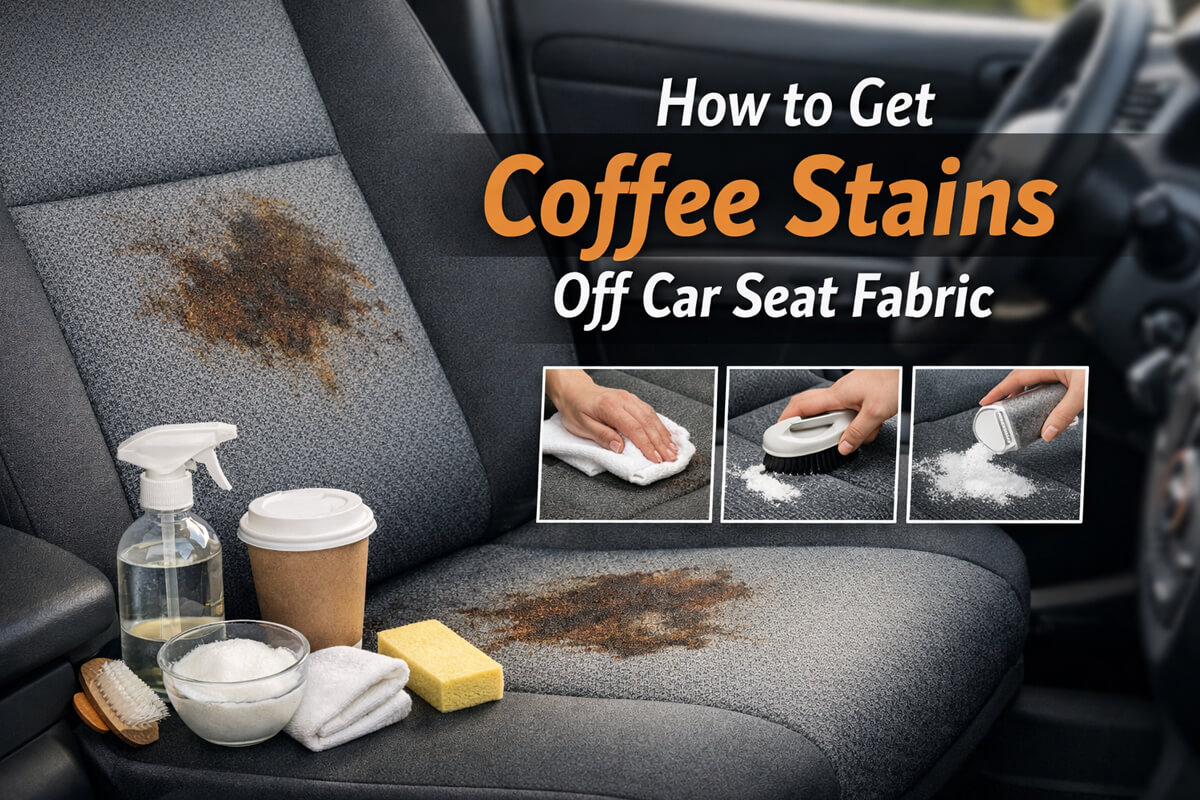
Coffee spills inside a car are one of the most frequent causes of interior stains. Fabric car seats absorb liquid extremely fast, and once coffee dries, the pigments, tannins and oils become firmly embedded in the fibers. Heat inside the vehicle accelerates oxidation, while limited airflow slows drying, allowing stains to penetrate deeper into the seat cushion and foam. This detailed guide explains in depth how coffee stains behave on car seat fabric, how to remove both fresh and dried stains safely, and how to restore upholstery without discoloration, residue or lingering odor.
How coffee stains behave inside car upholstery
Car seat fabric is engineered to withstand friction and daily wear, but it is not stain-proof. When coffee is spilled, the liquid first wets the surface fibers, then travels downward into the foam padding. Coffee contains tannins that bind to textile fibers similarly to dye. Once the liquid evaporates, these tannins remain behind as dark solids.
Unlike household furniture, car seats experience constant temperature changes. Heat expands fibers, allowing coffee to penetrate deeper. As the seat cools, fibers contract and trap the stain. This cycle repeats daily, making dried coffee stains progressively more difficult to remove over time.
If the coffee contained milk or sugar, the problem becomes more complex. Proteins and sugars create sticky residues that attract dirt, leading to darkened stains and unpleasant odors. These organic residues can also support bacterial growth if moisture remains trapped.
Environmental and usage factors that worsen coffee stains
Several factors unique to car interiors contribute to stain severity. Recognizing them helps determine the most effective cleaning approach.
- High cabin temperatures that accelerate stain oxidation
- Repeated pressure from sitting that pushes stains deeper
- Limited ventilation that slows moisture evaporation
- Dark interiors that hide stains until they become severe
- Frequent spills in the same area such as cup holders and seat edges
Understanding these conditions explains why car seat stains often require deeper cleaning compared to household upholstery.
Understanding different types of car seat fabric
Before cleaning any coffee stain, it is essential to understand the upholstery material. Different fabrics absorb and release stains differently.
- Polyester blends are common and tolerate mild water-based cleaners
- Nylon seats absorb quickly but release stains effectively with soap solutions
- Velour fabrics are highly absorbent and require minimal moisture
- Perforated fabrics allow liquid to reach foam rapidly
Always consult the vehicle manufacturer’s care recommendations if available. Using incompatible cleaners may cause fading, stiffness or water rings.
Essential supplies for effective coffee stain removal
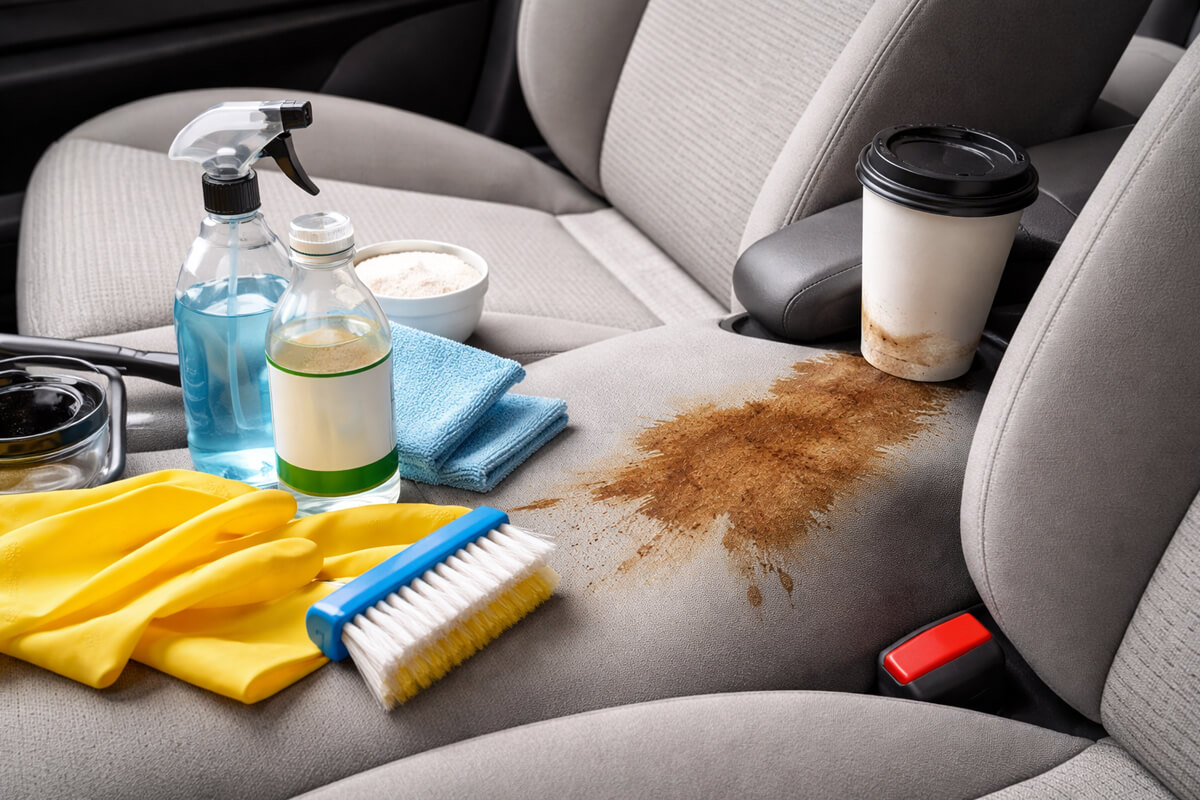
Having the correct tools and cleaning agents prepared in advance prevents repeated cleaning cycles and minimizes the risk of spreading the stain.
- Cold or lukewarm water for controlled moisture application
- Mild liquid dish soap to break down oils
- White vinegar to dissolve tannins and neutralize odors
- Baking soda for absorption and deodorizing
- Microfiber cloths for blotting without abrasion
- Soft brush or toothbrush for gentle agitation
- Spray bottle for even distribution of solutions
- Vacuum cleaner to remove dried residue
Using minimal liquid is critical to avoid saturating the seat foam.
Immediate response to fresh coffee spills
Fresh coffee stains are significantly easier to remove than dried ones. Immediate action prevents pigments from bonding with fibers.
Blotting excess coffee correctly
Blotting should begin as soon as the spill occurs. The goal is to absorb as much liquid as possible without spreading it.
- Use a clean cloth or paper towel
- Press gently from the outside of the stain inward
- Replace the cloth as it becomes saturated
Rubbing must be avoided, as it forces coffee deeper into the seat.
Cold water dilution method
Cold water helps flush coffee before it sets into the fibers.
- Dampen a cloth with cold water
- Blot the stain lightly
- Repeat until visible discoloration fades
Hot water should never be used at this stage.
Rehydrating dried coffee stains safely
Dried stains must be softened before removal. Rehydration loosens hardened tannins and allows cleaning agents to penetrate.
Apply a light mist of lukewarm water to the stain and allow it to sit for several minutes. The fabric should be damp, not wet. This step prepares the stain for deeper treatment without spreading it into surrounding areas.
Deep cleaning dried coffee stains with dish soap
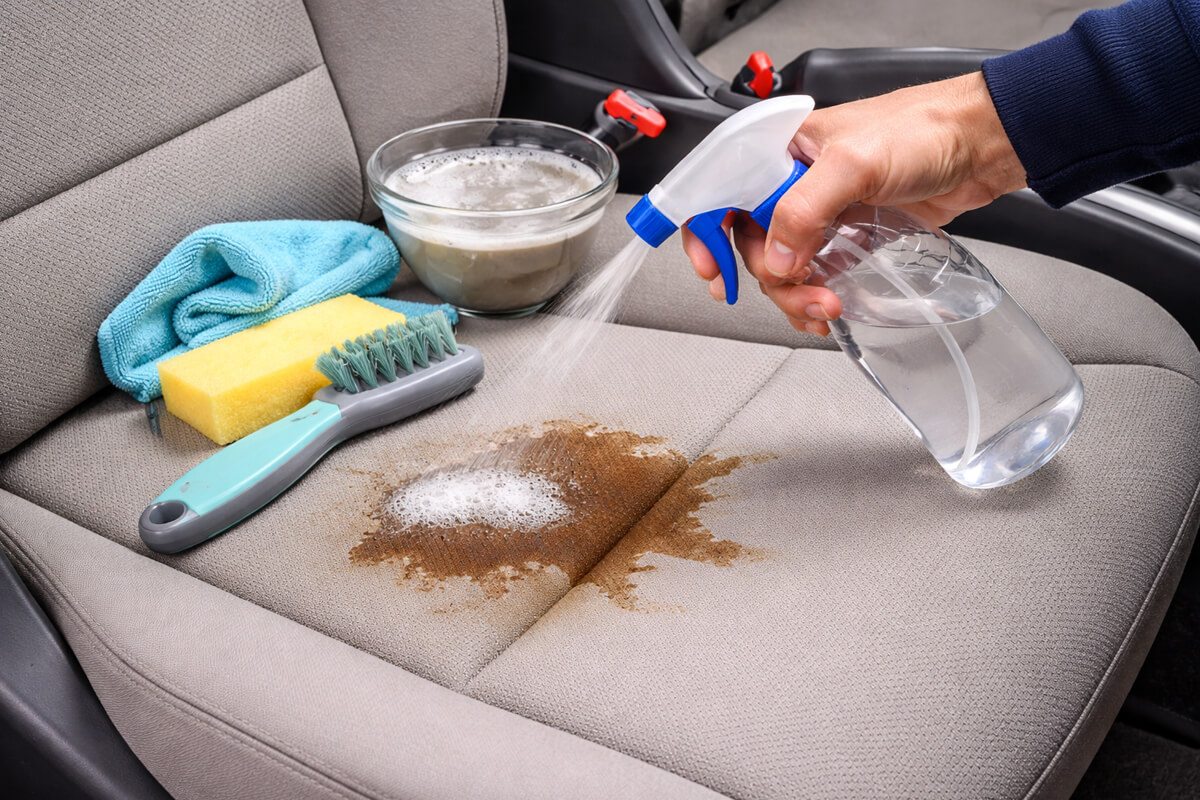
Dish soap is effective for breaking down oils and pigments while remaining safe for most car upholstery fabrics.
Soap solution method
- Mix one cup of warm water with a few drops of dish soap
- Apply using a cloth or spray bottle
- Blot gently to lift the stain
- Allow the solution to work for several minutes
- Blot again with a dry cloth
This method often removes moderate dried stains without additional cleaners.
Breaking down stubborn tannins with vinegar
White vinegar is particularly effective against tannin-based stains like coffee. Its mild acidity breaks chemical bonds without damaging fibers.
Vinegar cleaning process
- Mix equal parts white vinegar and water
- Lightly spray the stained area
- Allow the solution to sit for 5 to 10 minutes
- Blot thoroughly with a microfiber cloth
Vinegar odor dissipates as the seat dries and can be neutralized further with baking soda.
Using baking soda to absorb deep residue and odors
Baking soda excels at absorbing moisture and lifting residual pigments from upholstery fibers. It is especially effective after liquid cleaning steps.
Baking soda application
- Lightly dampen the stained area
- Cover generously with baking soda
- Allow it to sit for several hours or overnight
- Vacuum thoroughly once dry
This step also removes lingering coffee odors from the seat foam.
Handling coffee stains with milk or sugar
Milk and sugar introduce proteins and carbohydrates that require additional breakdown. If untreated, these residues can sour and produce odors.
Dish soap dissolves fats, vinegar neutralizes proteins, and baking soda absorbs remaining residue. Combining these methods gradually produces better results than aggressive scrubbing.
Comparison of coffee stain removal methods for car seats
The table below summarizes the effectiveness of different cleaning methods depending on stain condition and fabric type.
| Cleaning Method | Best Use Case | Fabric Safety | Effectiveness |
|---|---|---|---|
| Cold water blotting | Fresh spills | All fabrics | High |
| Dish soap solution | Dried moderate stains | Most fabrics | High |
| Vinegar and water | Dark tannin stains | Most fabrics | Very high |
| Baking soda | Odor and deep residue | All fabrics | Medium to high |
Drying car seats correctly after cleaning
Proper drying is essential to prevent water marks, odor and mold growth inside seat cushions.
- Open car doors or windows to improve airflow
- Use portable fans if available
- Avoid sitting on the seat until completely dry
Heat guns or hair dryers should not be used, as they may set remaining stains.
Preventing coffee stains in car interiors
Prevention is the most effective way to keep car upholstery clean and extend its lifespan.
- Use spill-resistant travel mugs
- Keep drinks in cup holders only
- Carry microfiber cloths for quick response
- Apply fabric protectant sprays periodically
- Clean minor spills immediately
With proper techniques and regular care, coffee stains can be removed successfully from car seat fabric. Detailed cleaning, controlled moisture use and correct drying ensure the interior remains fresh, clean and visually appealing for years.