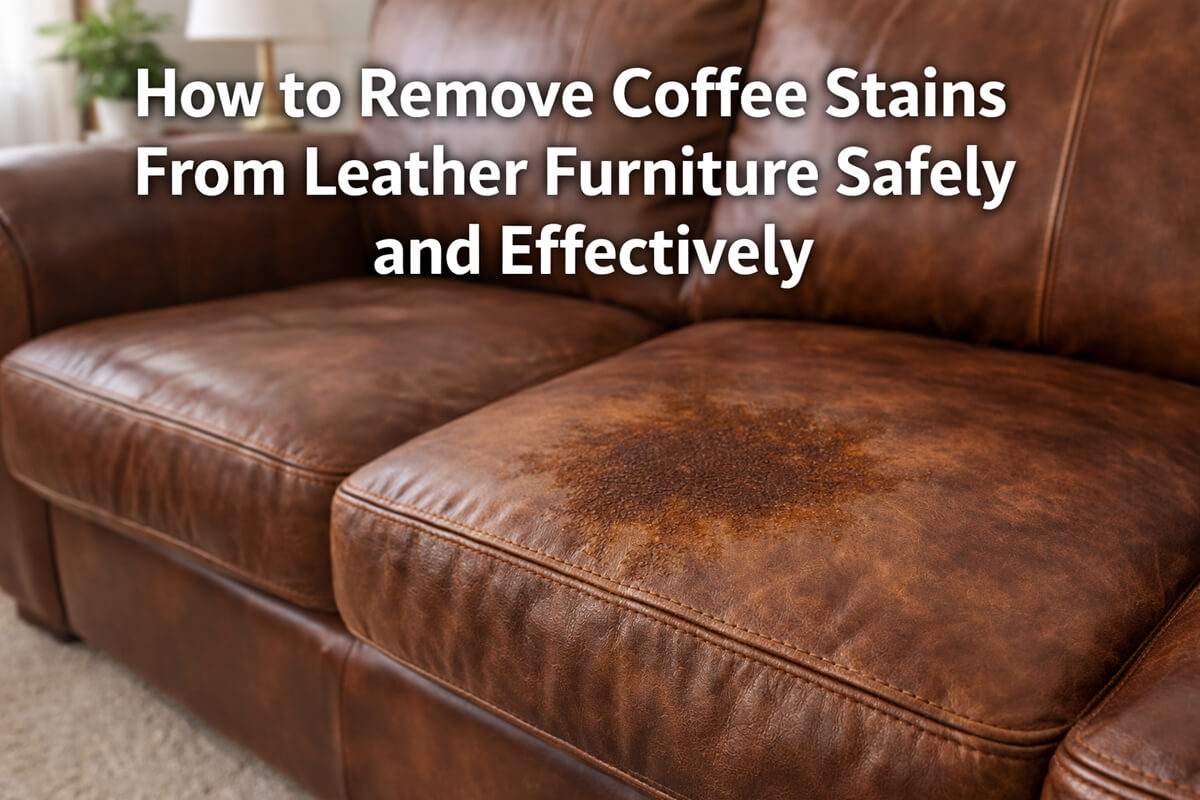
Coffee stains on leather furniture require special attention because leather is a natural material with unique properties. Unlike fabric upholstery, leather has a protective surface layer but remains porous and sensitive to liquids, heat, and chemicals. When coffee is spilled, it can leave behind dark stains, dry out the leather, and weaken its protective finish if not treated properly. Coffee also contains acids and oils that may cause long-term damage, including discoloration and cracking. This in-depth guide explains in detail how coffee stains form on leather, how to remove both fresh and dried stains safely, and how to preserve the quality and appearance of leather furniture over time.
How coffee penetrates leather surfaces
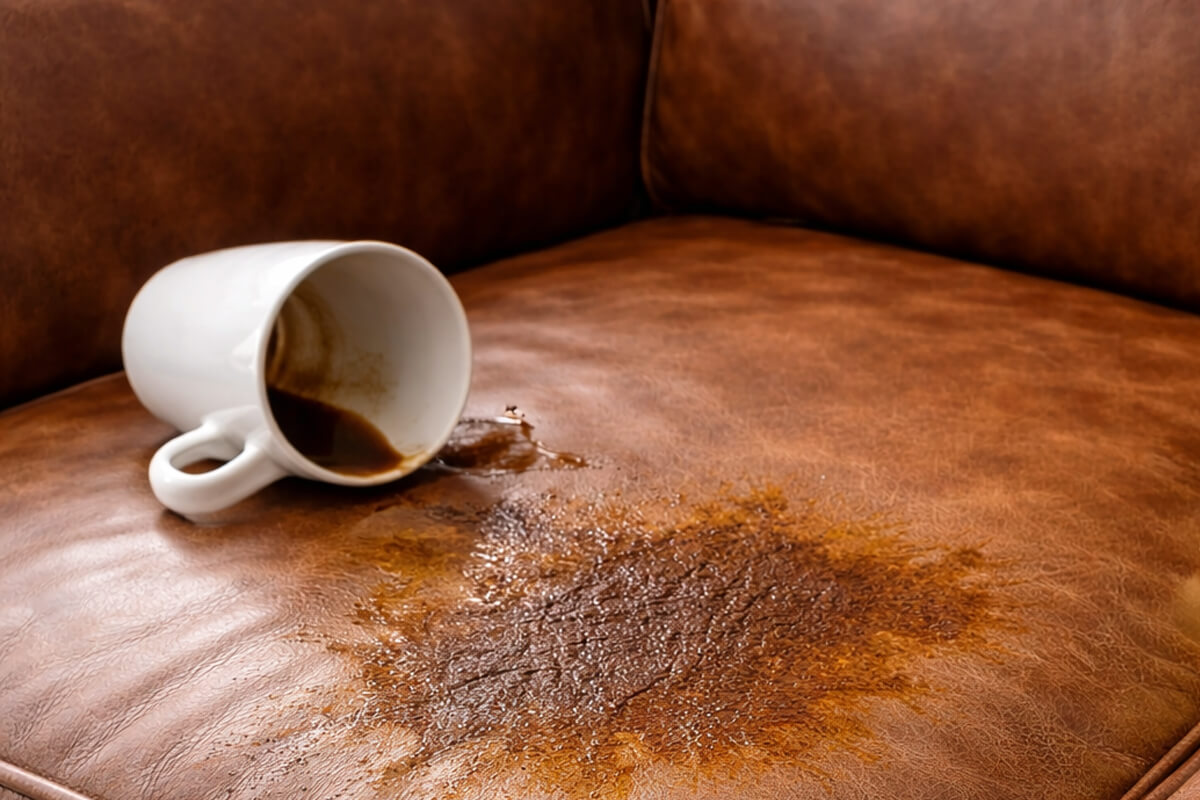
Leather furniture is typically coated with a protective finish that helps resist spills, but this coating is not completely waterproof. When coffee is spilled, it initially pools on the surface. Within seconds, acids and pigments begin to penetrate microscopic pores and imperfections in the finish. Heat from hot coffee accelerates this process by softening the protective layer and allowing deeper absorption.
As coffee dries, tannins bind to the leather surface and may migrate into the hide itself, especially in lightly finished or aniline leather. These tannins behave like dyes, making stains darker and more permanent over time. Oils present in coffee can also disrupt the natural oils within leather, leading to stiffness and loss of flexibility.
Why coffee stains can permanently damage leather
Even small coffee stains can cause long-term damage if residue remains on leather. Coffee acids slowly break down the protective finish, exposing the leather underneath to moisture loss and environmental stress. Over time, this leads to fading, uneven coloration, and cracking.
If the coffee contains milk or sugar, additional complications arise. Milk proteins can sour and produce unpleasant odors, while sugar leaves sticky residue that attracts dust and dirt. These contaminants embed into the leather grain and accelerate surface degradation. Without proper cleaning and conditioning, leather furniture can lose its smooth texture and develop rough, brittle areas.
Common cleaning mistakes that worsen leather coffee stains
Leather furniture is often damaged not by the spill itself, but by incorrect cleaning methods. Avoiding these common mistakes is essential for preserving leather quality.
- Using excessive water that seeps into the leather
- Scrubbing forcefully and damaging the surface finish
- Applying undiluted vinegar, alcohol, or ammonia
- Using household cleaners not designed for leather
- Skipping leather conditioning after cleaning
Leather should always be cleaned gently, with minimal moisture and gradual stain removal techniques.
Understanding different types of leather furniture
Not all leather furniture reacts the same way to coffee spills. Identifying the type of leather helps determine the safest and most effective cleaning method.
- Finished leather has a protective coating and resists stains better
- Semi-aniline leather has light protection and absorbs liquids faster
- Aniline leather is uncoated and highly absorbent
- Bonded leather contains synthetic components and behaves differently
Manufacturer care labels or product documentation often specify recommended cleaning practices. When in doubt, test any method on an inconspicuous area first.
Supplies needed for safe coffee stain removal from leather
Successful leather cleaning relies on gentle products that clean without stripping natural oils. The following supplies are commonly used for safe stain removal.
- Soft microfiber cloths
- Distilled water to avoid mineral residue
- Mild liquid soap or leather cleaner
- White vinegar diluted with water
- Baking soda for odor absorption
- High-quality leather conditioner
Avoid abrasive sponges, paper towels, or harsh chemicals that can scratch or dry out leather.
Immediate actions after spilling coffee on leather furniture
Quick response is critical when dealing with coffee spills on leather. The first few minutes determine whether the stain will remain superficial or become permanent.
Blotting the coffee spill correctly
Immediately blot the spill with a clean, dry microfiber cloth. Press gently to absorb liquid without rubbing or spreading it. Continue blotting with fresh cloths until no moisture transfers. Rubbing must be avoided, as it pushes coffee deeper into the leather grain.
Light surface cleaning with water
If a slight residue remains, use a lightly dampened cloth with distilled water.
- Wipe gently in small circular motions
- Use minimal moisture
- Dry the area immediately with a clean cloth
This step removes surface residue while preserving the protective finish.
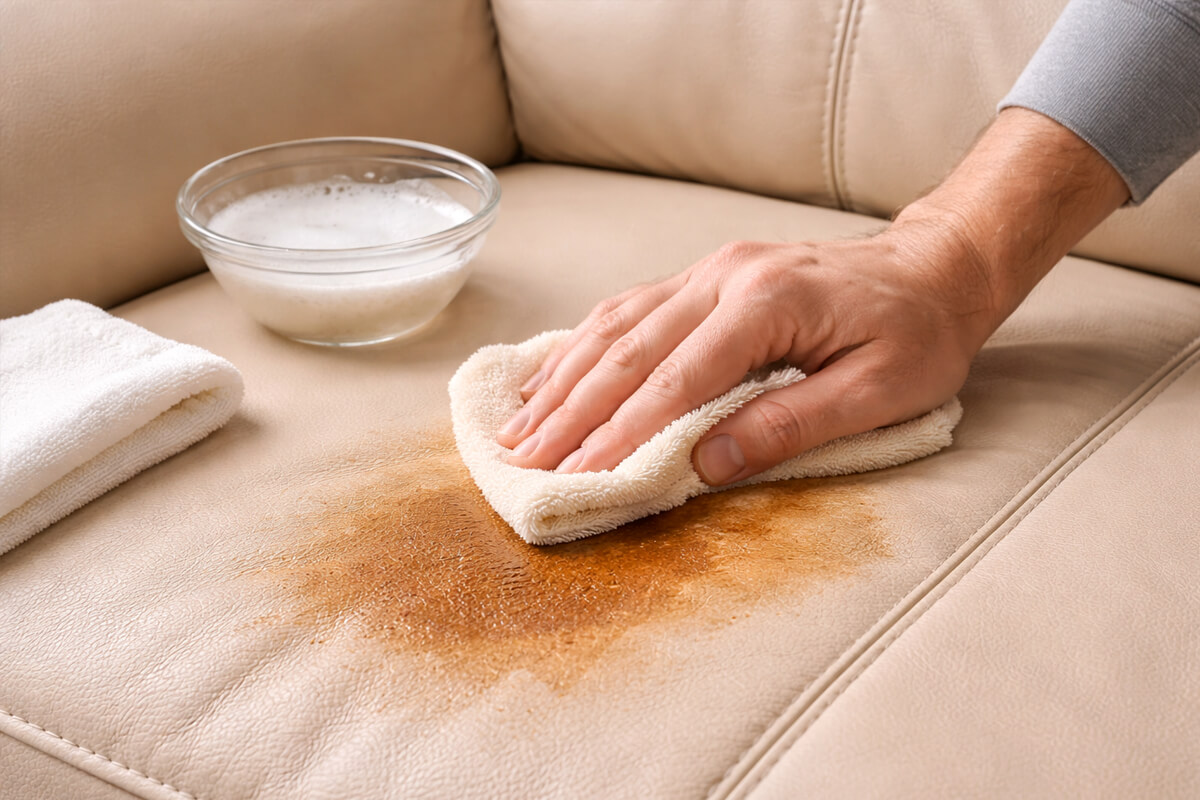
Removing fresh coffee stains using mild soap
Mild soap is effective for lifting fresh coffee stains without stripping leather oils.
Gentle soap cleaning method
- Mix a small amount of mild soap with distilled water
- Dampen a cloth lightly with the solution
- Wipe the stained area gently
- Remove soap residue with a clean damp cloth
- Dry thoroughly
This method works best on finished leather and should not be overused.
Cleaning dried coffee stains from leather safely
Dried coffee stains require careful rehydration and gradual removal. Aggressive cleaning can damage the leather surface.
Using diluted vinegar with caution
Diluted vinegar helps break down dried coffee pigments when used correctly.
- Mix one part white vinegar with two parts water
- Dampen a cloth lightly with the solution
- Test on a hidden area first
- Wipe gently without scrubbing
- Dry immediately
Vinegar should never be left on leather and must always be followed by conditioning.
Handling coffee stains that contain milk or sugar
Coffee with milk or sugar creates more complex stains. Milk proteins adhere strongly to leather, while sugar leaves sticky residue that attracts dirt.
Mild soap helps dissolve fats, while gentle wiping removes sticky residue. Multiple light cleanings are more effective and safer than one aggressive attempt.
Removing coffee odors from leather furniture
Leather can absorb odor molecules even after visible stains are removed. Coffee odors may linger if not addressed properly.
- Allow the furniture to air out in a well-ventilated space
- Place baking soda nearby to absorb odors
- Avoid applying scented sprays directly to leather
Odor removal should always be indirect and moisture-free.
Conditioning leather after stain removal
Any cleaning process removes some natural oils from leather. Conditioning is essential to restore softness and prevent cracking.
Leather conditioning process
- Apply a small amount of conditioner to a clean cloth
- Work it gently into the leather surface
- Allow it to absorb fully
- Buff lightly with a dry cloth
Conditioning should always follow wet cleaning to maintain leather health.
Comparison of coffee stain removal methods for leather
The table below compares common cleaning approaches based on effectiveness and leather safety.
| Method | Best For | Leather Safety | Effectiveness |
|---|---|---|---|
| Dry blotting | Fresh spills | Very high | High |
| Mild soap solution | Light stains | High | High |
| Diluted vinegar | Dried stains | Medium | Medium to high |
| Baking soda | Odor removal | High | Medium |
Drying leather furniture correctly after cleaning
Proper drying prevents warping, cracking, and discoloration.
- Allow leather to air dry naturally
- Keep away from heaters and direct sunlight
- Do not use hair dryers or heat guns
Slow drying preserves leather structure and finish.
Preventing coffee stains on leather furniture
Preventive care significantly reduces the risk of stains and damage.
- Use coasters or trays for drinks
- Avoid placing hot cups directly on leather
- Clean spills immediately
- Condition leather regularly
- Maintain proper indoor humidity
With careful handling, gentle cleaning and regular conditioning, coffee stains can be removed safely from leather furniture. Understanding leather behavior and applying controlled methods ensures long-lasting beauty, comfort and durability.