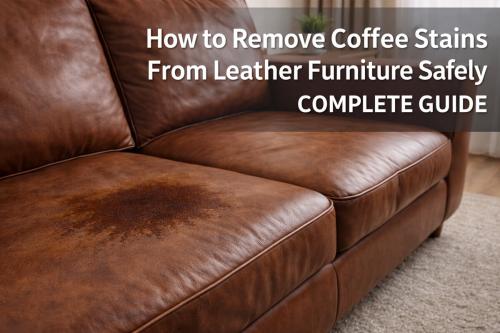
Coffee stains on a couch are one of the most common upholstery problems in everyday homes. Living rooms are often places where people relax with hot drinks, work on laptops or entertain guests, and even a small spill can quickly turn into a visible stain. Couch upholstery absorbs liquid faster than many people expect, especially when the coffee is hot. Once coffee penetrates the fabric, tannins and oils begin binding to the fibers, creating discoloration and sometimes unpleasant odors. This detailed guide explains easy but effective methods to clean coffee stains from a couch, covering both fresh and dried stains, different fabric types and long-term care strategies.

How coffee stains settle into couch upholstery
When coffee spills on a couch, the liquid does not stay on the surface. Upholstery fabric is designed to be comfortable and breathable, which means it contains microscopic spaces between fibers. Coffee quickly seeps into these spaces and begins spreading outward and downward. Tannins in coffee behave like natural dyes, attaching themselves to textile fibers as the liquid evaporates.
Heat plays a significant role in this process. Hot coffee slightly expands the fibers, allowing deeper penetration. As the couch cools and dries, the fibers contract and trap the pigments inside. Over time oxidation causes the stain to darken, making it more noticeable and harder to remove. If the coffee reaches the inner padding or foam, surface cleaning alone may not be sufficient, as the stain can wick back up later.
Why coffee stains on couches become more stubborn over time
Coffee stains that are not treated immediately tend to worsen due to a combination of chemical and physical factors. These factors explain why an old stain is much harder to remove than a fresh spill.
- Oxidation darkens coffee pigments as they dry
- Repeated sitting compresses fibers and pushes stains deeper
- Dust and dirt bond with damp residue and increase discoloration
- Milk or cream adds proteins that cling to fabric
- Sugar leaves sticky residue that attracts grime
Over time these effects combine, creating a stain that is not only darker but also larger and more deeply embedded in the couch upholstery.
Recognizing different couch upholstery materials
Before cleaning a coffee stain, it is essential to identify the upholstery material. Different fabrics react differently to moisture, cleaning agents and agitation. Using the wrong method may cause discoloration, shrinking or texture damage.
- Cotton upholstery absorbs liquid quickly and stains deeply
- Polyester and synthetic blends resist stains better and clean easily
- Linen fabrics are delicate and prone to water marks
- Microfiber traps stains on the surface but reacts to excess moisture
- Velvet and specialty fabrics may require dry methods
Checking the manufacturer’s care tag on the couch helps determine which cleaning approaches are safe and effective.

Supplies needed for easy and safe coffee stain removal
Most coffee stains can be removed using common household supplies. Preparing these items before cleaning helps avoid spreading the stain or applying excessive moisture.
- Cold or lukewarm water for controlled cleaning
- Mild liquid dish soap to dissolve oils
- White vinegar to break down tannins
- Baking soda for absorption and odor control
- Microfiber cloths or clean cotton towels
- Soft brush or toothbrush for gentle agitation
- Spray bottle for even application
- Vacuum cleaner for residue removal
Using gentle tools and minimal liquid protects couch fibers while still allowing effective stain removal.
Immediate actions for fresh coffee spills
Fresh coffee stains are much easier to clean because the pigments have not yet bonded fully with the fibers. Acting quickly can prevent long-term discoloration.
Blotting excess coffee correctly
Blotting removes liquid before it penetrates deeper into the couch. This step should be done as soon as possible after the spill.
- Use a clean, dry cloth or paper towel
- Press gently without rubbing
- Work from the outer edges toward the center
- Replace the cloth as it becomes saturated
Rubbing should be avoided because it spreads the stain and forces coffee deeper into the fabric.
Diluting the stain with cold water
Cold water helps flush out coffee pigments without setting the stain.
- Dampen a cloth with cold water
- Blot the stained area lightly
- Repeat until the stain lightens
Hot water should never be used at this stage because it permanently sets tannins.
Easy cleaning with dish soap and water
Dish soap is one of the simplest and safest cleaning agents for couch upholstery. It breaks down oils and pigments while remaining gentle on fibers.
Step by step dish soap method
- Mix one cup of lukewarm water with a few drops of dish soap
- Apply the solution using a clean cloth
- Blot gently without scrubbing
- Allow the solution to sit for several minutes
- Blot again with a dry cloth to lift residue
This method works well for fresh spills and moderately dried coffee stains.
Removing dried coffee stains using vinegar
Dried coffee stains require a stronger approach. White vinegar is highly effective because its mild acidity dissolves tannins and loosens dried pigments.
Vinegar based cleaning method
- Mix equal parts white vinegar and water
- Apply sparingly using a spray bottle or cloth
- Let the solution sit for 5 to 10 minutes
- Blot gently with a clean towel
Vinegar smell fades as the couch dries and can be neutralized with baking soda if needed.
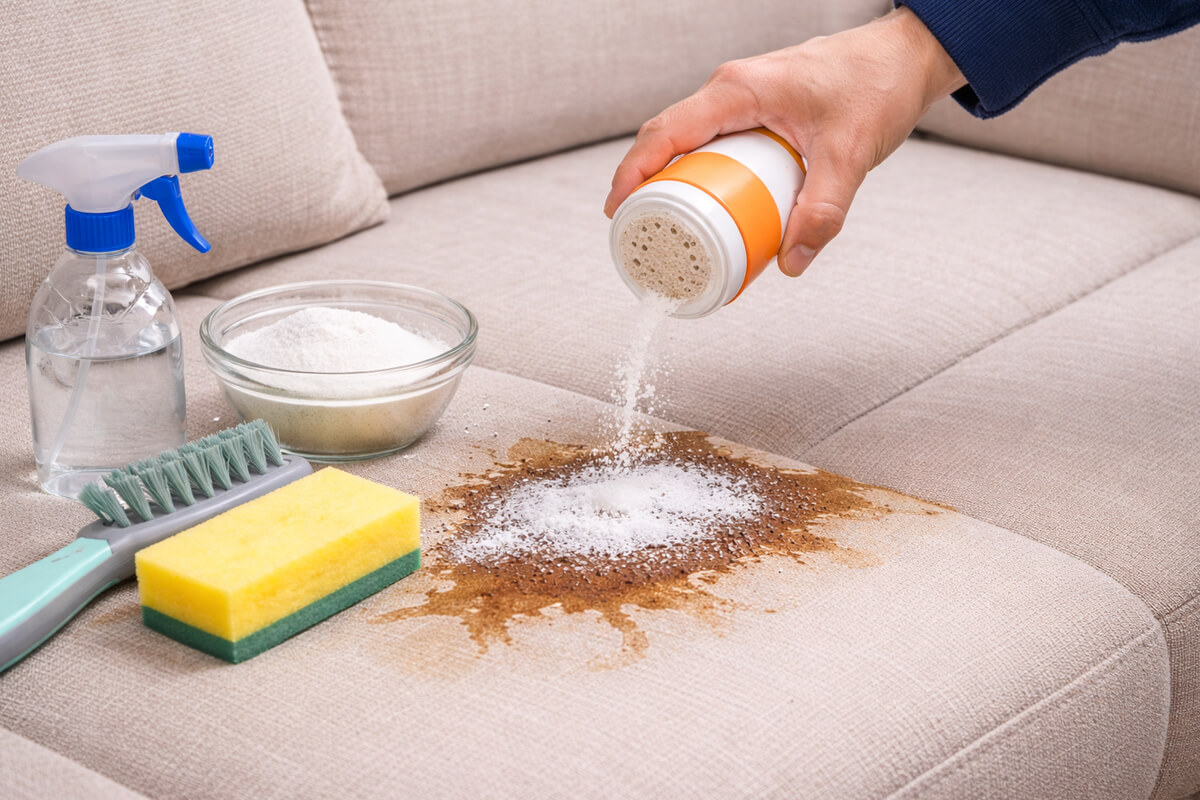
Using baking soda to lift stains and remove odors
Baking soda is an effective follow-up treatment after liquid cleaning. It absorbs moisture, lifts remaining pigment and neutralizes odors trapped in the upholstery.
Baking soda treatment process
- Lightly dampen the stained area
- Sprinkle baking soda generously over the spot
- Allow it to sit for several hours or overnight
- Vacuum thoroughly once dry
This method is especially helpful for removing lingering coffee smells.
Handling coffee stains with milk or sugar
Coffee containing milk or sugar creates more complex stains. Milk leaves protein residues that bind to fibers, while sugar becomes sticky and attracts dirt.
Dish soap dissolves fats, vinegar breaks down proteins, and baking soda absorbs residue. Using these methods gently and in stages is more effective than aggressive scrubbing.
Special care for microfiber couches
Microfiber upholstery requires special attention. Excess moisture can leave water marks or stiff patches.
- Use minimal liquid when cleaning
- Apply solutions with a cloth rather than spraying directly
- Brush the fabric lightly after drying to restore texture
Always follow manufacturer recommendations for microfiber fabrics.
Comparison of easy coffee stain removal methods
The table below compares common cleaning methods based on stain severity and fabric safety.
| Method | Best For | Fabric Safety | Effectiveness |
|---|---|---|---|
| Cold water blotting | Fresh spills | All fabrics | High |
| Dish soap solution | Fresh and light dried stains | Most fabrics | High |
| Vinegar and water | Dried tannin stains | Most fabrics | Very high |
| Baking soda | Odor and deep residue | All fabrics | Medium to high |
Drying the couch correctly after cleaning
Proper drying is critical to prevent water rings, odors and mold growth inside couch cushions.
- Increase airflow with open windows or fans
- Avoid sitting on the couch until fully dry
- Do not apply direct heat to upholstery
Slow and even drying produces the best results.
Preventing future coffee stains on couches
Preventive habits significantly reduce the likelihood of permanent stains and help keep upholstery looking clean.
- Use spill-resistant mugs
- Avoid placing drinks directly on couch arms
- Apply fabric protectant sprays periodically
- Clean small spills immediately
- Vacuum couches regularly to remove dirt
By understanding how coffee stains behave and using these easy methods, you can effectively clean coffee stains from a couch and maintain the appearance of your furniture. Gentle techniques, timely action and proper drying ensure long-lasting cleanliness and comfort.