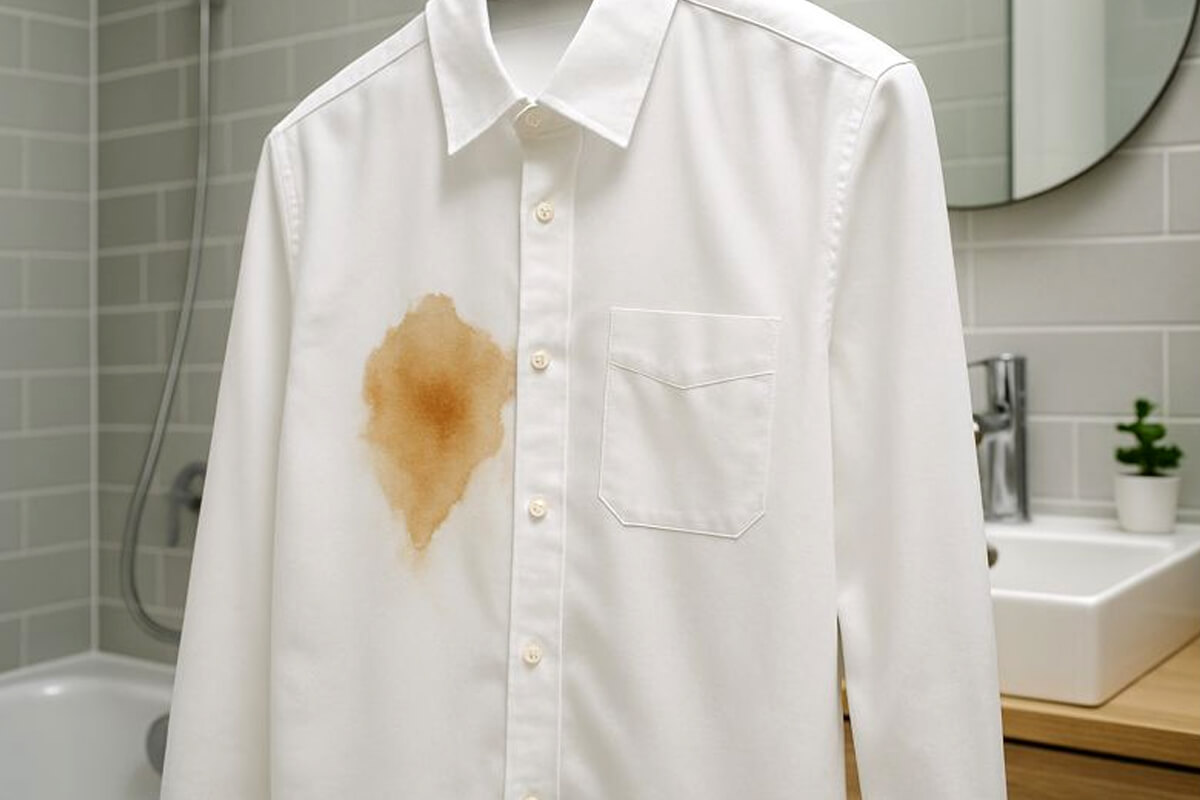
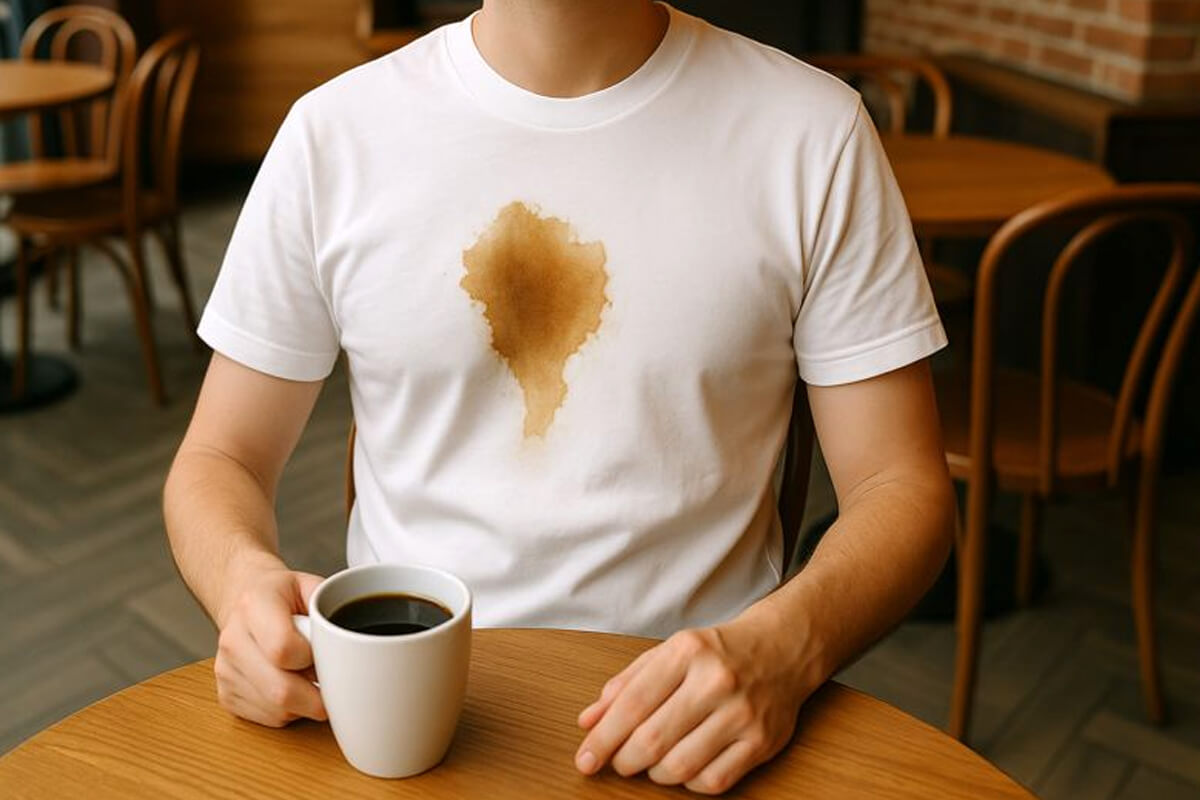
Removing coffee stains from white clothing can feel challenging, especially when you want to avoid using bleach. Coffee contains tannins and natural dyes that bond quickly with fabric fibers, creating visible brown or yellow marks. While bleach can lighten these stains, it also weakens fabric, causes yellowing and can damage delicate materials. Fortunately there are effective, safe and natural ways to remove coffee stains from white clothes without using any bleach. This guide explains in detail how coffee stains form, why they become harder to remove over time and which non-bleach methods work best for different fabrics.

Understanding how coffee stains attach to fabric fibers
Coffee contains a combination of oils, tannins and dark pigments. When spilled on fabric, these substances quickly penetrate even the smallest fibers. Tannins are especially problematic because they behave similarly to natural dyes used in textile production. On white clothing the contrast is immediately visible, and if the stain is not treated quickly, the pigments bond with the fibers and become more difficult to lift.
Heat plays a major role in how deeply stains set. Washing stained clothes in hot water too soon can cause permanent discoloration. Similarly drying stained garments before fully removing the coffee can cause the pigment to bake into the fabric. Knowing these interactions helps you choose safer cleaning methods that avoid making the stain worse.
Major factors that make coffee stains difficult to remove
Several conditions can intensify coffee stains or make them more resistant to natural cleaning methods. Identifying these factors helps you decide which cleaning technique is most suitable for each garment.
Time left untreated, allowing the stain to oxidize.
Exposure to heat from washing, ironing or drying machines.
Coffee additives such as milk, cream or sugar, which complicate stain removal.
Fabric type, especially delicate materials like silk or wool.
Absorbency of the fabric, which affects how deeply the stain sets.
Understanding these challenges helps ensure that you choose the safest and most effective non-bleach stain-removal method.
Essential tools and natural cleaners for removing coffee stains
You can remove almost any coffee stain from white clothing using natural or gentle ingredients that do not rely on bleach. These supplies are easy to find, fabric-safe and effective even on older stains.
Cold water for flushing fresh stains.
White vinegar for breaking down tannins.
Liquid dish soap for dissolving oils.
Baking soda for lifting stains naturally.
Hydrogen peroxide for light-colored cotton fabrics.
Lemon juice for natural whitening.
Salt for absorbing liquid rapidly.
A soft brush for gentle stain agitation.
A spray bottle for applying solutions evenly.
These ingredients work individually or in combination depending on the fabric type and severity of the stain.
How to treat fresh coffee stains on white clothing
Fresh stains are far easier to remove than dried ones. Treating the clothing immediately prevents the coffee pigments from bonding with fibers and reduces the need for deeper cleaning.
Rinsing the stain with cold water
Cold water prevents the stain from setting while flushing out as much coffee as possible from the fabric.
Hold the stained area under cold running water.
Rinse from the back of the fabric to push the stain outward.
Continue rinsing until most of the pigment fades.
Hot water should never be used during this stage because it sets the tannins permanently.
Applying dish soap to break down oils
Coffee contains natural oils that require a degreasing agent. Dish soap is gentle, safe and effective for dissolving these oils.
Apply a small drop of liquid dish soap to the stain.
Gently rub the fabric together to create lather.
Let it sit for 5–10 minutes.
Rinse thoroughly with cold water.
This method works well for coffee with added milk or cream.
Removing dried coffee stains without bleach
Dried stains require stronger natural methods because the pigments have already bonded with the fibers. These techniques lift deep-set discoloration without using bleach or damaging the material.
Using white vinegar for tannin removal
White vinegar is one of the best natural stain removers for coffee stains. It breaks down tannins while refreshing the fabric.
Mix one tablespoon of vinegar with one cup of cold water.
Apply the solution using a cloth or spray bottle.
Let it soak for 15 minutes.
Rinse thoroughly and repeat if necessary.
This method is ideal for cotton, linen and synthetic white garments.
Applying a baking soda paste to lift dried pigments
Baking soda is a natural stain lifter that absorbs pigments and deodorizes the fabric.
Mix baking soda with a small amount of cold water to create a paste.
Apply the paste directly to the stain.
Leave it on the garment for 20–30 minutes.
Rinse the area and repeat if needed.
This method is safe for most fabrics except delicate natural fibers.
Using lemon juice as a natural whitening agent
Lemon juice brightens white clothing while neutralizing tannins. It works especially well when combined with sunlight.
How to use lemon juice on coffee stains
Apply freshly squeezed lemon juice to the stained area.
Allow it to sit for 10 minutes.
Rinse with cold water and check the results.
For an extra whitening boost, place the garment outside in the sun while the lemon juice is still on the fabric.
Hydrogen peroxide for white cotton garments
Hydrogen peroxide is a mild alternative to bleach that safely removes coffee stains from white cotton. It works as an oxidizing agent, breaking down dark pigments at a molecular level.
Steps for safely using hydrogen peroxide
Mix equal parts hydrogen peroxide and cold water.
Apply the solution to the stained area.
Let it sit for 10–15 minutes.
Rinse thoroughly and repeat if necessary.
This method should not be used on wool, silk or dyed clothing because peroxide may lighten the fibers.
Using salt to absorb stains from delicate fabrics
Salt is ideal for delicate fabrics because it absorbs pigmentation without scrubbing or applying harsh chemicals. It is also effective for treating fresh stains when no other cleaning agents are available.
How to treat stains with salt
Sprinkle a thick layer of salt over the damp stain.
Allow the salt to absorb moisture for 10–20 minutes.
Brush away the salt and rinse with cold water.
Salt is especially useful for fabrics such as silk, chiffon or cashmere when immediate treatment is required.
Comparing natural stain-removal methods
Each natural cleaning method performs differently depending on the fabric type and severity of the stain. The table below outlines the strengths of each method.
| Method | Best Uses | Fabric Compatibility | Effectiveness |
|---|---|---|---|
| Cold water rinse | Fresh stains | All fabrics | High |
| Dish soap | Oily coffee with cream | Cotton, synthetics | High |
| Vinegar solution | Dried stains | Cotton, linen, synthetics | Very high |
| Baking soda paste | Stubborn pigments | Most fabrics except delicate ones | Very high |
| Lemon juice | Natural whitening | Light fabrics | Medium to high |
| Hydrogen peroxide | Severe stains on whites | Cotton only | Very high |
| Salt absorption | Fresh stains on delicate fabrics | Delicate fibers | Medium |
Long-term strategies to protect white clothing from stains
Prevention is essential for maintaining bright white fabrics. Simple habits can greatly reduce the likelihood of permanent coffee stains and prolong the lifespan of your clothing.
Effective routines for stain prevention
Rinse stains immediately, even if you cannot wash the garment yet.
Keep stain-removal wipes or napkins on hand when traveling.
Avoid drinking coffee while wearing delicate white fabrics.
Wash whites separately to prevent discoloration.
Air-dry white garments instead of machine-drying to prevent setting stains.
By using these natural cleaning methods, you can effectively remove coffee stains from white clothes without resorting to bleach. These gentle, fabric-safe techniques protect garments from damage while restoring their original brightness. With proper care and timely treatment even stubborn stains can be removed successfully.