Dried coffee stains on upholstery can be challenging to remove because once coffee dries it binds to fabric fibers through tannins, natural pigments and oils. These compounds penetrate deep into the upholstery surface and attach to both synthetic and natural materials. Over time the stain hardens, darkens and becomes more difficult to lift with simple cleaning. Fortunately it is possible to remove dried coffee stains safely and effectively using the right step-by-step methods. This guide explains in detail how dried coffee stains form, how upholstery fabrics differ in stain absorption and which cleaning techniques work best for restoring your furniture without causing damage.
How dried coffee stains develop on upholstery
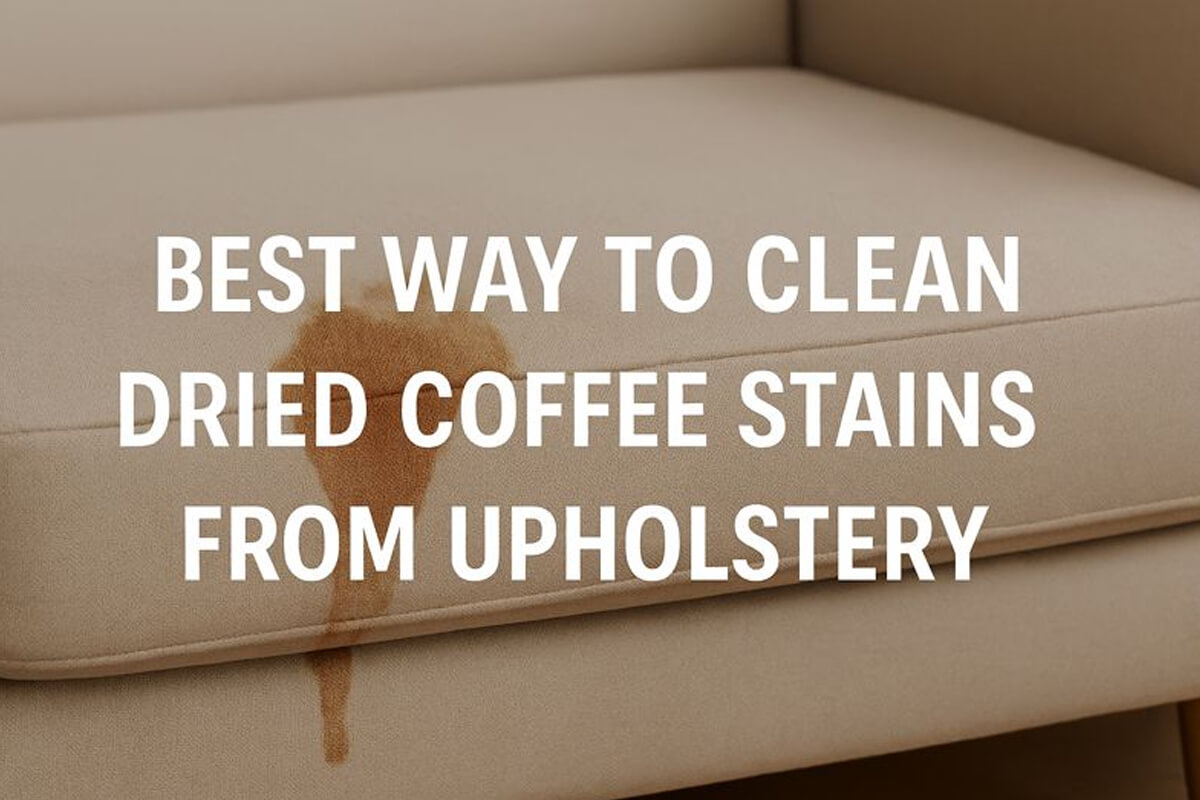
Coffee contains pigments, oils and tannins that act similarly to natural dyes. When spilled on upholstery the liquid first spreads across the surface, then seeps into the fabric grain and deeper into the cushion layers underneath. As the stain dries, oxygen exposure darkens the spill, causing oxidation. This chemical process binds the stain more firmly to the upholstery fibers. The older the stain, the harder it becomes to remove because the liquids have fully evaporated, leaving solid residues embedded inside the fabric layers.
Temperature also affects stain intensity. Warm coffee penetrates more quickly than cold coffee because heat expands fibers slightly. This is why stains from hot coffee often produce deeper discoloration. Over time dirt and dust settle on the stain creating an even darker mark that makes the upholstered furniture look aged or poorly maintained.
Factors that influence how deeply coffee stains set into upholstery
Not all upholstery absorbs stains in the same way. The material, fabric tightness, fiber type and previous treatments play major roles in how stubborn a dried coffee stain becomes. Understanding these factors helps select an appropriate cleaning method and avoid accidental damage.
- Fabric thickness influences how far the stain travels vertically inside the cushion.
- Synthetic materials such as polyester repel liquids better than cotton or linen.
- Tightly woven upholstery traps stains on the surface but may require deeper cleaning to remove residue.
- Light-colored upholstery shows dried coffee stains more prominently.
- Stain-resistant coatings slow down absorption but lose effectiveness over time.
Knowing the specific type of upholstery material helps determine whether water-based solutions, enzymatic cleaners or dry cleaning methods are appropriate.
Preparations before cleaning dried coffee stains
Before applying any cleaning solutions, it is essential to prepare the upholstery correctly. Proper preparation ensures better penetration of cleaning agents and prevents pushing the stain deeper into the furniture.
Vacuuming surface debris and dust
Dried stains often collect dirt and dust. Vacuuming the area removes loose particles that may interfere with cleaning. Using a soft brush attachment prevents damage to delicate fabrics. The goal is to lift the fibers slightly so cleaning solutions can reach every layer of the dried stain.
Testing the cleaning solution on an inconspicuous area
Most upholstery materials react differently to water and cleaning products. Testing prevents accidental discoloration or fiber damage. Apply a small amount of the chosen cleaning solution to the back side of the furniture or a hidden seam. Wait until the test area dries completely before evaluating the result.
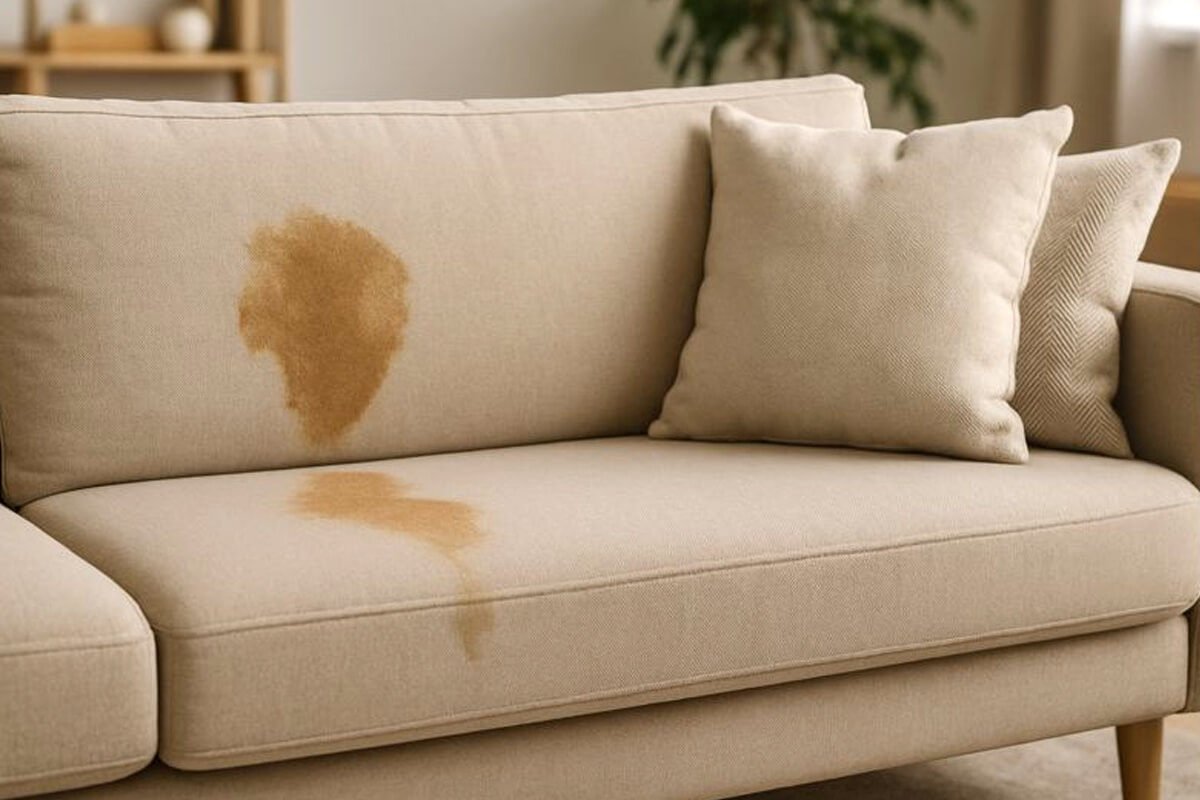
Cleaning dried coffee stains with water and dish soap
This method is safe for most upholstery fabrics. Dish soap dissolves oils and pigments while water rehydrates dried residues. It is a good first step before trying more intensive stain removal techniques.
Steps for using dish soap on dried stains
- Mix one cup of warm water with a few drops of mild dish soap.
- Dip a clean cloth into the mixture and wring it out slightly.
- Blot the stained area gently without scrubbing.
- Allow the solution to penetrate for 5–10 minutes.
- Blot with a dry cloth to lift the stain.
- Repeat until the stain lightens.
Dish soap loosens the coffee residue so it begins lifting off the fabric surface. If the stain remains after several attempts, a stronger approach may be necessary.
Removing deep stains with white vinegar and water
White vinegar is highly effective for lifting tannin-based stains such as coffee. It breaks down residue without harming most upholstery fabrics. Vinegar is especially useful for older stains that have deeply penetrated the fibers.
How to use vinegar for dried coffee stains
- Mix equal parts white vinegar and warm water.
- Apply the solution using a spray bottle or cloth.
- Blot gently to avoid spreading the stain.
- Let the solution sit for 10 minutes to dissolve residue.
- Blot again with a dry towel until the stain begins to fade.
If the smell of vinegar is a concern, rinsing the cleaned area with plain water after treatment helps neutralize odors.
Using baking soda to lift stubborn dried coffee stains
Baking soda is a natural lifting agent that breaks down and absorbs stains. It is particularly effective for upholstery because it dries quickly and pulls pigments outward from fabric layers. Baking soda also eliminates lingering odors caused by old coffee spills.
Steps for using baking soda
- Lightly mist the stained area with warm water.
- Sprinkle baking soda generously over the damp upholstery.
- Allow the baking soda to sit for several hours.
- Vacuum the dried powder thoroughly.
- Repeat if deeper pigment removal is needed.
This technique works best when combined with vinegar pretreatment for old or large stains.
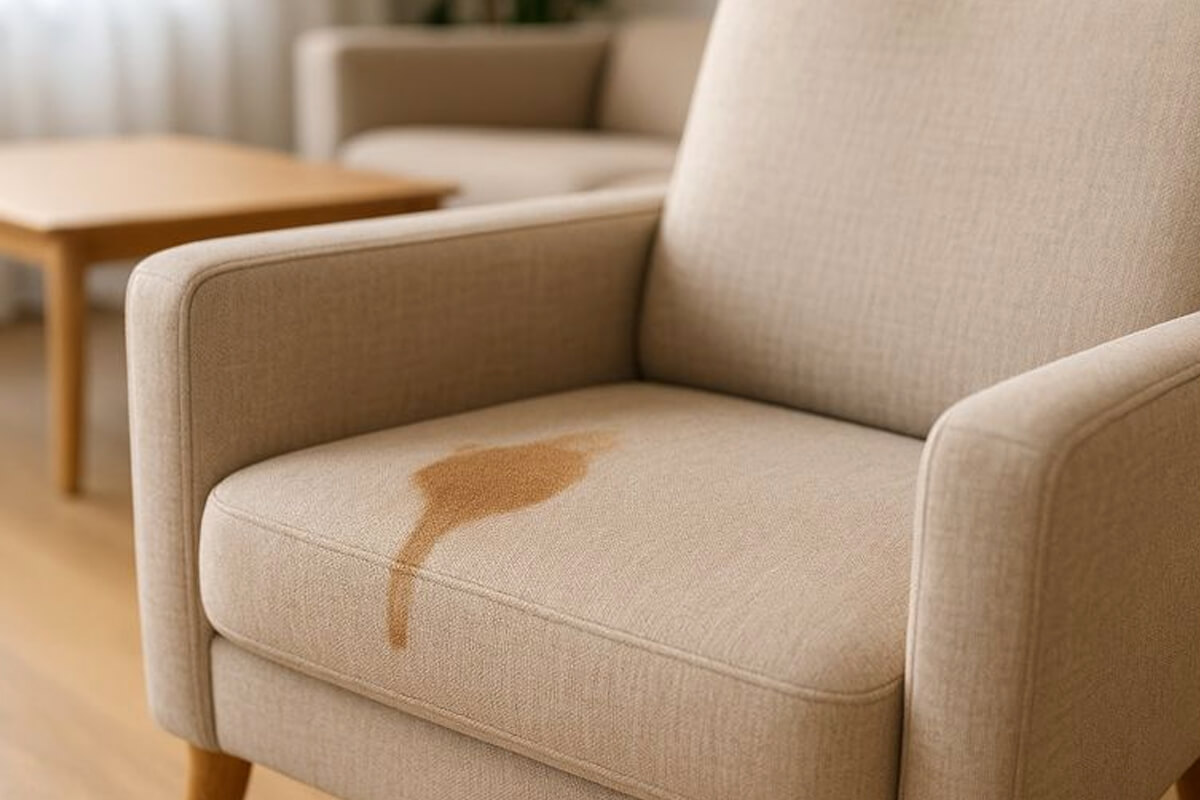
Cleaning dried coffee stains with hydrogen peroxide
Hydrogen peroxide is an oxidizing cleaner that breaks down dark pigments, making it ideal for light-colored upholstery. However it must be used cautiously because it may lighten darker fabrics. Patch testing is essential before applying peroxide-based solutions.
How to apply hydrogen peroxide safely
- Mix hydrogen peroxide with an equal amount of water.
- Add a small drop of dish soap for extra cleaning power.
- Apply the mixture gently with a cloth.
- Let it sit for 10–15 minutes.
- Blot with a clean towel until the stain fades.
This method is ideal for stains that have been present for months or have darkened significantly.
Cleaning upholstery with enzymatic cleaners
Enzymatic cleaners work by breaking down organic compounds using natural enzymes. They are especially effective for coffee stains mixed with milk or sugar because they target proteins and oils in addition to pigments. These cleaners are safe for most upholstery fabrics but require proper dwell time to work effectively.
How to use enzymatic cleaners
- Apply the cleaner directly onto the stained area.
- Allow it to sit for at least 10–20 minutes.
- Blot the stain gently with a damp cloth.
- Repeat until the stain is fully removed.
Enzymatic cleaners are also effective for removing odors caused by old coffee spills.
Dry cleaning solvent for specialty upholstery fabrics
Some upholstery materials such as silk, suede or vintage fabrics cannot be cleaned with water-based methods. In these cases a dry cleaning solvent may be the safest approach. These solvents dissolve oils and pigments without soaking the upholstery.
Steps for using dry cleaning solvent
- Apply a small amount to a white cloth.
- Blot the stained area lightly.
- Allow the solvent to evaporate naturally.
- Repeat if necessary.
Ventilation is important when using solvent-based cleaners.
Comparing upholstery cleaning methods
The table below summarizes the most effective methods for removing dried coffee stains based on fabric type and stain severity.
| Cleaning Method | Best For | Fabric Compatibility | Effectiveness Level |
|---|---|---|---|
| Dish soap and water | Fresh or light dried stains | Most fabrics | High |
| Vinegar and water | Deep tannin stains | Cotton, polyester, blends | Very high |
| Baking soda | Odor and pigment lifting | All fabrics | Medium to high |
| Hydrogen peroxide | Stubborn dark stains | Light-colored upholstery | Very high |
| Enzymatic cleaners | Coffee with milk or sugar | Most upholstery fabrics | Very high |
| Dry cleaning solvent | Specialty or delicate fabrics | Non-water-safe materials | High |
Preventing future coffee stains on upholstery
After removing dried coffee stains it is important to protect your furniture from future spills. Simple habits and preventive treatments can dramatically reduce staining and extend the life of your upholstery.
Best preventive strategies
- Use washable slipcovers or armrest protectors in high-risk areas.
- Apply fabric protector sprays to repel liquids.
- Avoid drinking coffee on light-colored furniture.
- Clean spills immediately before they dry.
- Vacuum upholstery regularly to prevent dirt from embedding into fibers.
With the proper cleaning techniques and preventive measures you can keep your upholstery looking fresh, clean and stain-free. Dried coffee stains may be stubborn but they can be removed fully with patience and the right natural or commercial cleaning methods.