Spilling coffee on a mattress is one of the most frustrating household accidents. Unlike clothing or removable cushion covers, a mattress cannot be placed in a washing machine, saturated with water or scrubbed aggressively. When hot coffee seeps into the surface, it penetrates the top fabric layers and absorbs deeply into the foam or padding beneath. Coffee stains contain tannins, oils, sugars and dark pigments that bond with mattress fibers and create long-lasting discoloration. Over time the stain may also produce odors or attract dust, especially if milk or sugar were added to the drink. Fortunately even dried or old coffee stains can be removed with the correct techniques. This comprehensive guide explains the science behind coffee stains, how mattress materials absorb liquid, and how to clean the stain safely and effectively using step-by-step methods.
How coffee interacts with mattress materials
A mattress is made of multiple absorbent layers including quilting, polyester blends, cotton fibers and foam. These materials behave like sponges, quickly pulling in any liquid that comes into contact with them. Coffee is particularly problematic because it contains dark natural pigments and tannins that act similarly to dye. Tannins attach to porous surfaces and leave behind a yellow or brown stain that darkens as it dries. The liquid portion of the spill moves downward through the layers while the pigments remain near the surface, creating a visible stain.
Mattresses also retain heat, which intensifies stain absorption. Warm or hot coffee opens the fibers slightly, allowing pigments to travel deeper. Once inside the foam or padding, coffee residues become harder to extract. When milk or sugar is added to the drink, these ingredients leave behind sticky residues and proteins that may sour over time or attract bacteria. This is why coffee stains require a combination of cleaning techniques that break down oils, remove pigments and extract moisture without oversaturating the mattress.
Common problems caused by coffee spills on mattresses
Ignoring a coffee spill can lead to more than just a visible stain. Several underlying issues may appear if the area is not cleaned properly.
- Discoloration that spreads as the liquid moves deeper.
- Lingering odors as the coffee dries or spoils.
- Moisture trapped inside the mattress layers.
- Potential mold growth if the spill remains damp.
- Hard, sticky residues from sugar or milk additives.
These problems develop silently under the fabric surface, making it important to treat the stain thoroughly rather than only addressing the visible part.
Tools and cleaning products needed for coffee stain removal
To clean a mattress safely you need a combination of absorbent materials, mild cleaning agents and deodorizing powders. The following items help break down coffee stains without damaging fabrics or leaving the mattress overly wet.
- Cold water
- White vinegar
- Liquid dish soap
- Baking soda
- Hydrogen peroxide
- Spray bottle
- Microfiber towels
- Soft brush
Each item plays a specific role. Cold water prevents tannins from setting. Dish soap dissolves oils and sticky sugars. Vinegar removes tannins and neutralizes odors. Baking soda absorbs moisture and lifts residue. Hydrogen peroxide helps remove older or deeper pigments.
Immediate steps to take after a coffee spill
The first few minutes after a spill are crucial. Mattress fibers absorb liquid quickly, but rapid action prevents the stain from going deeper. Avoid scrubbing, rubbing or pressing hard because this forces the liquid further downward.
Blotting to stop the spread of liquid
- Place a dry microfiber towel over the spill.
- Press gently to absorb liquid.
- Switch to clean towels as needed.
The goal is to lift as much coffee as possible before applying water or cleaning agents. Blotting should continue until the towel no longer absorbs liquid.
Lightly diluting the stain with cold water
- Mist the area with cold water from a spray bottle.
- Blot again with a clean towel.
Cold water prevents the stain from setting and helps lift the pigments before they dry. However over-wetting is dangerous because a mattress can trap moisture that leads to mold. Modest application is essential.
Cleaning the mattress with dish soap solution
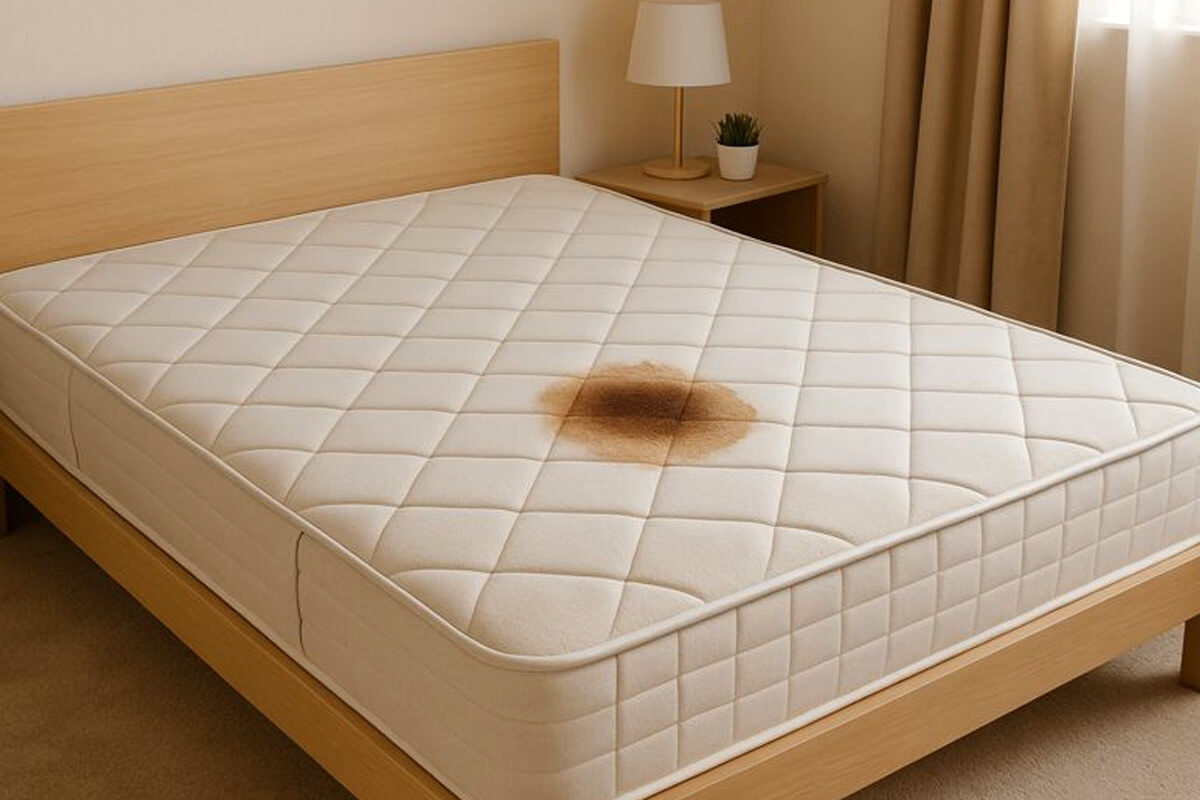
Dish soap is effective because it breaks down oils and sugars found in coffee. These components contribute significantly to stickiness and odor. A diluted dish soap mixture is gentle and safe for most mattress fabrics.
How to prepare and apply dish soap solution
- Mix one cup of cold water with two to three drops of dish soap.
- Dampen a cloth with the solution.
- Gently dab the stain without rubbing.
Dish soap begins dissolving oily residues within minutes. Dabbing repeatedly lifts the stain from the surface. After treating the area, blot with a clean damp cloth to remove soap residue. This step prevents the detergent from drying inside the mattress.
Using white vinegar to break down tannins
White vinegar is one of the most powerful natural stain removers for coffee. It breaks down the tannins that cause discoloration and helps lighten the stain. Vinegar also neutralizes odors created by old coffee or additives like milk.
Steps for applying white vinegar
- Combine equal amounts of vinegar and cold water.
- Spray the solution over the stained area.
- Let it sit for 10–15 minutes.
During this time the vinegar penetrates into the fibers and loosens pigment particles. After soaking, blot the area dry. If needed repeat the process until the discoloration fades noticeably.
Using baking soda to absorb moisture and remove odors
Baking soda is essential for mattress cleaning because it absorbs moisture and neutralizes odors effectively. It also helps lift any remaining residue to the surface where it can be vacuumed away.
How to use baking soda effectively
- Sprinkle baking soda generously across the damp area.
- Leave it for at least several hours or overnight.
- Vacuum the powder thoroughly.
As the baking soda dries, it pulls moisture and stain particles out of the mattress. If the stain is old or heavily saturated, repeating the process may be necessary.
Using hydrogen peroxide for old or stubborn stains
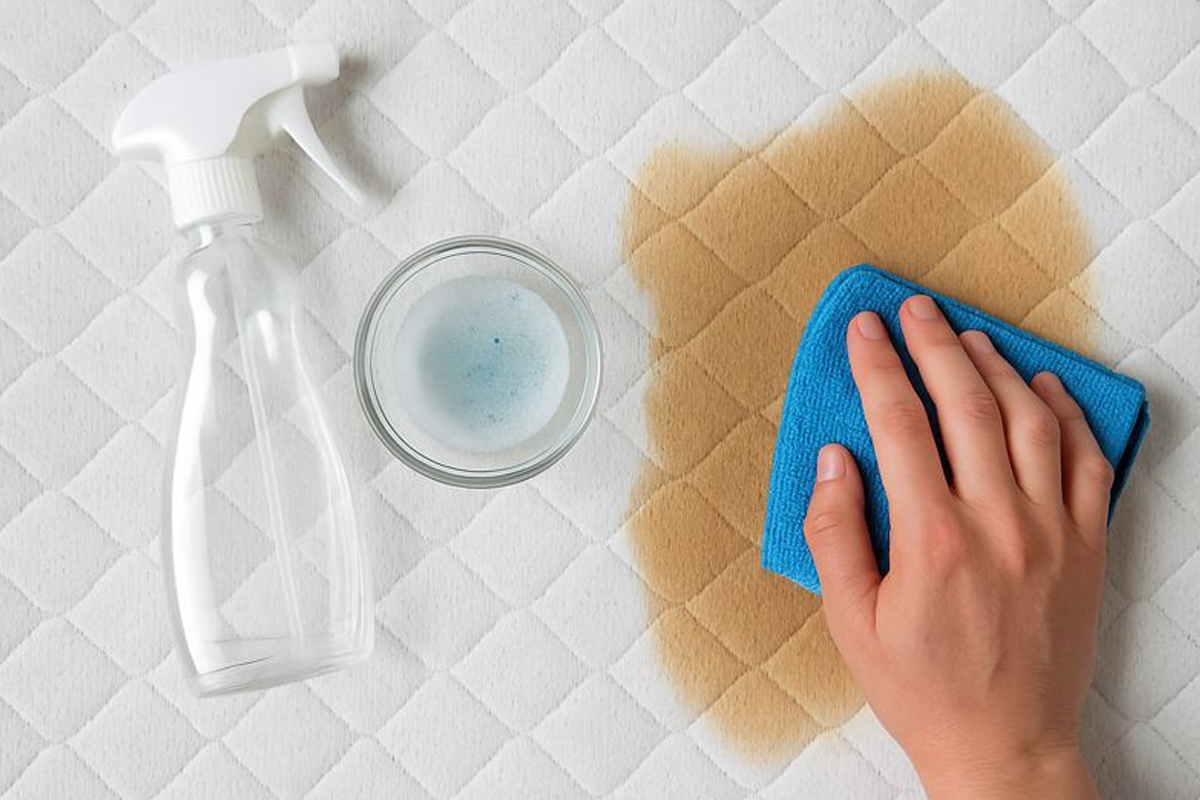
For coffee stains that have already dried or become deeply embedded, hydrogen peroxide offers stronger cleaning power. It works as a fabric-safe oxidizer that breaks down dark pigments. However hydrogen peroxide may lighten certain fabrics, so testing before use is essential.
How to apply hydrogen peroxide safely
- Mix one part hydrogen peroxide with one part water.
- Apply sparingly to the stained area.
- Allow it to sit for 5–10 minutes.
Once the peroxide begins lifting the pigments, blot the area dry with a clean towel. Repeat if necessary, but avoid overuse to prevent discoloration.
Special cleaning considerations for coffee with milk or sugar
If the coffee spill contains milk or sugar, additional cleaning is required. Milk contains proteins that spoil over time, leading to unpleasant odors. Sugar creates a sticky film that traps dirt and bacteria. Cleaning such stains requires a combination of degreasers, odor-neutralizing agents and protein-removing solutions.
Multi-step cleaning for milk or sugar coffee spills
- Apply dish soap to dissolve oils and sugar residue.
- Use vinegar to break down proteins.
- Finish with baking soda to neutralize odors.
This layered cleaning approach removes all components of the stain rather than just the visible discoloration.
Comparison of mattress-friendly stain removal methods
The table below summarizes the key cleaning methods and helps determine which option is best for each specific type of coffee stain.
| Method | Best For | Strengths | Limitations |
|---|---|---|---|
| Dish soap | Fresh spills | Safe for all fabrics | Less effective for deep stains |
| White vinegar | Dried stains | Breaks down tannins | Temporary strong odor |
| Baking soda | Odor removal | Excellent absorber | Requires long drying time |
| Hydrogen peroxide | Old deep stains | Strong lifting power | Can lighten fabric |
Drying the mattress properly after cleaning
One of the most important steps in mattress cleaning is proper drying. A damp mattress can trap moisture inside, encouraging mold and mildew growth. Drying must be performed gradually to ensure all layers release moisture.
Best drying practices
- Use fans to speed up evaporation.
- Open windows to allow airflow.
- Avoid using heat sources that can damage foam.
Depending on room temperature and humidity, drying may take several hours. The mattress should feel completely dry before placing sheets back on it.
Preventing future coffee stains on a mattress
Prevention is the easiest way to keep your mattress looking clean and fresh. A few simple habits can greatly reduce the chances of spills turning into permanent stains.
Practical prevention techniques
- Use waterproof mattress protectors.
- Avoid drinking dark beverages in bed.
- Clean small spills immediately.
- Deodorize regularly with baking soda.
Following these habits keeps your mattress in excellent condition and extends its lifespan while reducing cleaning time in the future.
With the right techniques, cleaning supplies and careful application, even stubborn dried coffee stains can be successfully removed from a mattress. This guide provides safe, effective and mattress-friendly methods to restore the look and freshness of your bedding without harsh chemicals or expensive professional services.