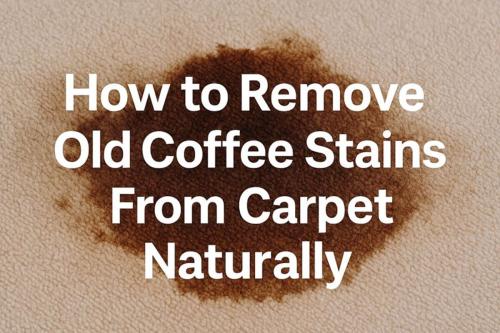
Coffee stains on a mattress are among the most difficult household stains to deal with. A mattress is designed to absorb moisture and pressure, which means any spilled liquid immediately moves beyond the surface layer. Coffee contains tannins, oils and pigments that penetrate fabric covers and settle deep inside padding and foam. Because a mattress cannot be soaked, scrubbed aggressively or washed in a machine, improper cleaning often leads to spreading stains, lingering odors or structural damage. This detailed guide explains exactly how coffee stains behave on mattresses, how to treat fresh and dried stains safely, and how to restore cleanliness without compromising comfort or hygiene.
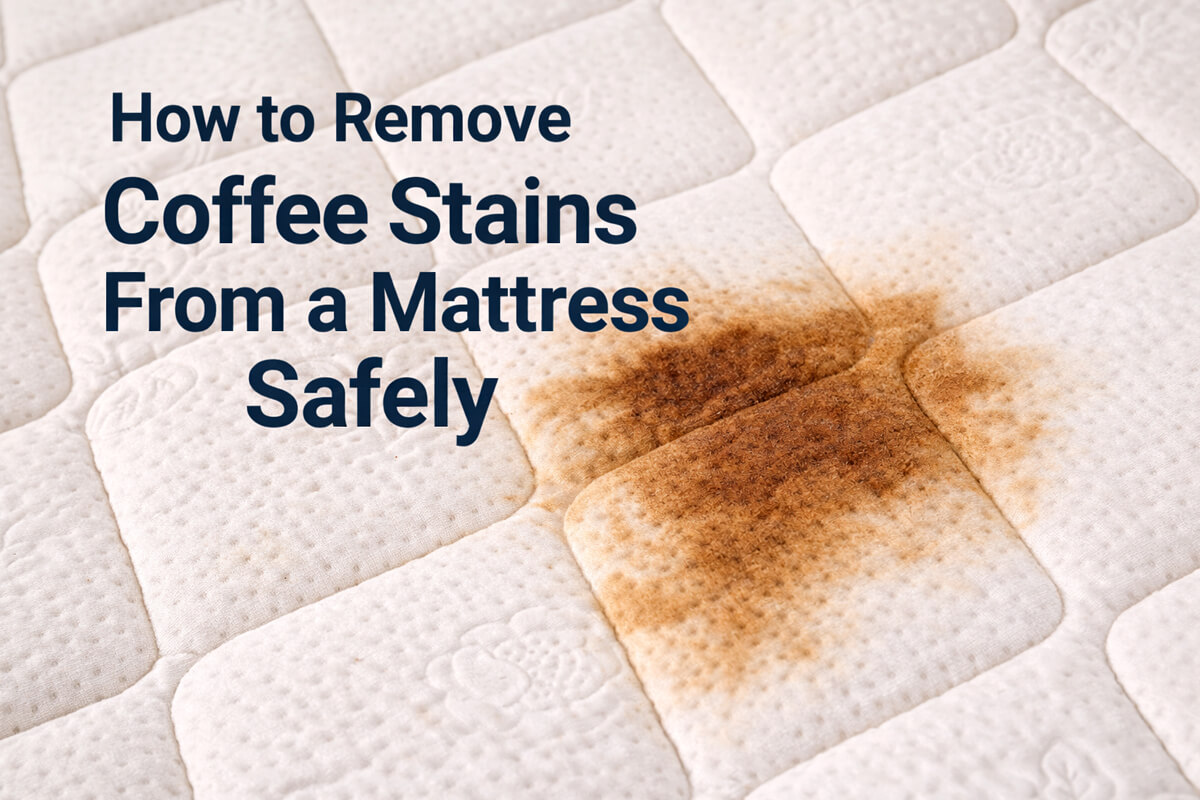
Why mattresses absorb coffee so deeply
Mattresses are constructed with multiple absorbent layers designed to distribute weight and regulate airflow. These layers include a fabric cover, cushioning fibers, foam or spring systems, and sometimes additional pillow-top padding. When coffee spills onto a mattress, gravity and capillary action pull the liquid downward almost instantly. Unlike hard surfaces, the mattress does not allow liquid to pool on top, making quick absorption unavoidable.
Hot coffee further increases absorption. Heat slightly expands fibers and foam cells, creating more space for liquid to enter. As the coffee cools, these materials contract, trapping pigments and oils inside. Once trapped, tannins bond chemically with fibers, behaving much like dye. This is why mattress coffee stains often appear darker and more persistent than stains on carpets or upholstery.
How coffee stains evolve as they dry inside a mattress
Immediately after a spill, coffee stains may appear light brown and diffuse. As moisture evaporates, oxidation begins. Oxygen reacts with coffee compounds, darkening the stain and intensifying discoloration. Oils thicken and adhere more strongly to fibers, while sugars and milk residues form sticky layers that trap dirt and bacteria.
Another common issue is wicking. When a mattress is lightly cleaned, moisture can dissolve deeper residue and pull it back to the surface as the area dries. This makes stains appear to return even after cleaning. Understanding this behavior explains why repeated light treatments are more effective than aggressive scrubbing.
Frequent mistakes that worsen mattress coffee stains
Many cleaning attempts fail because mattresses require a very specific approach. The following mistakes often make stains permanent or create additional problems.
- Applying too much water and saturating internal foam
- Using hot water that sets tannins into fibers
- Scrubbing aggressively and spreading pigments outward
- Using bleach or harsh chemicals that damage fabric
- Failing to dry the mattress fully after cleaning
Because mattresses dry slowly, excess moisture almost always leads to odor or mold risk.
Understanding different mattress materials before cleaning
Not all mattresses respond the same way to moisture and cleaning agents. Identifying the construction helps avoid damage.
- Cotton or polyester covers tolerate mild water-based solutions
- Memory foam absorbs liquid rapidly and must stay minimally damp
- Latex foam is sensitive to soaking and chemical exposure
- Pillow-top layers contain extra fibers that trap liquid easily
Manufacturer care labels often provide guidance on acceptable cleaning methods and should be reviewed whenever possible.
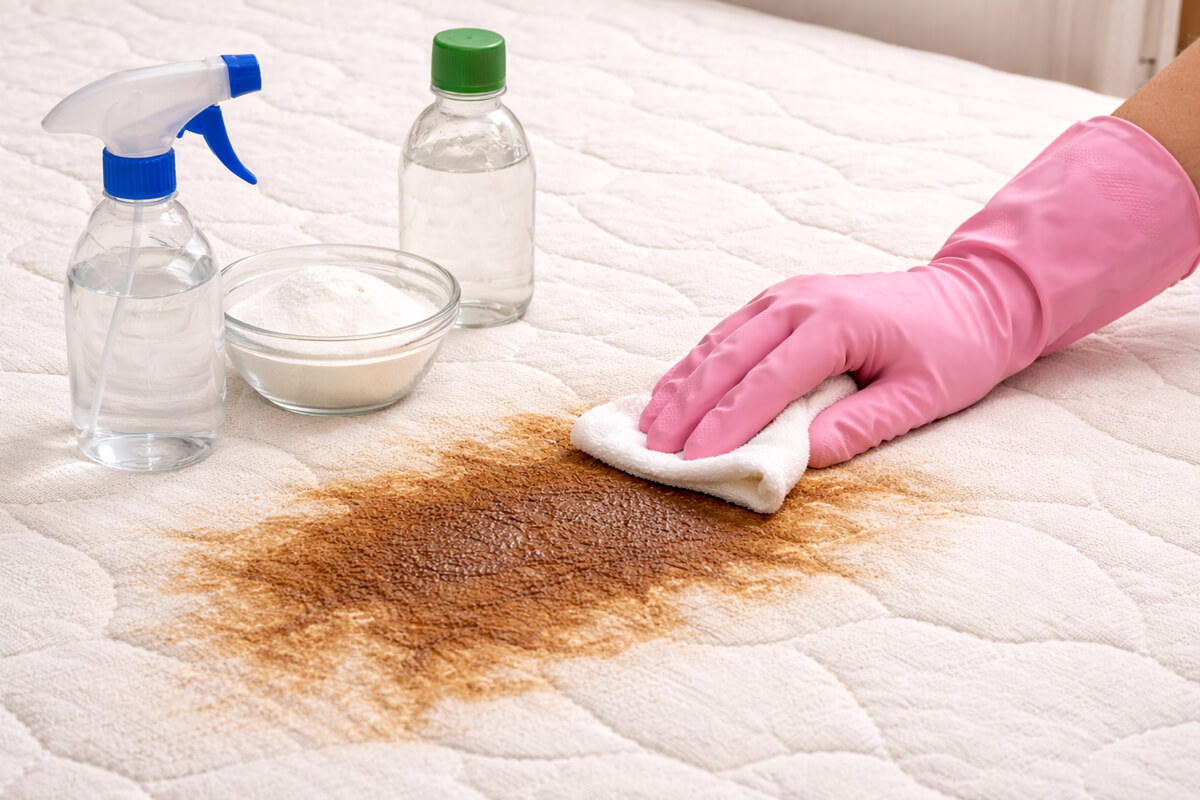
Supplies required for safe mattress stain removal
Successful mattress cleaning depends on controlled application rather than strong chemicals. Most stains can be treated using basic household items.
- Cold or lukewarm water for dilution
- Mild liquid dish soap to break down oils
- White vinegar to dissolve tannins and neutralize odor
- Baking soda for absorption and deodorizing
- Hydrogen peroxide for light-colored mattresses
- Microfiber cloths for blotting
- Spray bottle for precise moisture control
- Vacuum cleaner for dry residue removal
Limiting liquid volume is the most important principle when cleaning a mattress.
Immediate response after spilling coffee on a mattress
The first few minutes after a spill determine how deep the stain will set. Immediate action significantly improves results.
Blotting excess coffee without spreading
Blotting removes surface liquid before it penetrates deeper layers. Use clean, absorbent cloths and apply steady pressure without rubbing. Continue blotting with fresh cloths until no liquid transfers. Rubbing should be avoided because it pushes coffee outward and deeper.
Light dilution using cold water
Cold water reduces coffee concentration without setting the stain.
- Lightly dampen a clean cloth with cold water
- Blot the stain gently
- Immediately blot again with a dry cloth
This step prepares the stain for deeper cleaning while limiting penetration.
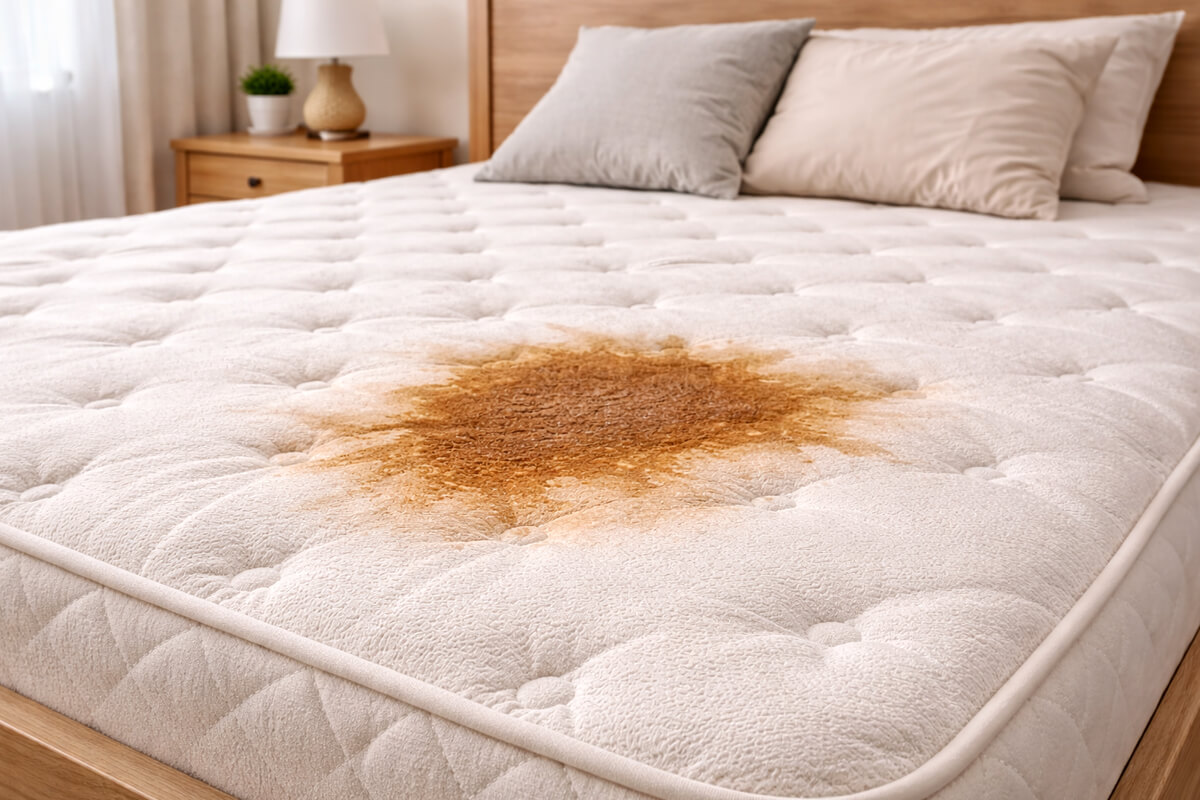
Removing fresh coffee stains using dish soap
Dish soap is effective because it breaks down oils and pigments without damaging mattress fabric.
Controlled dish soap method
- Mix one cup of lukewarm water with a few drops of dish soap
- Apply sparingly using a cloth or spray bottle
- Blot gently and allow the solution to work briefly
- Blot again with a dry cloth
This method is best for light and moderate fresh stains.
Breaking down dried coffee stains with vinegar
Dried stains require chemical breakdown. White vinegar dissolves tannins and helps loosen pigments bound to fibers.
Vinegar based treatment
- Mix equal parts white vinegar and water
- Apply lightly to the stained area
- Allow it to sit for several minutes
- Blot thoroughly to lift residue
Vinegar odor fades as the mattress dries and can be neutralized with baking soda.
Using baking soda to absorb moisture and odor
Baking soda is essential for mattress cleaning because it absorbs moisture without adding liquid. It also neutralizes odors caused by coffee oils and organic residue.
Baking soda application process
- Ensure the area is slightly damp but not wet
- Cover the stain generously with baking soda
- Allow it to sit for several hours or overnight
- Vacuum thoroughly to remove residue
This step prevents odor development and helps draw stains upward.
Handling coffee stains with milk or sugar
Coffee containing milk or sugar creates additional challenges. Milk proteins bind tightly to fibers, while sugar creates sticky residue that traps dirt.
Dish soap dissolves fats, vinegar neutralizes proteins and baking soda absorbs remaining residue. Using multiple light treatments is far more effective than one heavy application.
Hydrogen peroxide for stubborn mattress stains
Hydrogen peroxide removes organic stains through oxidation and is effective on light-colored mattresses.
Safe peroxide usage
- Patch test in an inconspicuous area
- Dilute hydrogen peroxide with equal water
- Apply lightly to the stain
- Allow to dry completely
This method should not be used on dark fabrics.
Comparison of mattress coffee stain removal methods
The table below summarizes common methods and their effectiveness.
| Method | Best Use | Mattress Safety | Effectiveness |
|---|---|---|---|
| Cold water blotting | Fresh spills | All mattresses | High |
| Dish soap solution | Fresh to moderate stains | Most mattresses | High |
| Vinegar solution | Dried tannin stains | Most mattresses | Very high |
| Baking soda | Moisture and odor | All mattresses | Medium to high |
Drying the mattress thoroughly after cleaning
Drying is critical to prevent odor, mold and mildew. Mattresses retain moisture longer than most household items.
- Use fans to increase airflow
- Open windows when possible
- Keep bedding off until fully dry
Complete drying may take several hours depending on humidity.
Preventing coffee stains on mattresses
Preventive steps greatly reduce the risk of permanent stains.
- Use a waterproof mattress protector
- Avoid drinking coffee in bed
- Address small spills immediately
- Vacuum the mattress regularly
- Allow the mattress to air periodically
By understanding how coffee stains behave and applying controlled, gentle cleaning methods, coffee stains can be removed safely from a mattress. Proper technique, patience and thorough drying ensure long-term cleanliness and comfort.