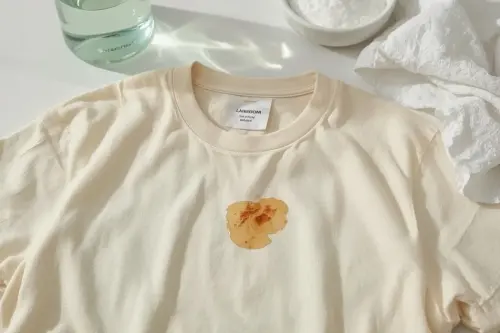
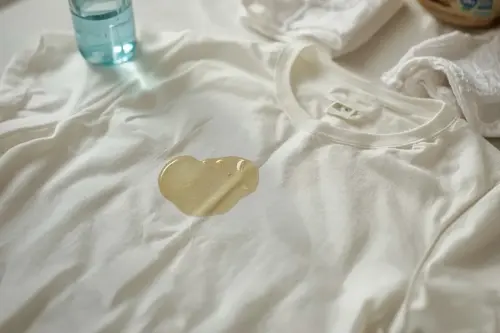
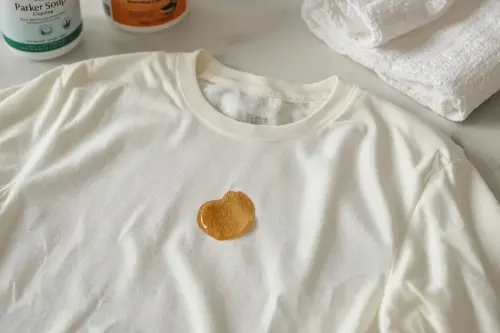
Grease stains are difficult to remove because they usually survive a regular wash. You take out a shirt, jeans, hoodie or kitchen apron from the washing machine and see a dark oily mark that was not there before. When the fabric dries, it sometimes looks worse than ever.
This is due to the fact that grease doesn’t wash out like many water-based stains. It clings to fabric fibers, especially if the clothing was washed without pretreating. Fortunately, you don’t have to suffer with a grease stain after washing. The trick is to re-treat it before throwing it into the dryer.
If you see a grease stain after washing, do not put the clothing in the dryer. Heat can make oily residue harder to remove.
Why grease stains stay after washing
A normal laundry cycle may not be enough for grease because oil and water do not mix easily. Laundry detergent helps, but if the stain was not pretreated, the detergent may clean the surface while oily residue remains inside the fabric.
Grease stains can also become more visible after washing because the surrounding dirt is removed. Once the fabric is clean, the oily mark stands out as a darker spot.
This is common with cooking oil, butter, bacon grease, salad dressing, pizza grease, motor oil, body oils, and greasy food splatters.
Check whether the clothing was dried with heat
Before treating the stain again, think about what happened after washing. If the clothing is still wet or air-dried, the stain is usually easier to treat. If it already went through the dryer, the stain may be more stubborn, but it is still worth trying.
- Washed but not dried: treat the stain right away before using heat.
- Air-dried: pretreat and wash again.
- Dried in the dryer once: use a longer pretreatment time.
- Dried several times: the stain may fade, but it may take repeated treatments.
Even if the stain has been through the dryer, do not give up immediately. Many set-in grease marks can still become much lighter.
What you need
- Liquid dish soap
- Liquid laundry detergent
- Baking soda, cornstarch, or baby powder
- Soft toothbrush or clean cloth
- Warm water
- Paper towels or a white towel
- Washing machine
For most washable clothes, liquid dish soap is useful because it is made to break down grease. Use a small amount as a spot treatment, not as a full replacement for laundry detergent.
Step 1: Treat the stain on dry fabric
Start with the clothing dry or only slightly damp. Grease stains are often easier to target when the fabric is dry because you can see the oily mark more clearly.
Lay the garment flat on a clean towel. Place another white towel or folded paper towel under the stained area. This helps absorb anything that loosens from the fabric and prevents the grease from transferring to another layer.
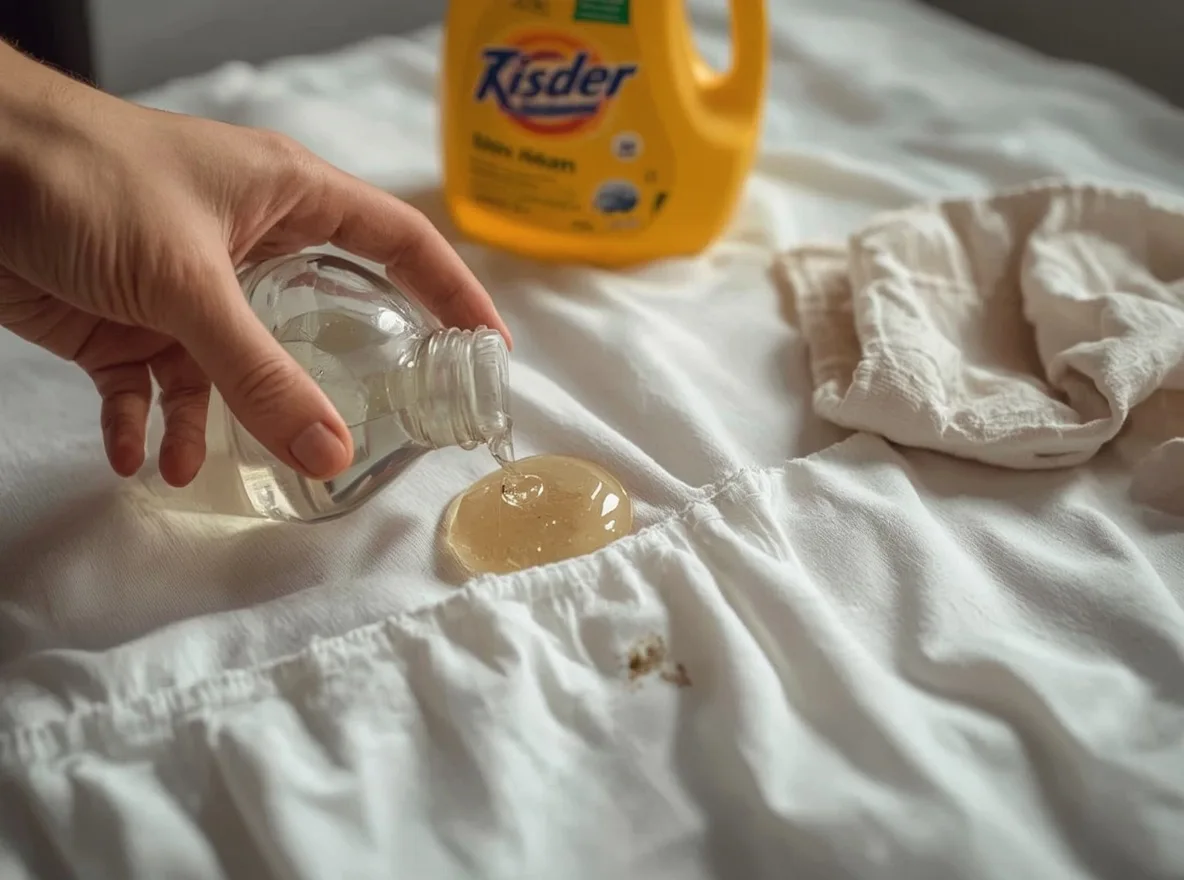
Step 2: Apply dish soap directly to the stain
Add a small amount of liquid dish soap directly to the grease stain. You only need enough to cover the mark. Too much soap can be difficult to rinse out, especially from thick fabrics like denim or sweatshirts.
Use your fingers or a soft cloth to gently spread the soap across the stain. Work from the outside of the stain toward the center to avoid spreading the grease wider.
Do not scrub aggressively. Strong rubbing can damage fabric, fade color, or create a worn-looking patch around the stain.
If the garment is sturdy cotton, you can use a soft toothbrush with light pressure. For dark, delicate, printed, or stretchy fabrics, use your fingers or a soft cloth instead.
Step 3: Let the soap sit
Let the dish soap sit on the stain for 10 to 20 minutes. This gives it time to break down the oily residue that survived the first wash.
If the stain has already gone through the dryer, leave the soap on for 20 to 30 minutes. Do not let it dry completely on delicate fabrics. If the area starts to dry out, rinse and move to the next step.
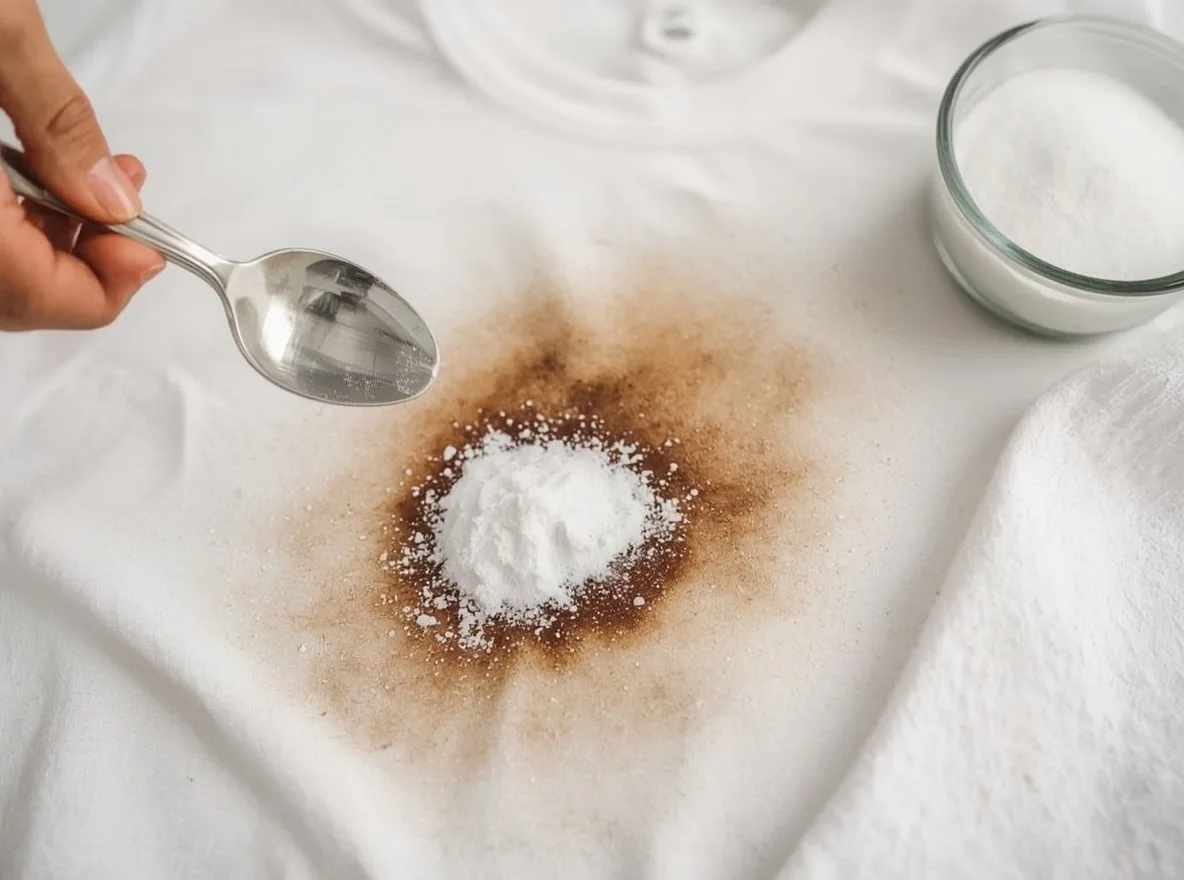
Step 4: Add baking soda for stubborn grease
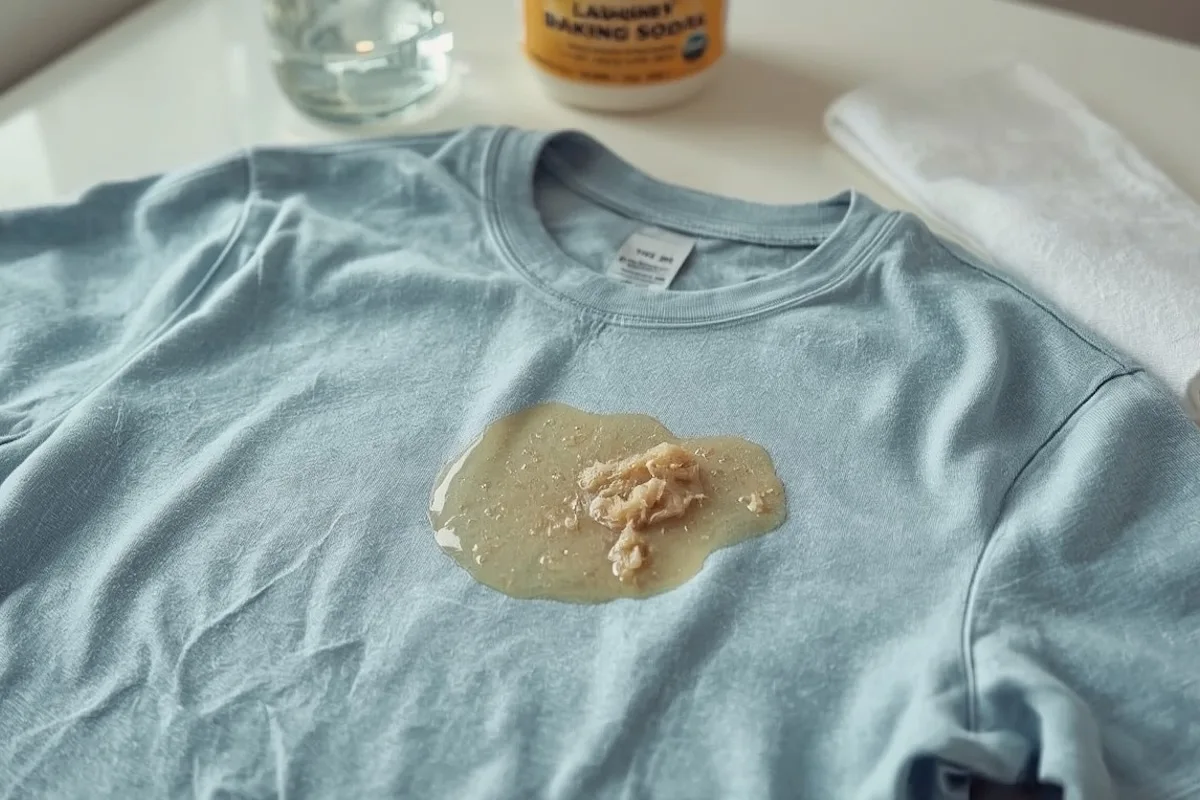
If the stain still looks dark, shiny, or oily, sprinkle baking soda, cornstarch, or baby powder over the dish soap. Gently work it into the stain with your fingers or a soft cloth.
The powder helps absorb oily residue, while the dish soap helps break it down. This combination is especially helpful for grease stains that remain after washing.
Let the mixture sit for another 10 to 15 minutes, then gently brush off extra powder before rinsing.
Step 5: Rinse from the back of the fabric
Rinse the stained area with warm water if the fabric can handle it. When possible, rinse from the back of the stain. This helps push loosened grease out of the fibers instead of forcing it deeper through the front.
Use cool or lukewarm water for dark clothes, delicate fabrics, stretch denim, or anything that may shrink. Always follow the care label.
Step 6: Wash the clothing again
Wash the garment again with regular laundry detergent. Use the warmest water that is safe for the fabric. Do not overload the washing machine, because clothing needs enough room for detergent and water to move through the fibers.
If you are treating shirts specifically, you may also want to read this guide on how to get old grease stains out of shirts. For denim, the method needs a little more color protection, so this guide on how to get grease stains out of jeans without fading may be more useful.
Step 7: Air dry and inspect the stain
After washing, do not put the clothing in the dryer right away. Air dry it first or check the fabric carefully in good light.
Grease stains can be hard to see when clothing is wet, so inspect the area again once it is dry. If the stain is gone, you can dry the garment normally next time. If the stain remains, repeat the treatment before using heat.
The stain should be gone or as light as possible before the clothing goes into the dryer. Heat is one of the main reasons grease stains become harder to remove.
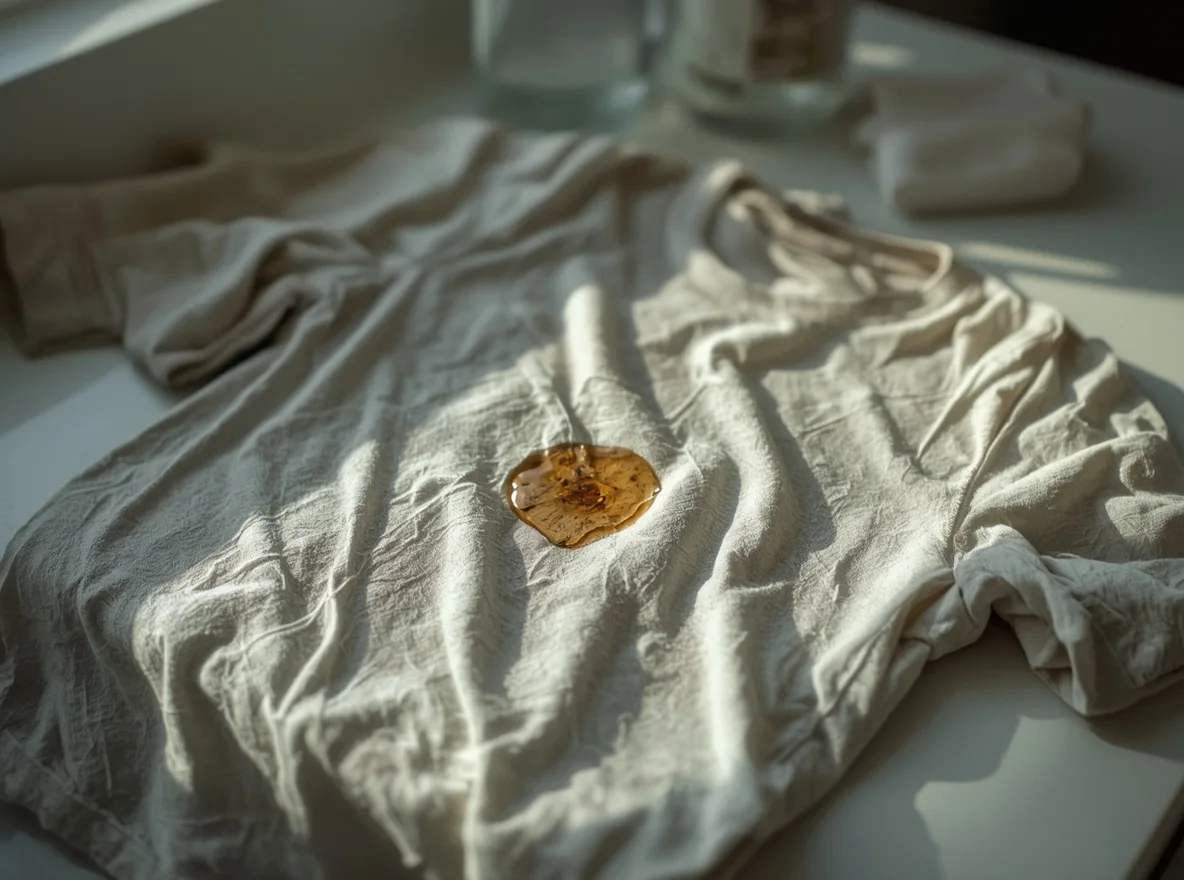
How to remove grease stains after the dryer
If the clothing already went through the dryer, treat the stain as a set-in grease mark. Start with dish soap on dry fabric and let it sit longer than usual. Then add baking soda or cornstarch if the stain still looks oily.
Rinse, wash again, and air dry. You may need to repeat the process two or three times. This is normal with dryer-set grease stains, especially on synthetic fabrics.
Avoid using harsh cleaners right away. They may damage the fabric or fade the color before the grease is fully removed.
How to treat grease stains on cotton clothes after washing
Cotton is usually one of the easier fabrics to treat. Apply dish soap directly to the stain, let it sit, rinse with warm water, and wash again.
White cotton can often handle repeated treatments well. Colored cotton needs a little more caution, especially if the dye is not very stable. Test on an inside seam if you are unsure.
How to treat grease stains on polyester after washing
Polyester can hold onto grease more tightly than cotton. Oily stains may cling to synthetic fibers and survive a normal wash.
Use dish soap as a pretreatment and give it enough time to work. Wash the garment in the warmest water allowed by the care label. Air dry and inspect before repeating the process.
Do not use very hot water unless the label allows it. High heat can affect some synthetic fabrics and may make stain removal harder if residue remains.
How to treat grease stains on dark clothes after washing
Dark clothes need gentle treatment because fading can become more noticeable than the original stain. Use clear dish soap if possible and apply it only to the stained area.
Work the soap in with your fingers or a soft cloth instead of a brush. Rinse thoroughly and wash the item inside out with similar colors.
Avoid bleach, harsh stain removers, long soaking, and heavy scrubbing on dark fabrics.
How to treat grease stains on delicate clothes
Delicate fabrics such as silk, wool, rayon, and dry-clean-only clothing need extra care. Do not treat them the same way as cotton T-shirts or kitchen towels.
For delicate clothes, blot gently and use an absorbent powder first. Avoid hot water, strong rubbing, and heavy dish soap. If the garment is expensive or labeled dry clean only, professional cleaning is usually the safest choice.
What if the grease stain is still there?
If the stain is lighter but still visible, repeat the same method. Grease often improves gradually. A second gentle treatment is usually safer than one harsh treatment.
If the stain does not change at all, one of these may be true:
- The clothing was dried with heat several times.
- The stain is older than it looked.
- The fabric is synthetic and holding oil tightly.
- The mark is not only grease but also dye, sauce, or another ingredient.
- The cleaning method needs more time to break down the oil.
For food grease such as bacon, pizza, butter, or salad dressing, the same basic method works, but heavier stains may need more absorbent powder before washing. For a specific food grease example, see how to get bacon grease out of clothes.
Can baking soda remove grease after washing?
Baking soda can help absorb grease, but it works best when paired with dish soap or liquid laundry detergent. On its own, baking soda may lighten an oily mark, but it may not fully break down the residue inside the fabric.
For a washed grease stain, use dish soap first, then add baking soda if the stain is stubborn or still looks shiny.
Can vinegar remove grease stains after washing?
Vinegar is not usually the best first choice for grease stains. It can help with some odors and mineral residue, but grease needs something that can break down oil.
Dish soap or liquid laundry detergent is usually more effective for oily stains. If you use vinegar for other laundry reasons, do not mix it with bleach or random cleaning products.
Can you use dish soap on clothes?
Yes, a small amount of liquid dish soap can be used as a spot treatment on many washable clothes. Apply it directly to the grease stain, let it sit, rinse it well, and then wash the garment with laundry detergent.
Do not pour a large amount of dish soap into the washing machine. It can create too many suds. Use it only on the stained area before washing.
Common mistakes to avoid
- Using the dryer too soon: heat can make grease harder to remove.
- Scrubbing too hard: this can damage fabric or create faded patches.
- Using only water: water alone does not break down grease well.
- Skipping pretreatment: washed grease stains usually need direct treatment before another wash.
- Using bleach first: bleach does not remove oil well and can damage color.
- Mixing cleaners: random cleaner combinations can be unsafe and may harm fabric.
How to prevent grease stains from surviving the wash
The best way to avoid this problem is to pretreat greasy clothing before it goes into the washing machine. Even a quick treatment can help.
- Blot fresh grease with a paper towel.
- Sprinkle baking soda or cornstarch on oily spots.
- Apply a small amount of dish soap before washing.
- Wash greasy items separately from delicate clothing.
- Check stains before drying.
Grease stains are much easier to remove before heat is involved. Make it a habit to inspect shirts, jeans, aprons, and kitchen towels before moving them from the washer to the dryer.
When the stain may not come out completely
Some grease stains may not fully disappear, especially if they have been dried with heat many times or left untreated for a long period. The stain may also be harder to remove from polyester, dark fabrics, or clothing with special finishes.
Still, repeated gentle treatment can often make the mark much lighter. If the item is no longer perfect but still usable, you may be able to keep it for cooking, cleaning, yard work, or casual home wear.
Final thoughts
To remove grease stains from clothes after washing, treat the stain again before using the dryer. Apply a small amount of dish soap to the dry stain, let it sit, add baking soda if needed, rinse, wash again, and air dry before checking the result.
The main rule is simple: grease needs pretreatment, not just another normal wash. With patience and the right method, many washed grease stains can be removed or faded enough to save the clothing.