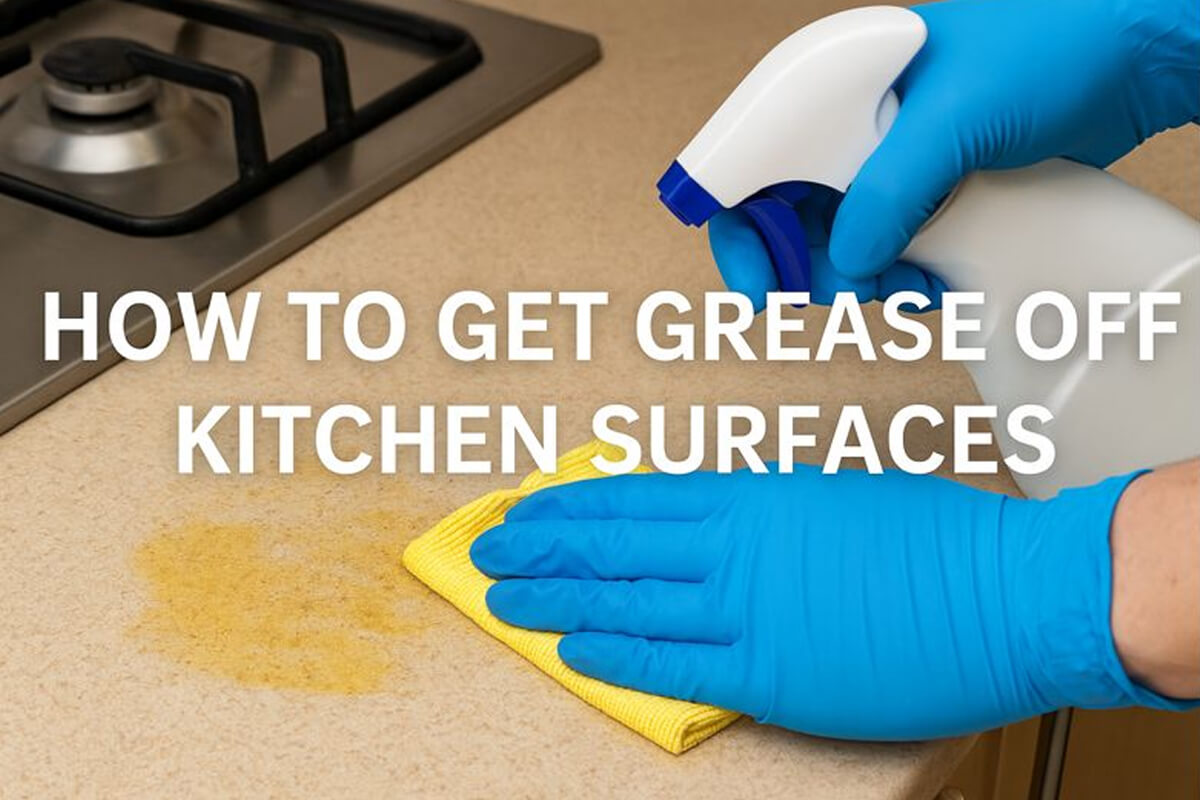
Grease is one of the most common challenges in home kitchens. It builds up on stovetops, cabinets, walls, countertops and appliances because of regular cooking. Over time the residue becomes sticky, attracts dust and forms a stubborn layer that is difficult to remove without the right approach. This guide explains how to clean fresh and old grease effectively, which products work best on different materials and how to maintain a grease free kitchen.
Why grease sticks to kitchen surfaces
Grease is formed from cooking oils, fats and food particles that evaporate into the air when heated. The vaporized grease settles on nearby surfaces and cools, creating a sticky film. When mixed with dust it becomes even harder to remove. Stovetops and areas above the oven accumulate grease the fastest because of constant exposure to heat.
Surfaces such as stainless steel, laminate, wood and painted walls absorb grease differently. Knowing the type of surface helps choose a cleaner that works effectively without causing damage.
Essential supplies for removing grease
Different levels of grease require different cleaning products. Some natural solutions work well for light grease while heavily built up grime may need stronger cleaners.
Warm water
Dish soap
White vinegar
Baking soda
Lemon juice
Degreasing spray
Microfiber cloths
Soft brush or sponge
These supplies are safe for most household surfaces and can be used in combination for deeper cleaning.
Cleaning fresh grease on kitchen surfaces
Fresh grease is easier to clean because it has not yet hardened or mixed with dust. Immediate action prevents buildup.
Steps for removing fresh grease with dish soap
Mix warm water with a few drops of dish soap.
Dampen a microfiber cloth with the solution.
Wipe the greasy area using circular motions.
Rinse the cloth and wipe again to remove soap residue.
Dry the surface with a clean towel.
Dish soap cuts through oils quickly because it contains surfactants that break grease into smaller particles.
Baking soda for stubborn grease marks
Baking soda works as a safe and mild abrasive. It removes hardened grease from stovetops, walls and countertops without scratching most surfaces.
How to use baking soda for grease removal
Sprinkle baking soda directly on the grease spot.
Add a small amount of warm water to create a paste.
Let the mixture sit for 10 minutes.
Scrub gently with a soft sponge.
Wipe clean with a damp cloth.
This method works particularly well on stovetops and kitchen tiles.
Cleaning grease with vinegar solution
Vinegar is an acidic cleaner that dissolves light to moderate grease buildup. It is safe for use on most surfaces except natural stone, which can be damaged by acid.
How to prepare a vinegar cleaning solution
Mix equal parts white vinegar and warm water.
Add a few drops of dish soap for extra cleaning power.
Pour the mixture into a spray bottle.
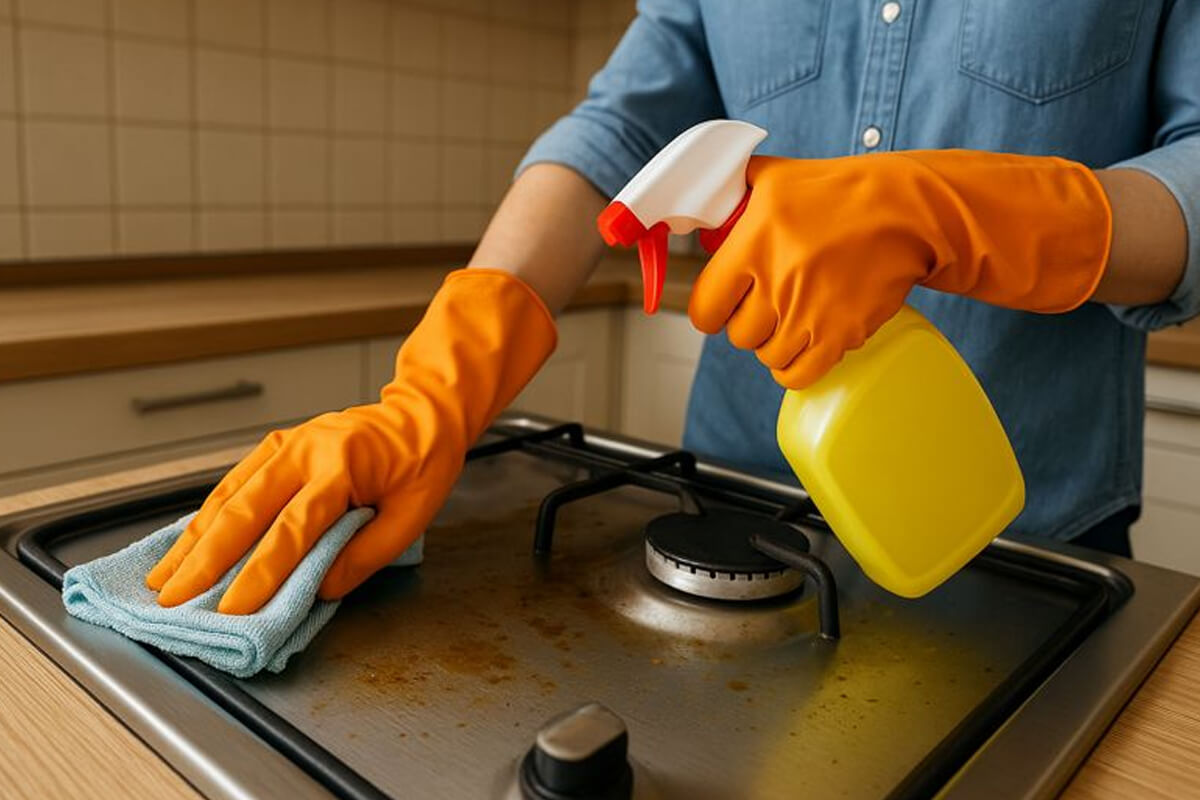
Spray the solution directly onto the greasy surface, leave for a few minutes and then wipe with a microfiber cloth. The acidity of vinegar helps lift grease while dish soap breaks down oils.
Using lemon juice for natural grease removal
Lemon juice contains citric acid, which cuts through light grease and leaves a fresh scent. It is a gentle alternative for homeowners who prefer natural cleaning solutions.
Steps for cleaning with lemon
Cut a lemon in half and squeeze the juice onto the greasy area.
Let the juice sit for 5 to 10 minutes.
Scrub lightly if needed.
Rinse with warm water and wipe dry.
Lemon is effective on cabinets, countertops and stovetop splatters.
How to remove old and sticky grease buildup
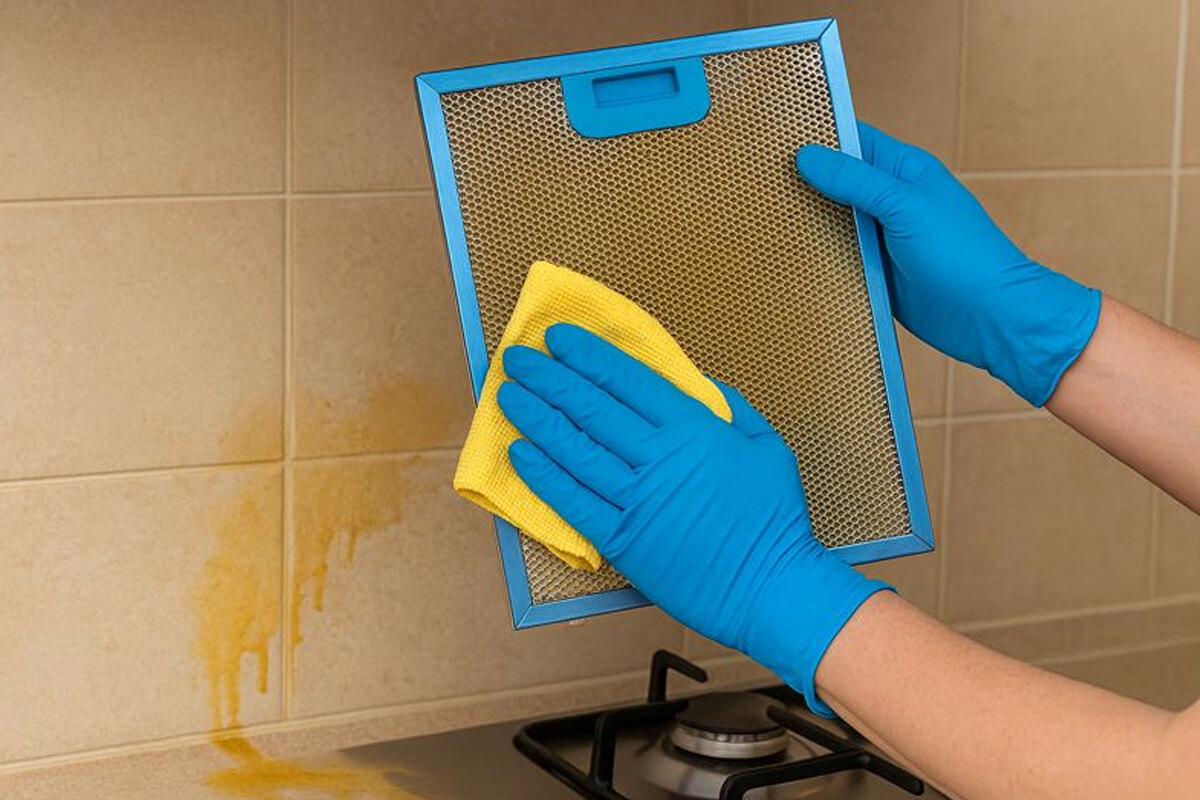
Grease that has been sitting for months or years becomes hard, sticky and difficult to dissolve. This type of buildup often appears on cabinet doors near the stove or on range hoods.
Apply a liberal amount of degreasing spray.
Allow the cleaner to sit for 5 to 15 minutes.
Scrub with a brush or non abrasive sponge.
Wipe clean with warm water.
For extremely thick buildup repeat the process until the surface is restored.
Cleaning grease from wooden cabinets
Wooden cabinets require special care because harsh chemicals can damage the finish. Mild soap and warm water usually work best for safe cleaning.
Safe method for wooden cabinets
Mix warm water with mild dish soap.
Dampen a soft cloth and wipe the cabinet doors.
Rinse with a separate cloth.
Dry immediately to prevent wood swelling.
For sticky corners a baking soda paste may be applied gently, avoiding excessive pressure.
Removing grease from stainless steel appliances
Stainless steel shows fingerprints and grease easily but can be cleaned effectively with simple products. The key is to wipe with the grain to avoid streaks.
Steps for stainless steel cleaning
Spray vinegar solution onto the surface.
Wipe with a microfiber cloth following the grain.
Apply a small amount of olive oil to polish if desired.
Using the correct motion helps maintain the sleek appearance of stainless steel appliances.
Dealing with grease on kitchen walls
Kitchen walls collect grease over time because of steam and cooking vapors. Painted walls require gentle cleaners to avoid damaging the paint.
Use warm soapy water for routine cleaning.
Apply baking soda paste for stubborn spots.
Wipe down with a damp cloth after cleaning.
If the wall paint is glossy it will be more resistant to grease. Matte finishes may require extra care.
Comparison of grease removal methods
The table below shows how each method performs depending on the level of grease and surface type.
| Method | Best for | Surface type | Effectiveness |
|---|---|---|---|
| Dish soap and warm water | Fresh grease | Most surfaces | High |
| Baking soda paste | Stubborn spots | Stovetops, tiles | Very high |
| Vinegar solution | Light to moderate grease | Most surfaces except stone | High |
| Lemon juice | Light grease | Cabinets, countertops | Medium |
| Degreasing spray | Heavy buildup | Cabinets, range hoods | Very high |
Helpful maintenance tips for a grease free kitchen
Regular cleaning habits prevent grease from building up and make deep cleaning easier. Wiping surfaces after cooking, keeping stovetops clean and using ventilation reduces future residue.
Clean stovetops daily to avoid hardened grease.
Wipe cabinets weekly.
Use the range hood when cooking.
Clean spills as soon as they occur.
Schedule monthly deep cleanings.
Following these habits helps maintain a shiny and hygienic kitchen. With the right techniques and consistent care any homeowner can manage grease effectively and keep kitchen surfaces clean and welcoming.